The Great Alone by Kristin Hannah
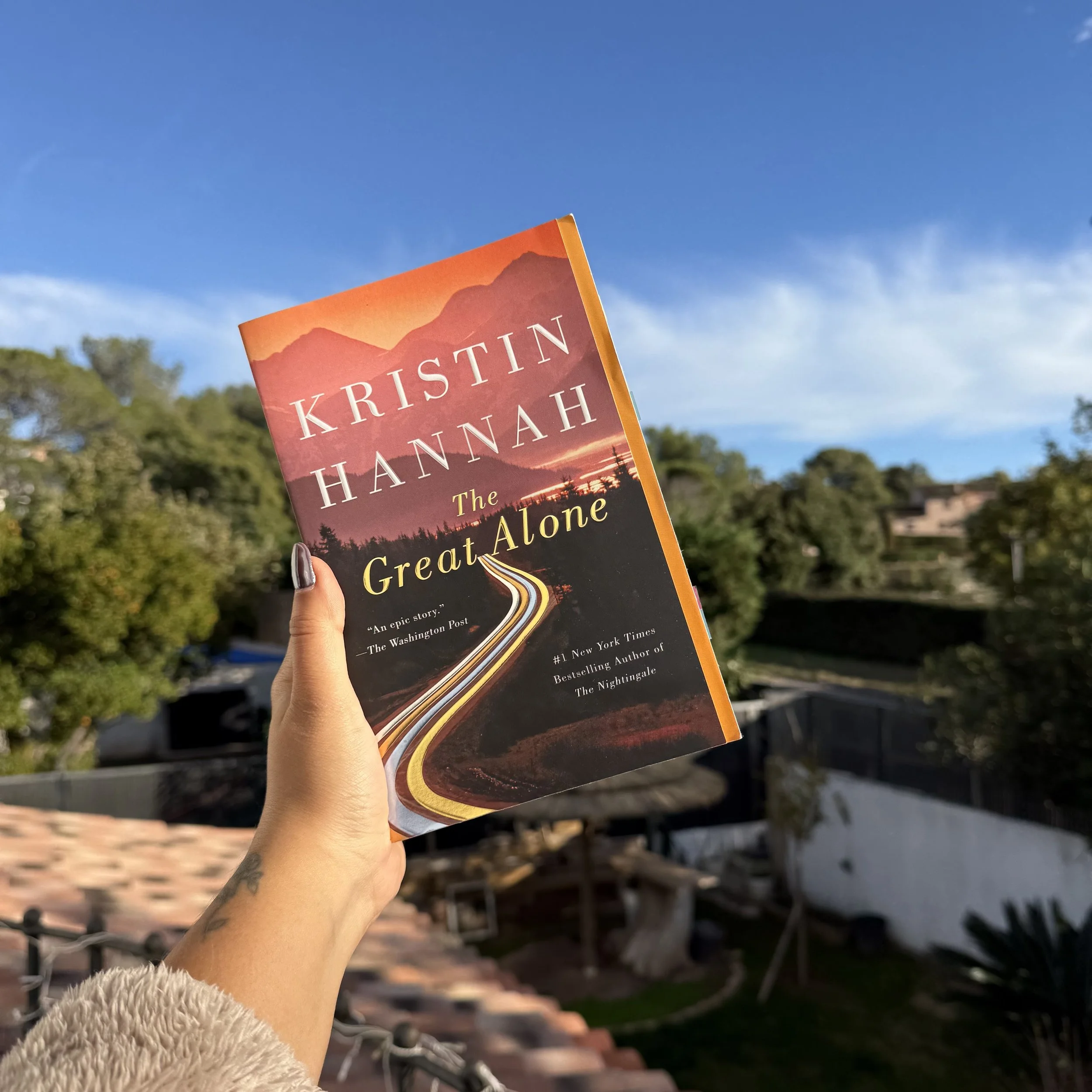
Alaska, 1974
Leni is thirteen: still young enough to believe in hope, yet old enough to carry the weight of everything she does not say. Her small family is fragile in its own way: a mother who loves too fiercely and a father haunted by ghosts no one can see, slipping further from reality as the days pass. They have moved more times than Leni can count, always chasing the promise of a fresh start that never seems to last. And each time, she follows without protest; not out of resignation, but out of love. Love for her mother, who is the sun of her small universe
« She knew what Mama was feeling right now, so Leni had to be strong. That was how they did it, she and Mama. They took turns being strong. It was how they’d gotten through the war years »
“Ultimately, it didn’t matter what she or Mama wanted. Dad wanted a new beginning. Needed it. And Mama needed him to be happy. So they would try again in a new place, hoping geography would be the answer. They would go to Alaska in search of this new dream. Leni would do as she was asked and do it with a good attitude. She would be the new girl in school again. Because that was what love was”
One day, her father walks in with a familiar fire in his eyes: the look that means change, upheaval, and the impossible word again. He announces they are moving north, to Alaska, to a cabin left to him in a remote speck of land called Kaneq. Her mother, Cora, clings to the idea as if it were salvation, and this time, she says, things will be different.
But when they arrive, reality is colder than the northern wind. The cabin is little more than a shack: no bathroom, no proper walls to grant privacy, no tools or supplies to survive the wilderness.
« Mama stumbled back; she was laughing, but there was a kind of horror in her eyes. The cabin looked like something an old, toothless hermit would live in, and it was small. (...) It smelled vaguely of animal excrement and settled dust. Leni kept a hand over her mouth, afraid she’d gag as she returned to the living room (crunch, crunch on the dead bugs). “Where’s the bathroom?” Mama gasped, headed for the front door, flung it open, and ran out. Leni followed her out onto the sagging deck and down the half-broken steps. “Over there,” Mama said and pointed at a small wooden building surrounded by trees. A half-moon cutout on the door identified it. »
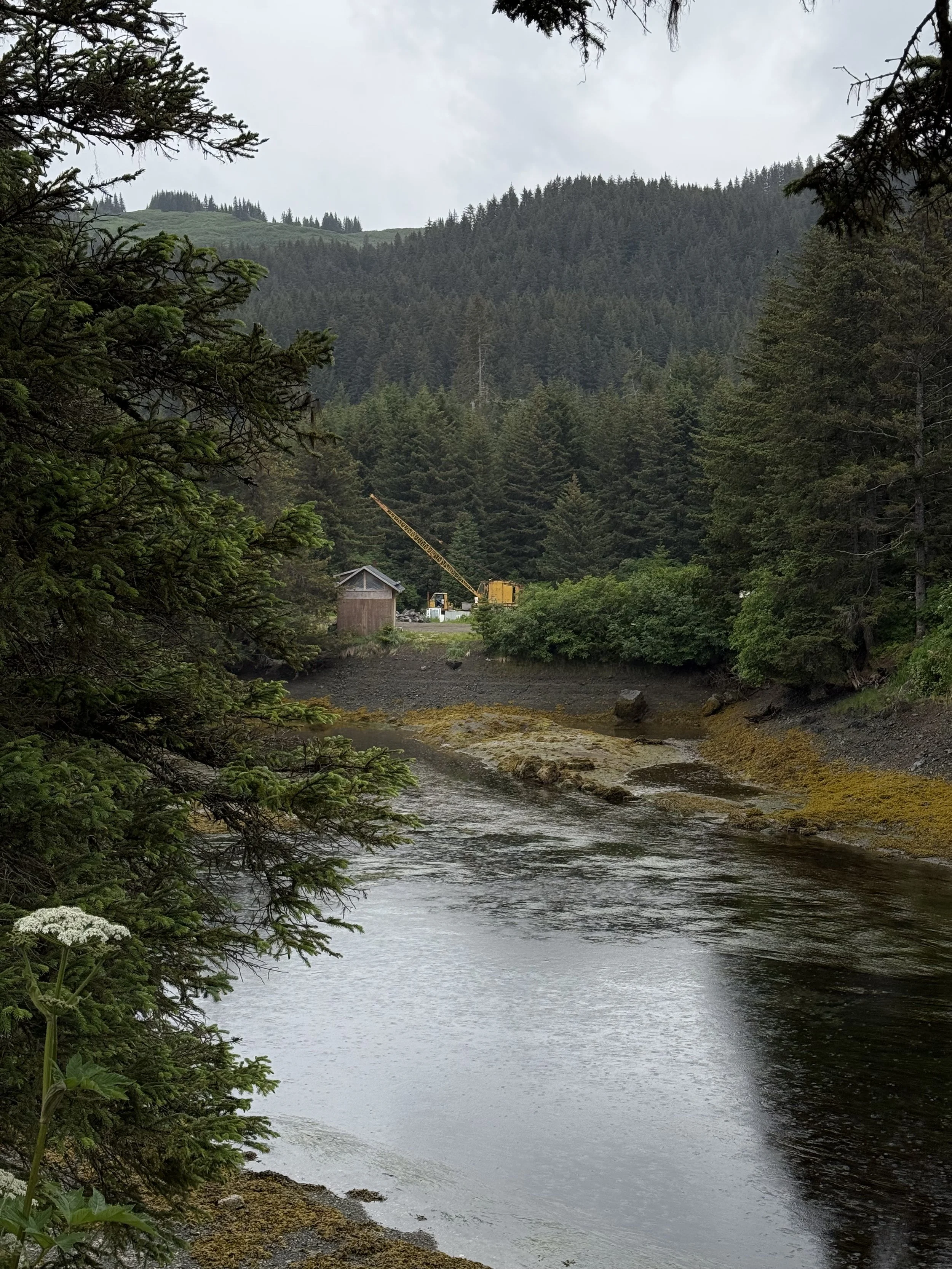
Dirt on the floor, rot in the wood, silence in every direction. The forest presses close, wild and unforgiving, and isolation settles around them like early winter frost.
« That’s our driveway,” Dad said. “Driveway?” Mama said, staring at the trail through the trees. It looked like it hadn’t been used in years. Thin-trunked alder trees grew in the path. (...) « Trees crowded into one another, jostled for space, turned the trail gloomy and dark. Sunlight poked through, changing color and clarity as they walked. The lichen-carpeted ground was springy, like walking on marshmallows. In no time, Leni noticed that she was ankle-deep in shadow. The darkness seemed to be rising rather than the sun falling. As if darkness were the natural order around here. »
(picture on the right, I took in Seldovia)
Leni starts attending school in Kaneq, trying to find her place in a world where nature rules and survival is not metaphor but necessity. The winters are brutal, the days short, and night falls fast in Alaska and with that, a darkness that feels alive and is not just on the outside but storms within her dad as well. Her family, with their hopes and fragile seams, is painfully unprepared for what awaits.
Warning: from here on, there will be mild spoilers
〰️
Warning: from here on, there will be mild spoilers 〰️
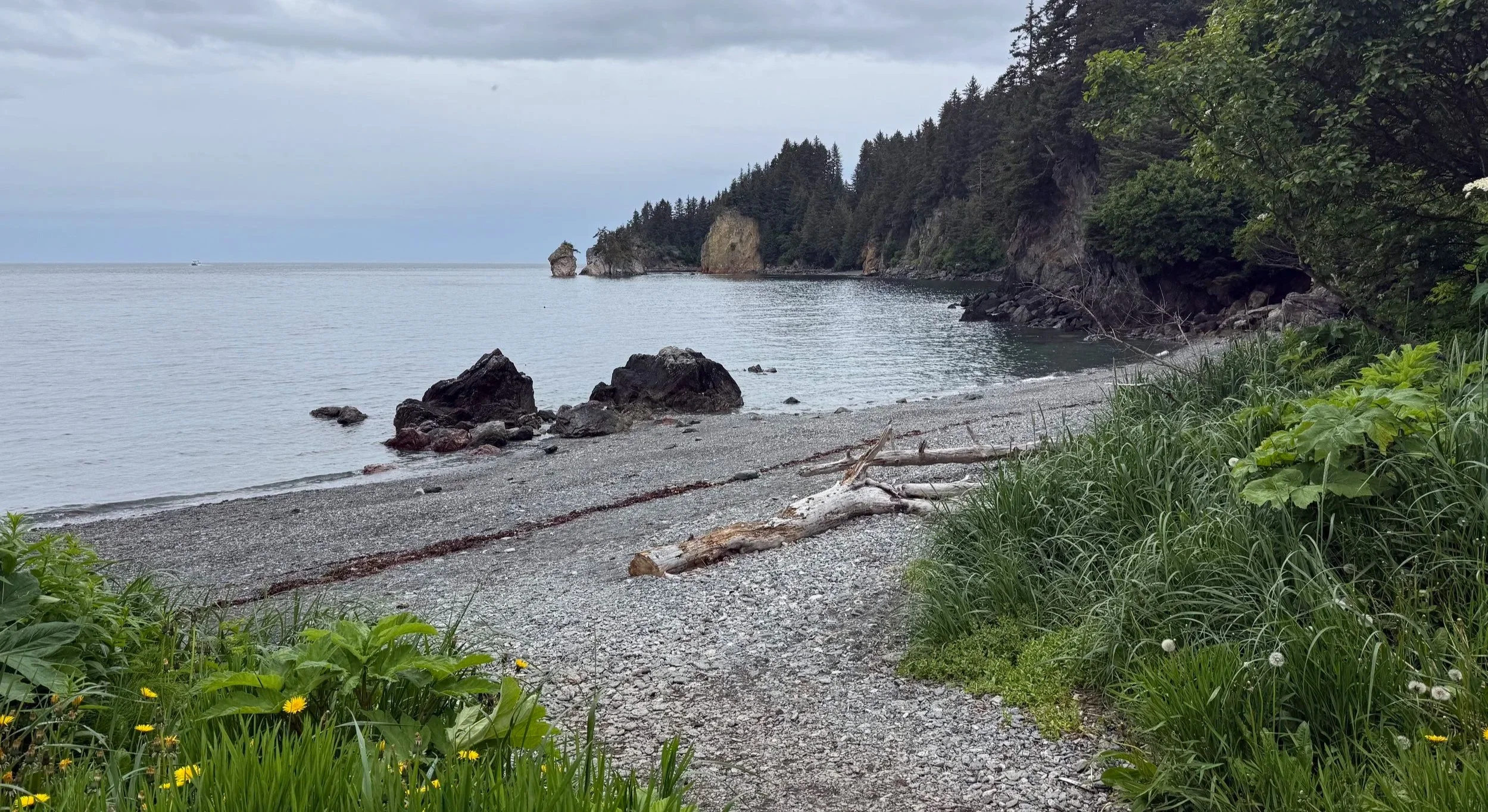
My pictures of Seldovia :)
Did I like it?
I loved this book, truly.
I devoured it in two days, unable to step away from the pages!! It swept me in completely, even more so that I have visited Seldovia, the inspiration for Kaneq; through the book I lived in Alaska with Leni, felt the cold of the wilderness, and carried the weight of her silence, her dreams and her hope.
Leni felt SO real: raw, tangible, painfully genuine. Her mother, Cora, was equally magnetic. Their relationship went really beyond the usual mother-daughter bond: they were companions, confidantes, two souls clinging to each other in a life filled with uncertainty. Their love was tender and fierce, built not only on affection but survival.
Ernt, however, was a character I could never excuse. Though the narrative gestures toward PTSD, nothing (aside from Cora’s memories) truly suggests he was ever gentle, loving, or safe. And memories, especially those born from longing and denial, can warp themselves into something softer, something easier to bear. Sometimes it feels less painful to rewrite a person in our mind than to admit the truth: some people are simply cruel. Some lack empathy entirely. And Ernt, to me, was one of those people. Yes he had lived through hell in Vietnam, I truly believe, but nothing made me think he used to be a better man and it was not the point of the story anyway, to me it revolved around how Leni navigated through her dysfunctional family and how she survived and built a life for herself.
And that’s why what broke me most was the childhood Leni never got to have. Again and again she was forced into the role of the adult: the protector, the keeper of peace, the quiet witness to her parents’ chaos. Instead of being sheltered, she was asked to shelter. Instead of being guided, she was pushed to guide. It was so infuriating, heartbreaking, and unfair. And it made me really want to punch someone, because she didn't deserve the way she was treated.
And then there was Cora. I don’t hate her, she is a complicated character. It was painful to watch her sink deeper into the gravity of toxic love, choosing Ernt over safety, over reason, and sometimes even over her daughter, since not leaving the man sequestrating her, isolating her and forcing her to be something she doesn’t want to be is not choosing the best for her. Yet Cora was not simply weak; she was trapped by fear, devotion, by the memory of who she wanted Ernt to be, or who she thought he used to be. She was both a victim and participant in her own ruin.
Each time she stayed, I got angrier and each time she forgave, it felt like a wound reopening for Leni.
This story will stay with me for a long time. Even now, I find myself thinking about Leni about everything she endured, she lost. I also felt unexpectedly close to her. Maybe because she’s a book lover, maybe because her inner world felt so familiar but also because I had the rare and almost surreal experience of knowing the places she described. It made me feel connected in a way I can’t fully explain, like the story wasn’t just words on a page, but a place I had walked through before. It reminded me of my trip to Alaska and for the time I spent turning these pages, I was back there again, remembering how much I loved those two weeks there.
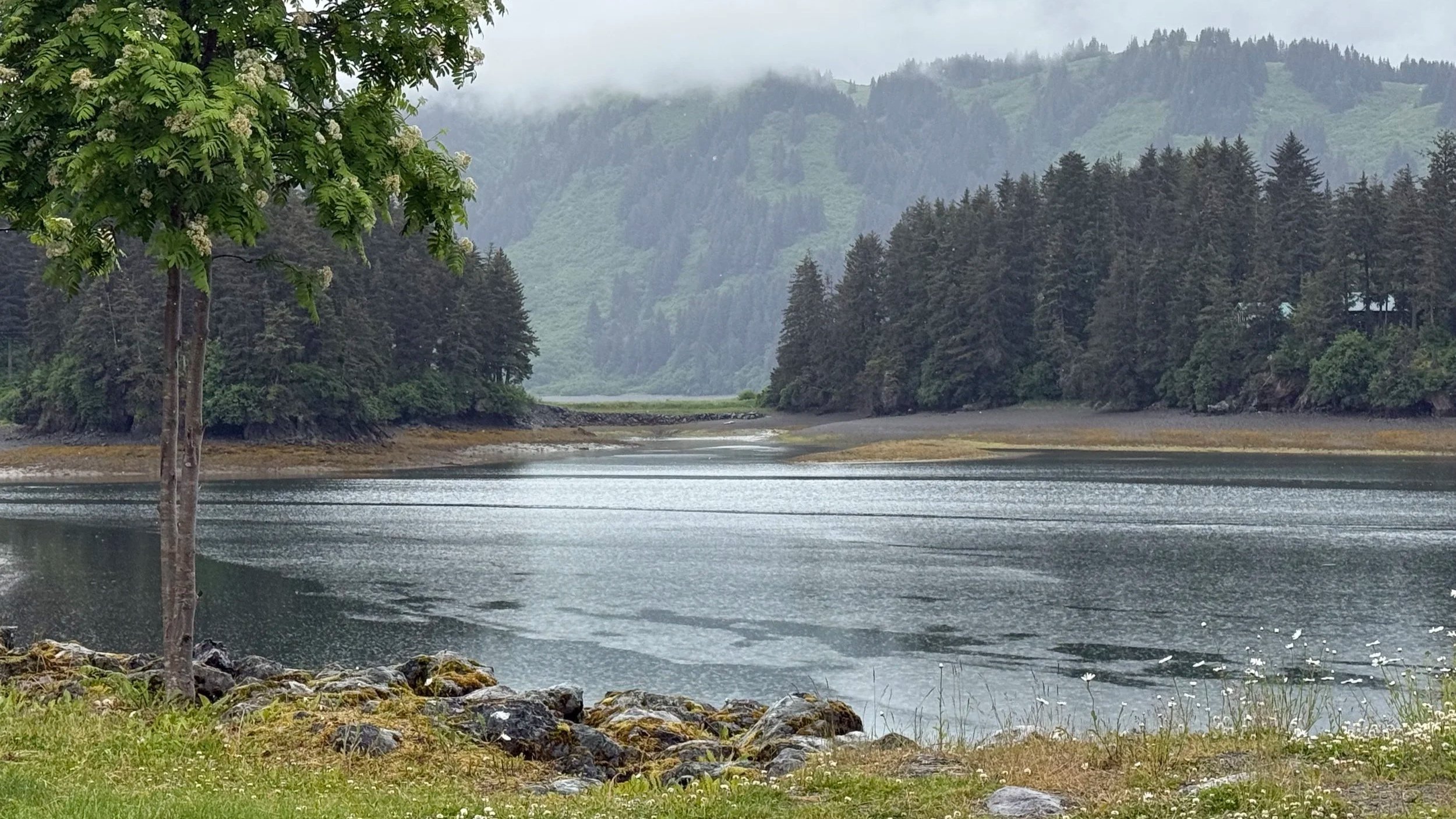
My pictures of Seldovia :)
