Egypt
If Egypt has ever sparked your curiosity, I’m here to share a glimpse of what awaits: a country overflowing with history, mythology, and heritage sites. Based on my own journey along the Nile, I’ll take you through the places I was lucky to visit and hopefully inspire your own adventure.
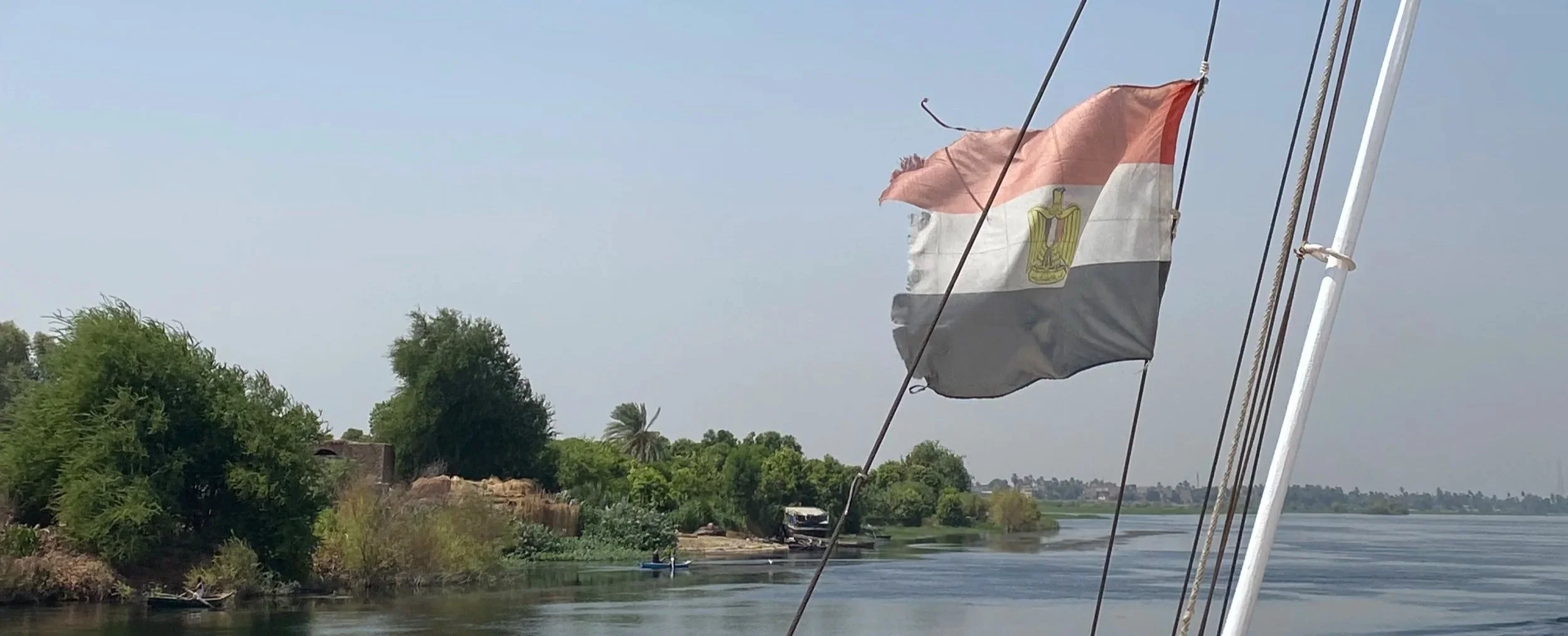
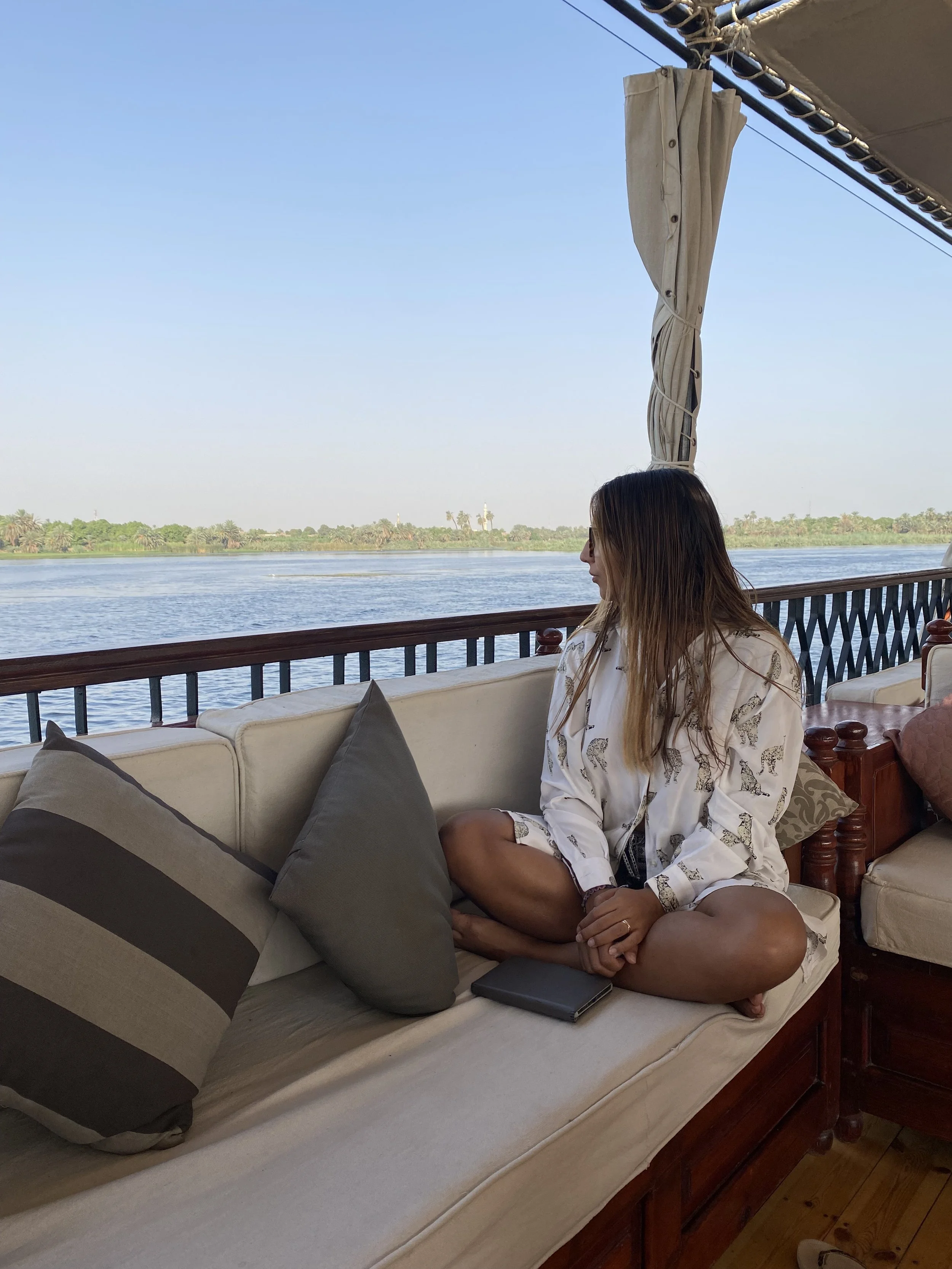
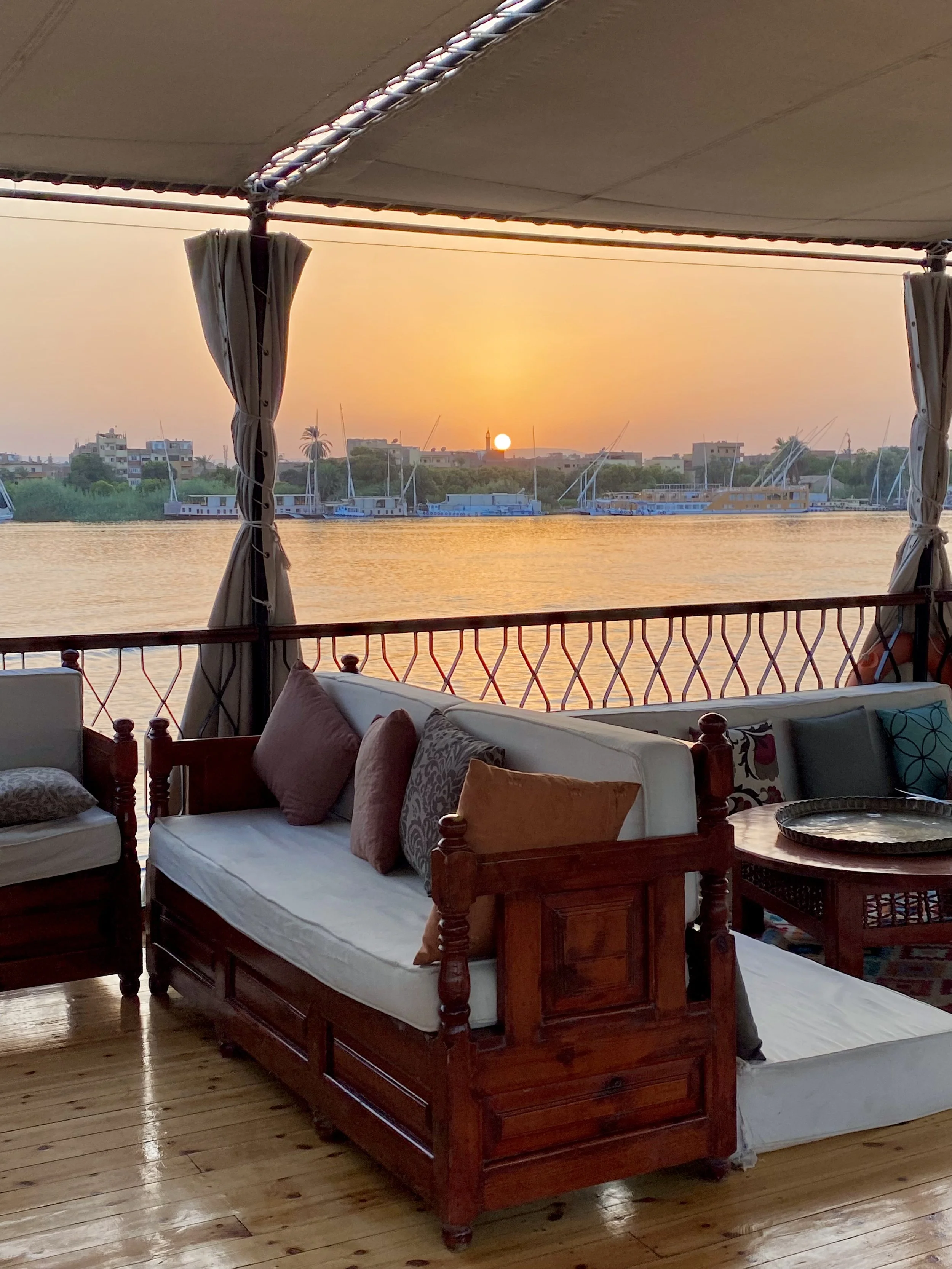
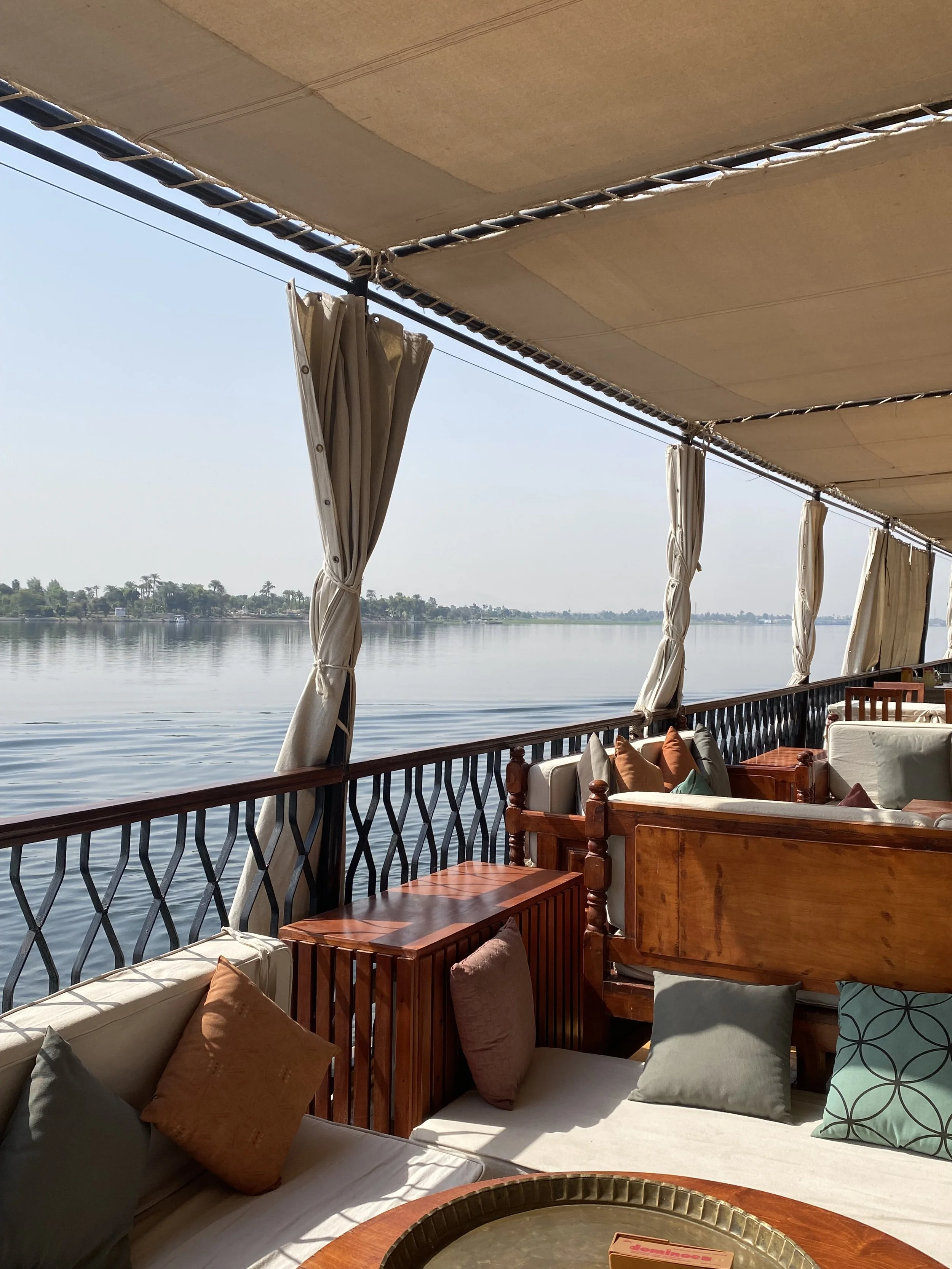
We split our itinerary into different parts: a first one on the Nile on a boat and then a few days at the shores of the Red Sea for underwater exploring before ending our trip in the country’s capital: Cairo. I’d say it was really balanced and we got to do a lot of sight seeing and visiting while not being rushed.
That being said: ready to explore the land of pharaohs and gods?
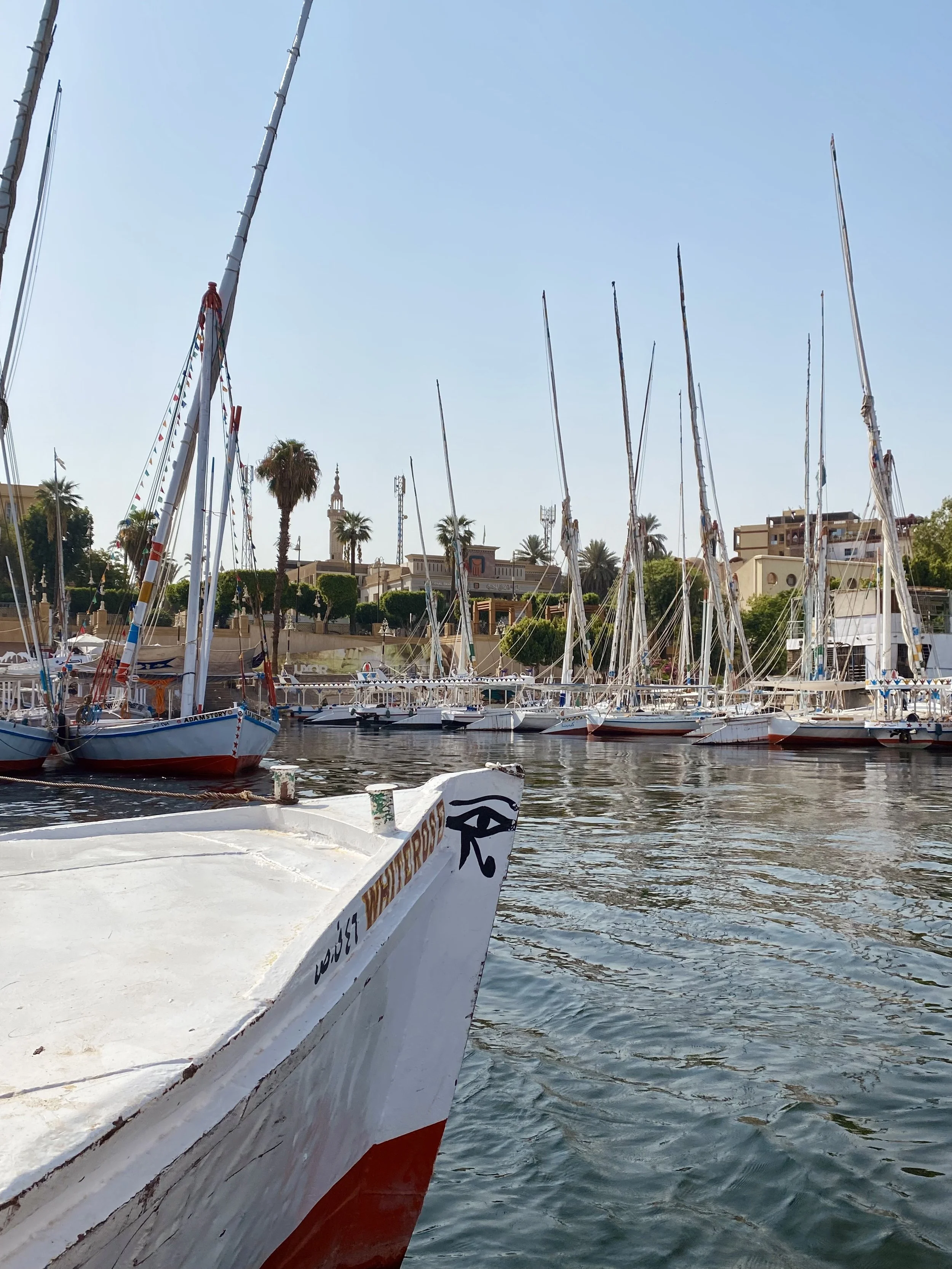
Step 1 : Esna
The Temple of Khnum in Esna
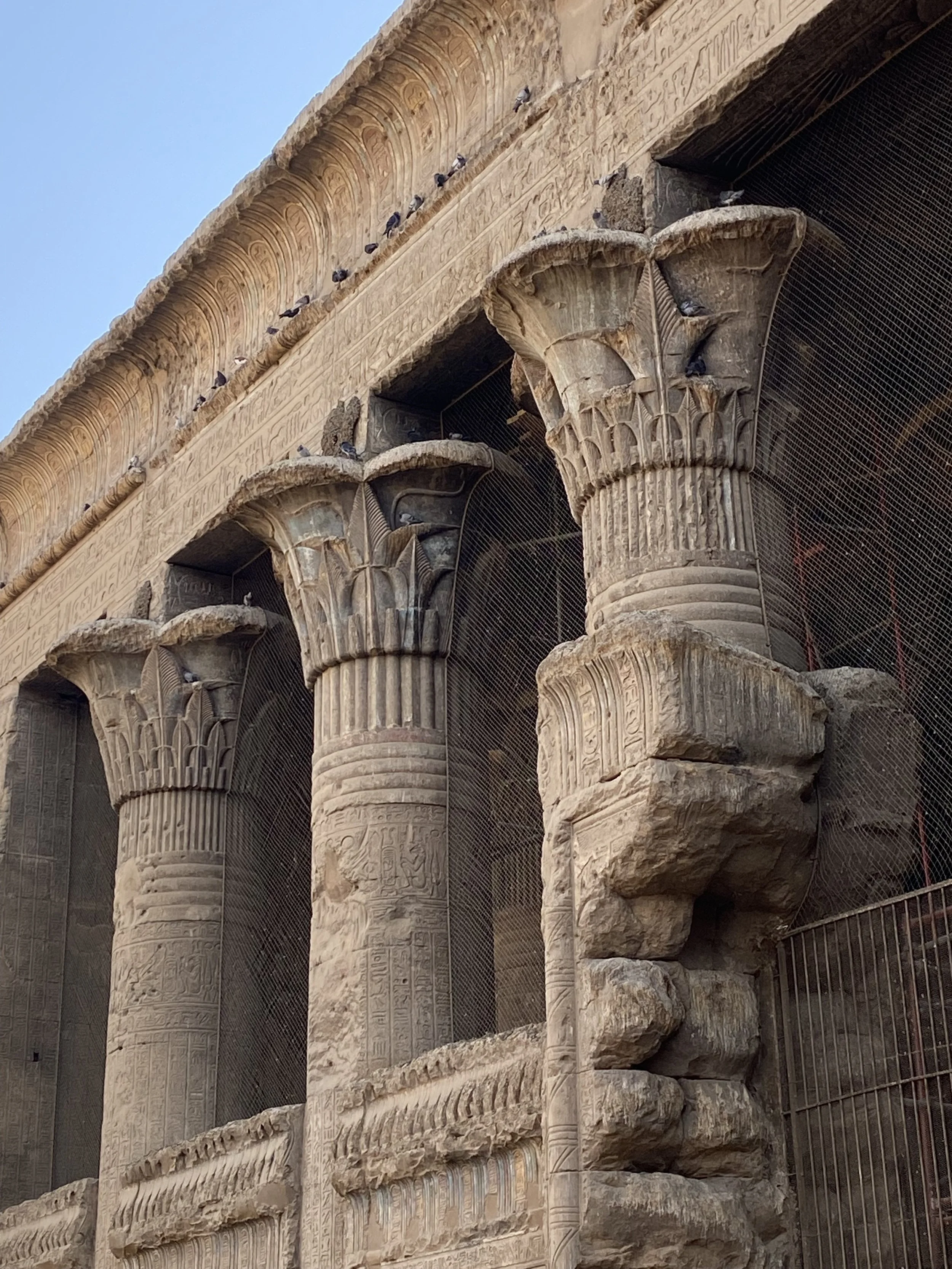
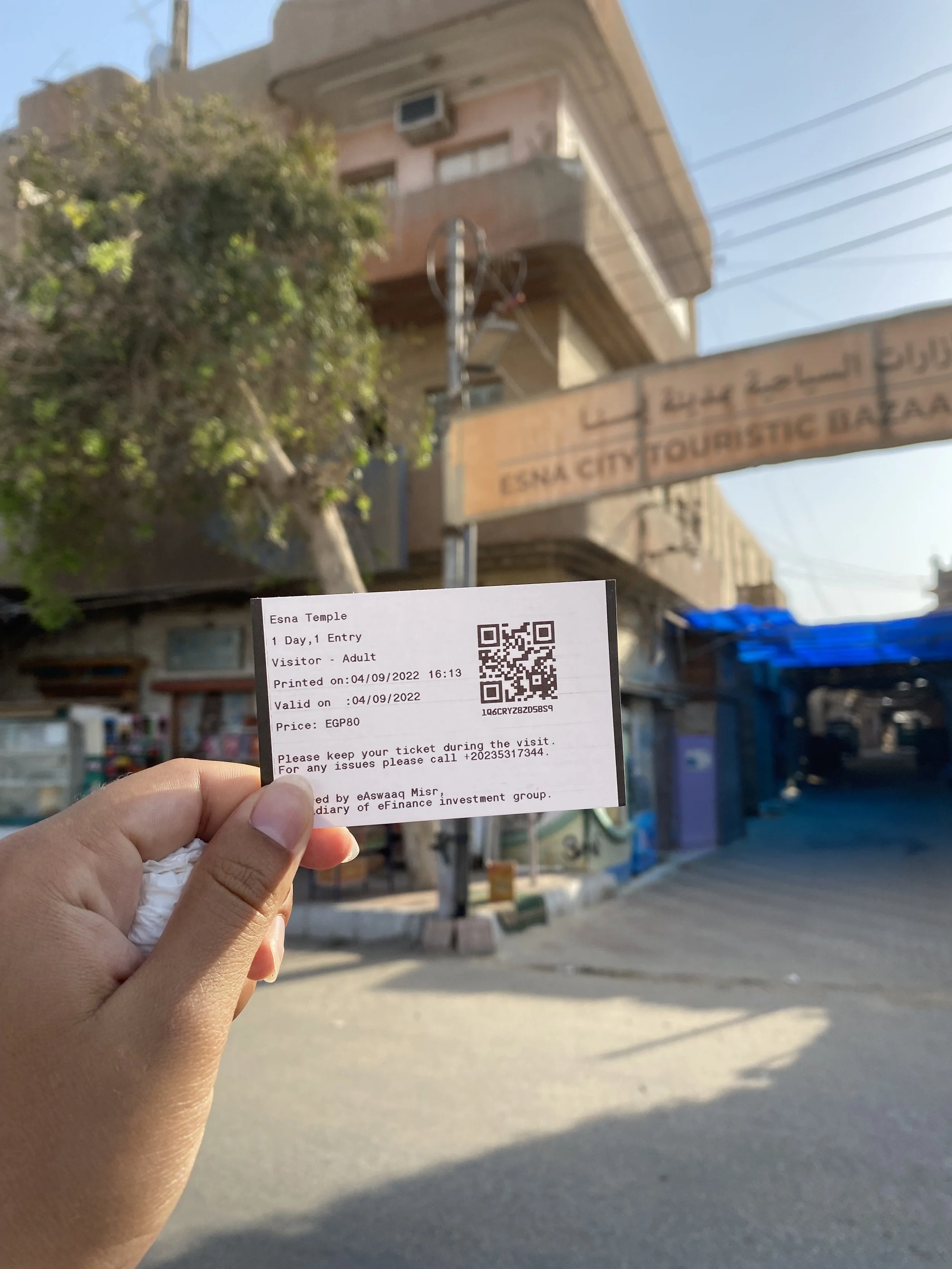
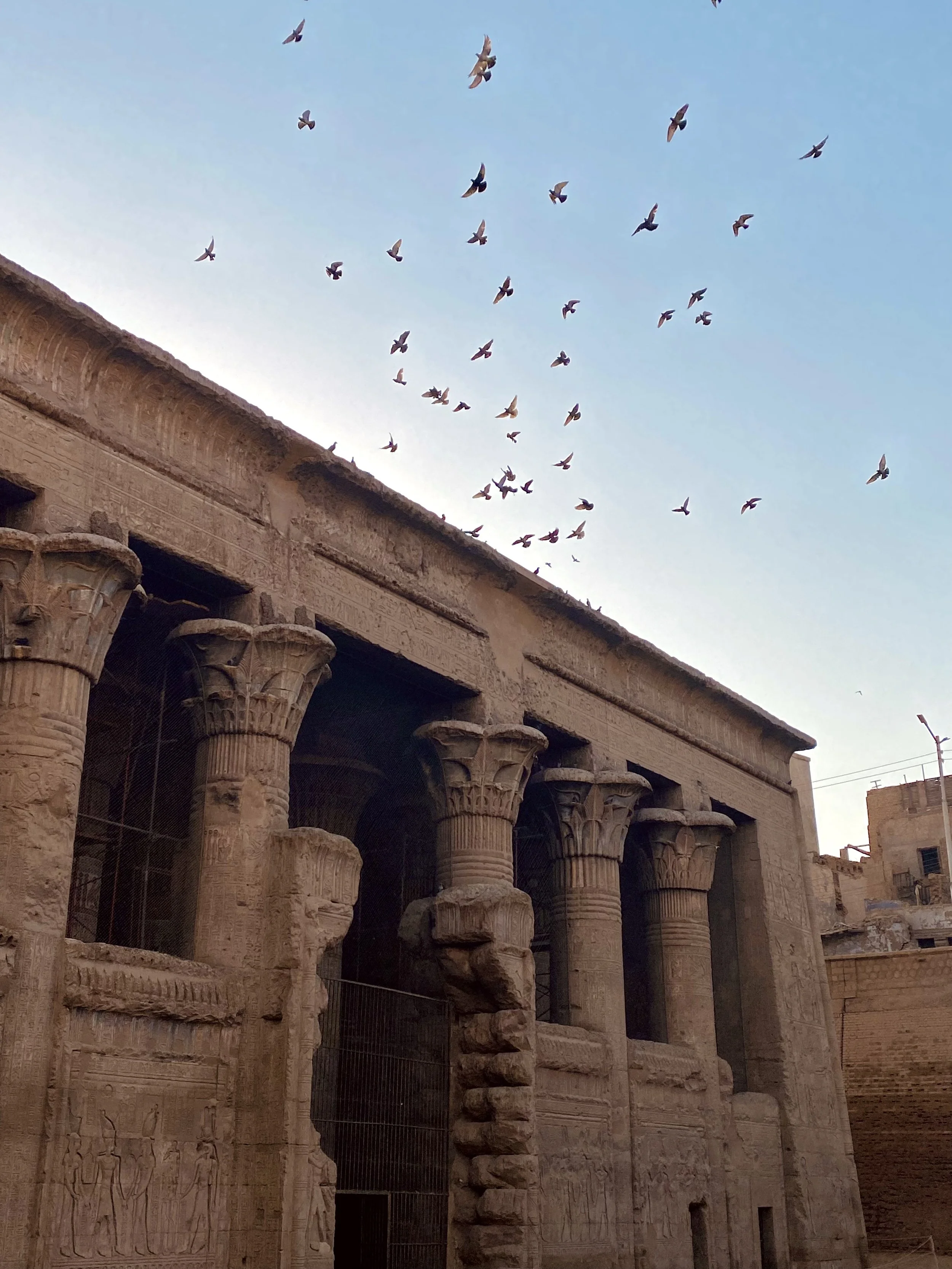
About 60 km south of Luxor lies the Temple of Khnum in Esna. Beneath its portico and a ceiling scattered with symbols you’ll discover a crossroad of Egyptian, Greek, and Roman influences.
Khnum, the Creator God at the Origins of the World
The temple is primarily dedicated to Khnum, the ram-headed deity, master of the Nile’s sources and creator of life. His name literally means “master of fresh waters.” In Egyptian mythology, Khnum is a demiurge: he controls the annual flood of the Nile, bringing fertility and prosperity. He also forms human beings on his divine potter’s wheel, shaping life from clay.
His temple in Esna was a sacred site where priests honored the god to ensure the land’s abundance.
But it is also dedicated to Heka and Neith
Heka, the very embodiment of magical power. Son of Ra in Heliopolis and sometimes considered a youthful manifestation of Khnum, he is closely linked to medicine. In ancient Egypt, physicians were considered his priests.
Neith is one of the oldest goddesses in the Egyptian pantheon. A warrior and a weaver of destiny, originating from Sais in the Delta, she is associated with beliefs connected to Libya.
When you enter the pronaos, there are forty eagles carved into the wall representing 24 falcons for Nekhbet, protectress of Upper Egypt and 22 cobras being Wadjet, goddess of Lower Egypt. Together, they symbolize the union of the Two Lands and the role of the gods in maintaining cosmic and political balance.
An astronomical ceiling
The restored ceiling of the Esna temple is probably one you’ll remember. It features the 12 zodiac signs as we know them today which is rare in an Egyptian temple. These symbols, originally Babylonian, arrived in Egypt through Greek influence. There are also planets like Jupiter, Mars, and Saturn. It also features egyptian constellations, including Mesekhtiu which is our modern Big Dipper and Sah (like Orion)
Stop 2: Edfu
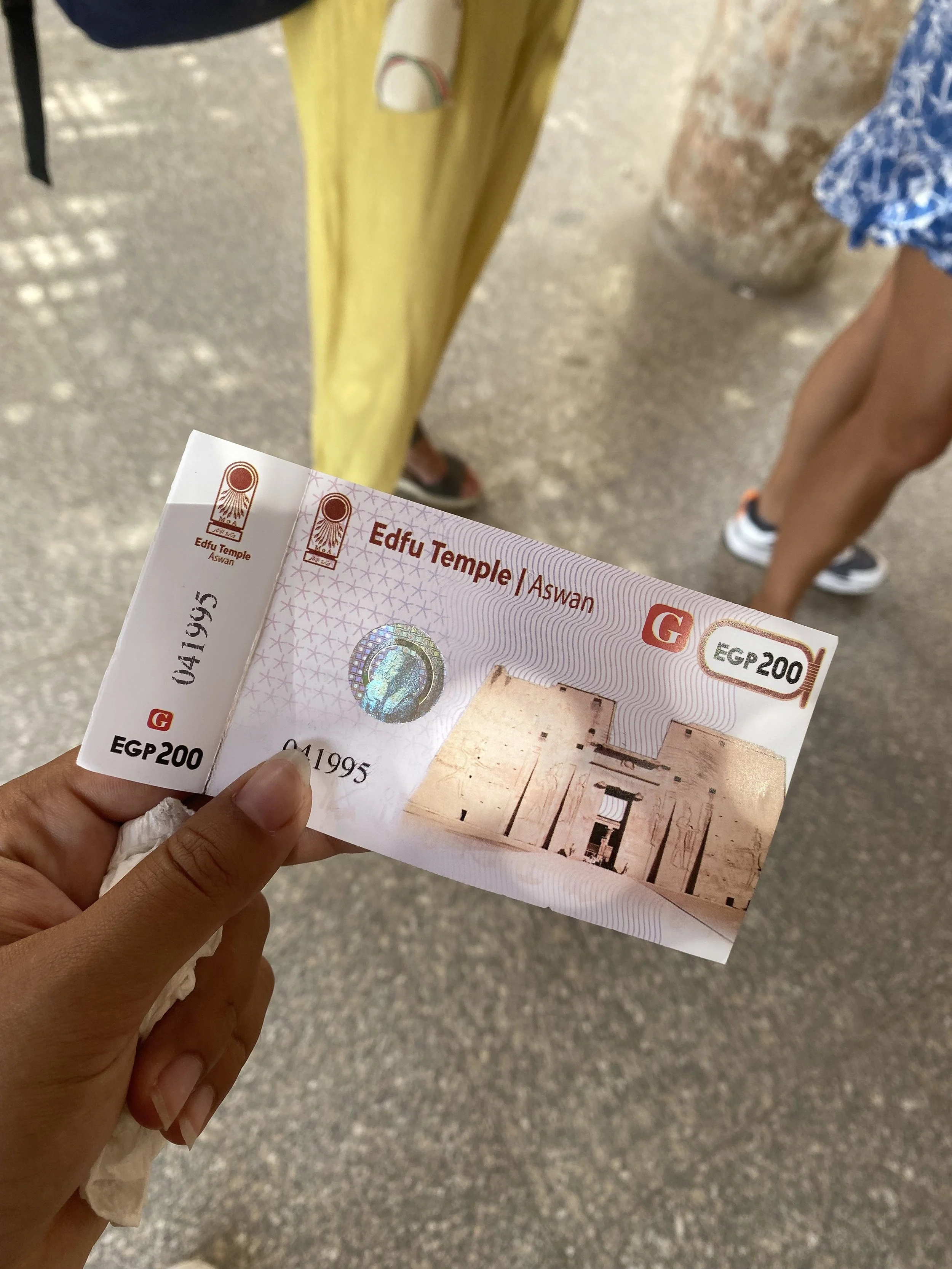
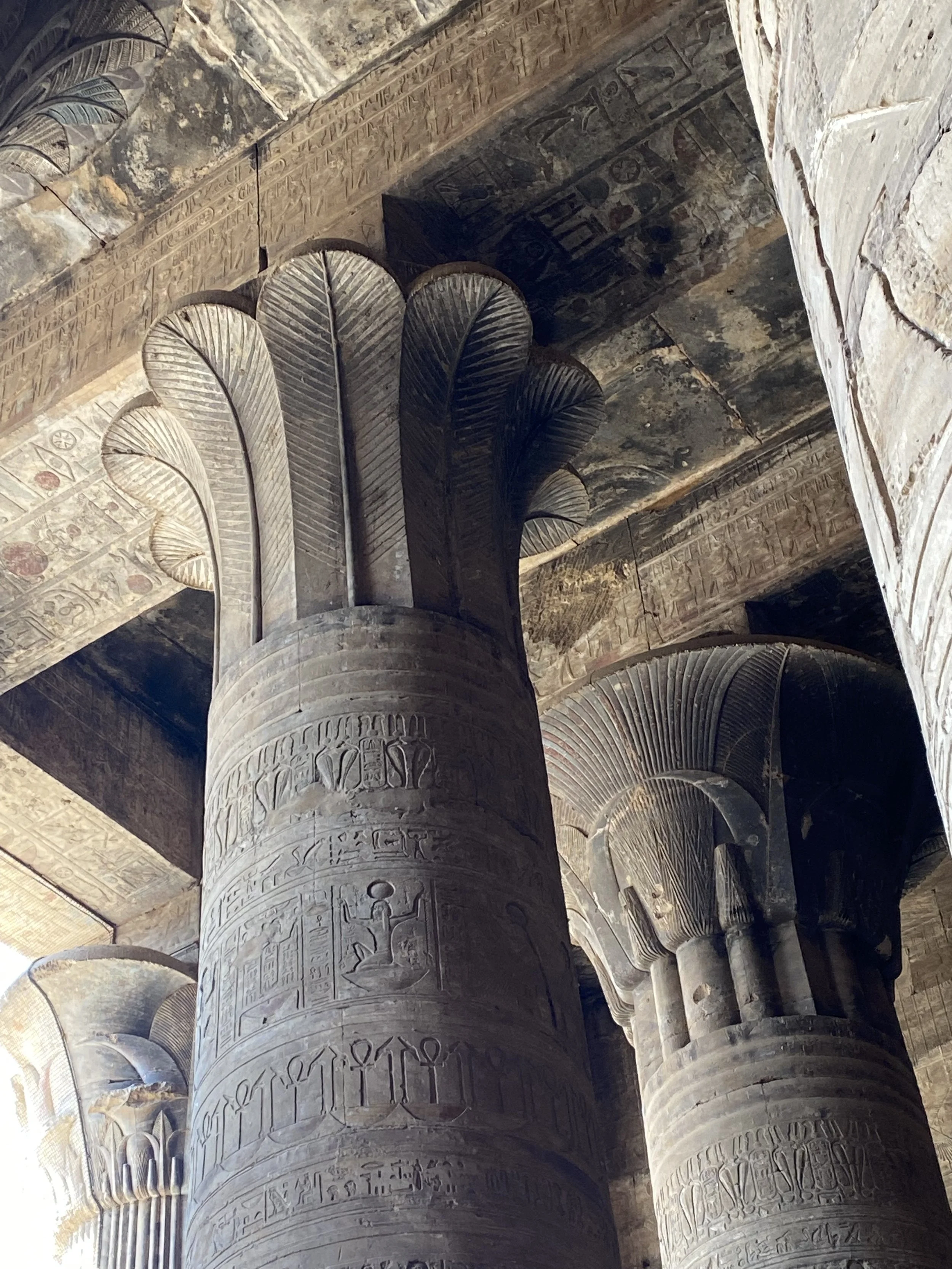
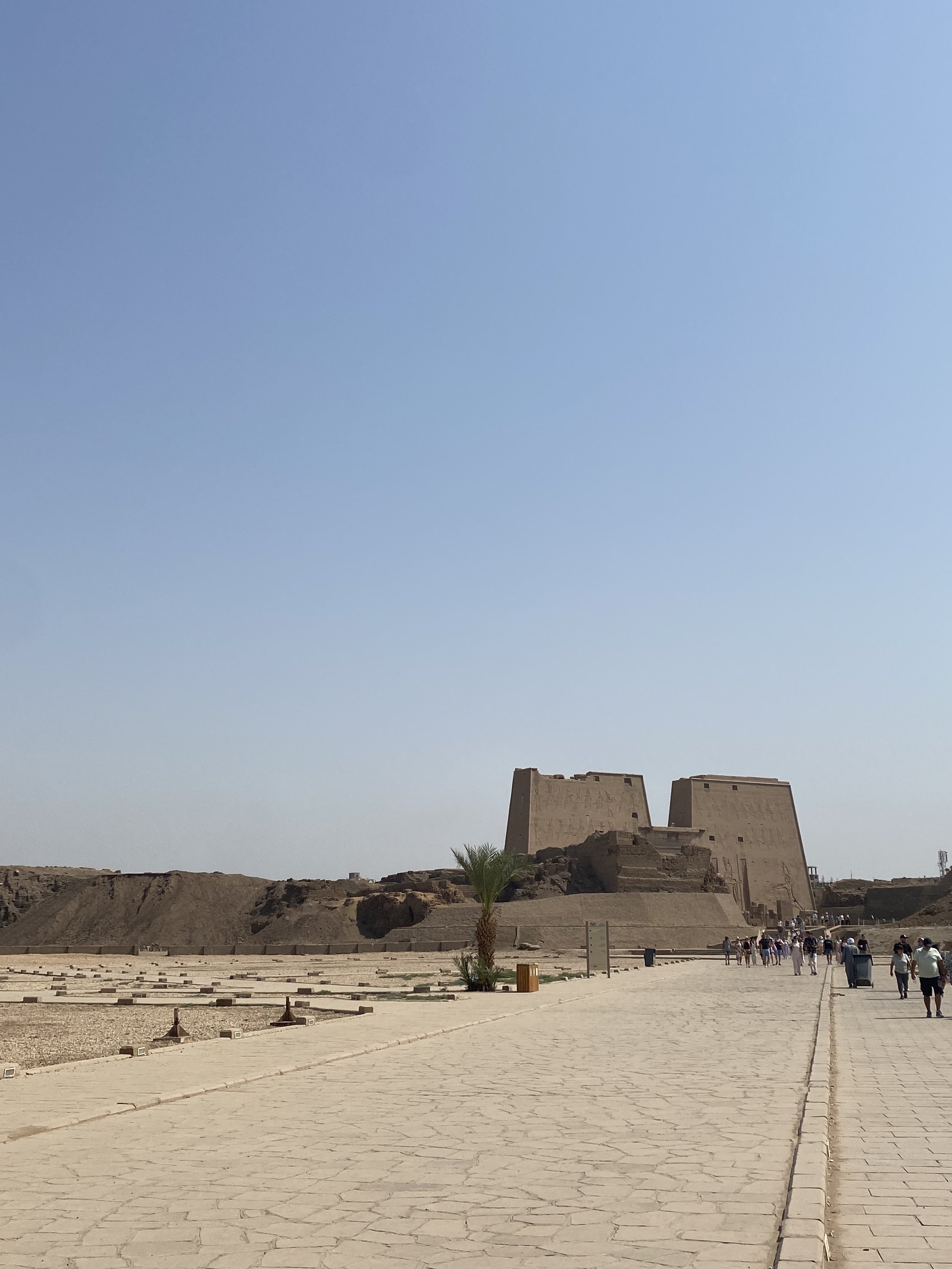
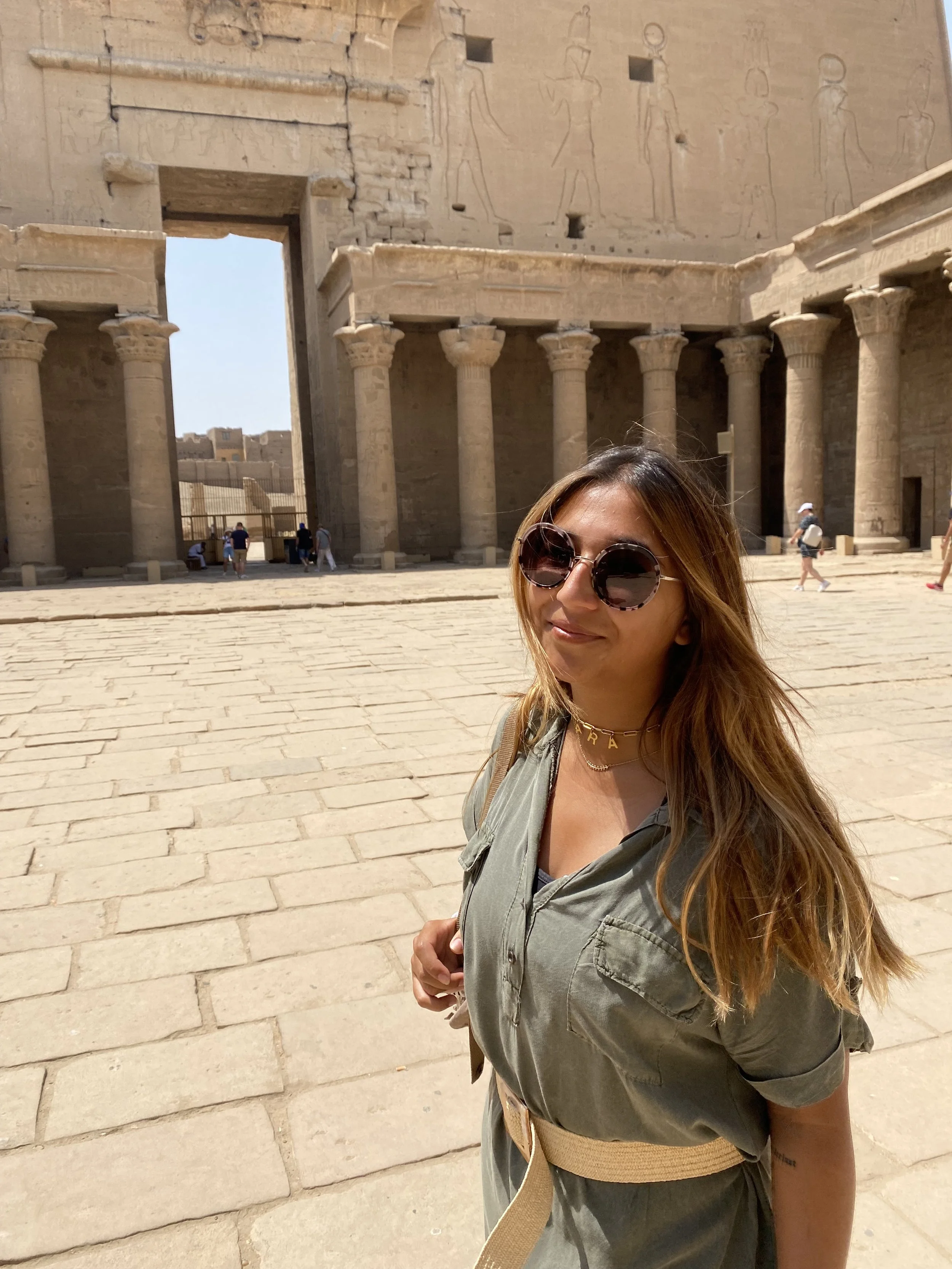
Next we went to the Temple of Horus, located in Edfu on the west bank of the Nile between Aswan and Luxor (about 100 km south), which is the second most important in Egypt after Karnak. It’s from 250 BCE and its state of preservation is exceptional. It gets you an idea of the architectural layout of an ancient Egyptian temple.
The Temple of Edfu was not built by the pharaohs but during the rule of the Ptolemies, Greek rulers who took power after Alexander the Great. Although financed by kings of Greek origin, the monument does follow traditional pharaonic architecture. Its architectural harmony is remarkable: unlike many Egyptian temples modified over centuries, Edfu was built in a single, continuous campaign, which explains its coherence.
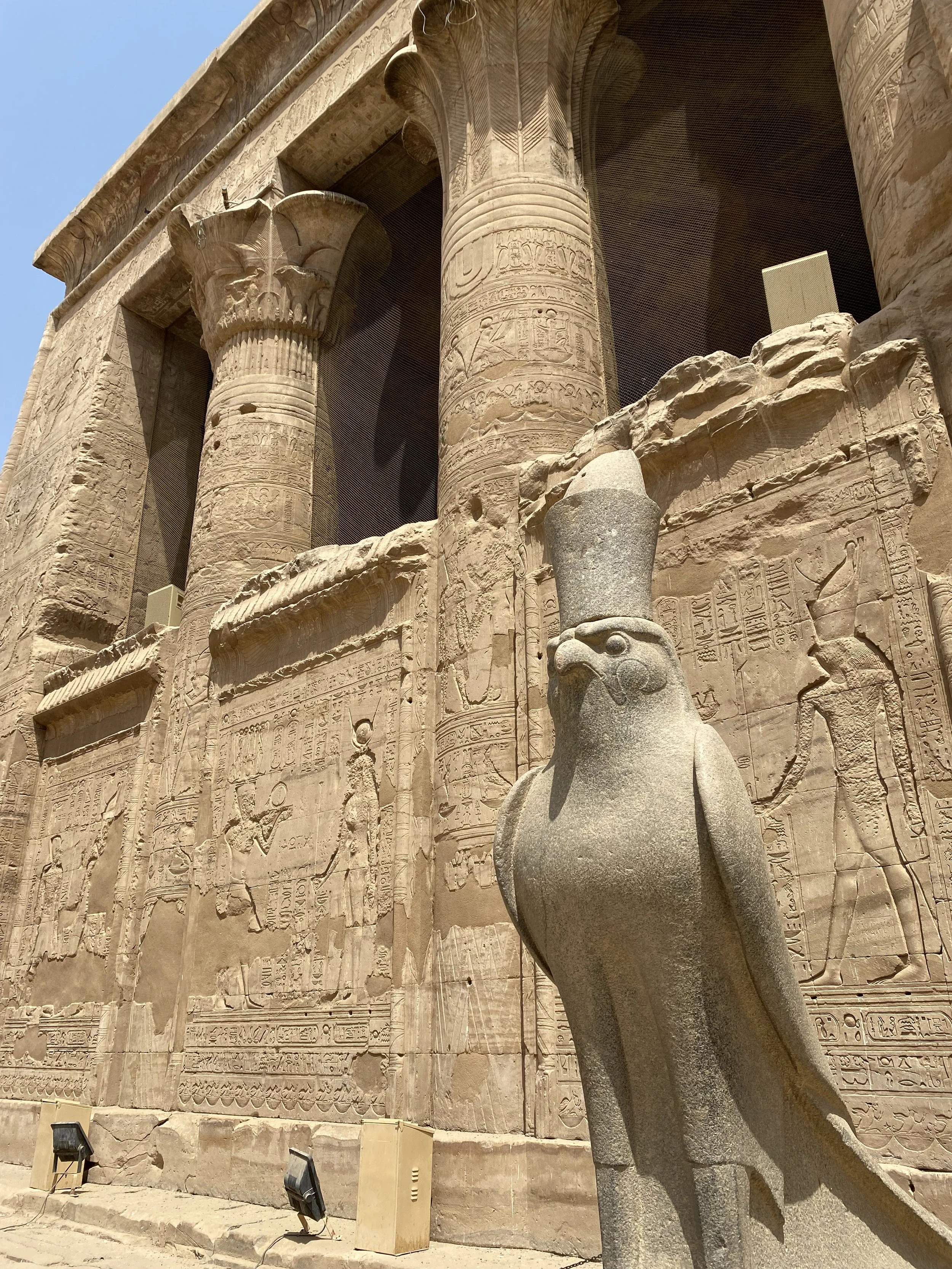
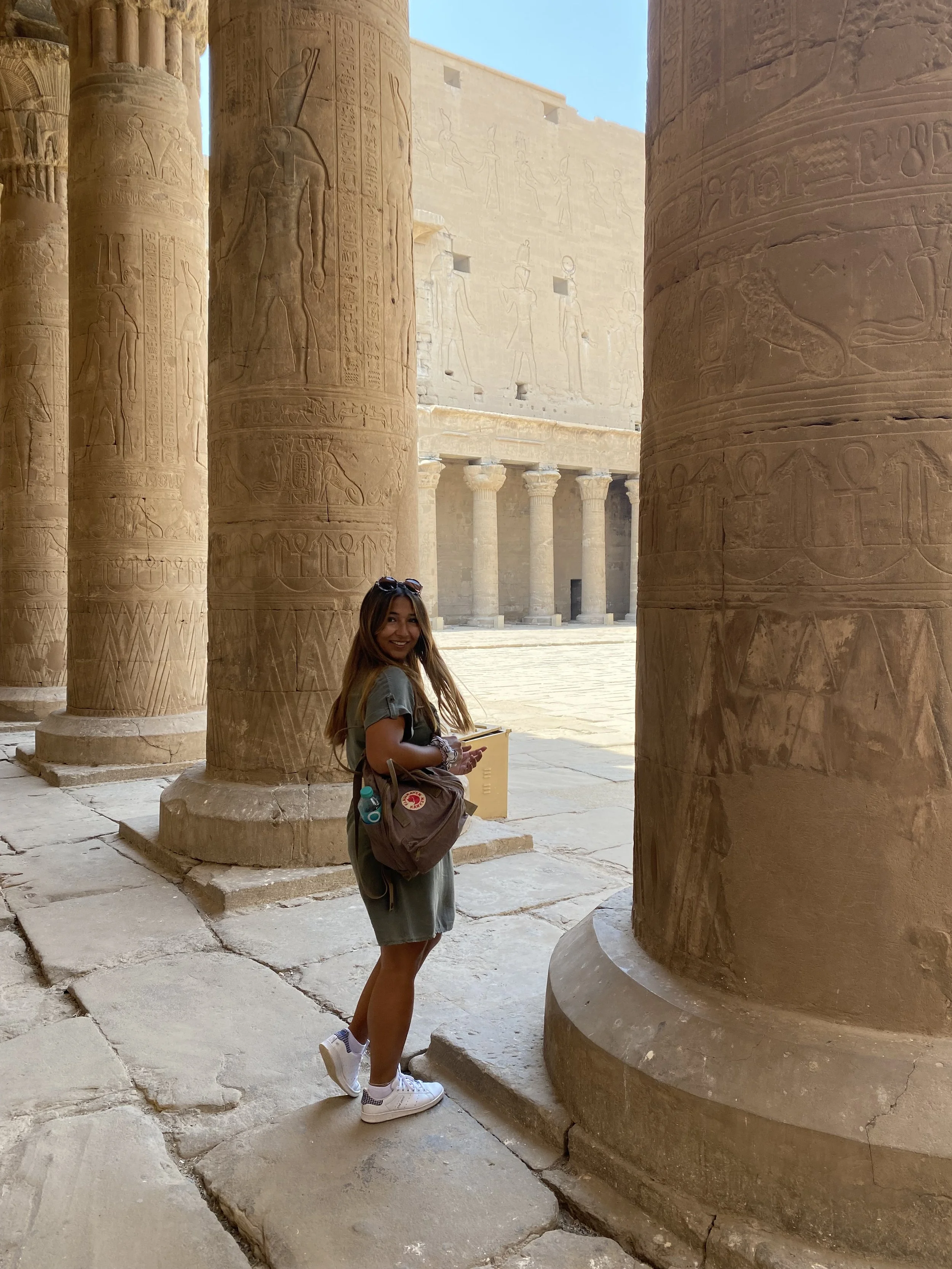
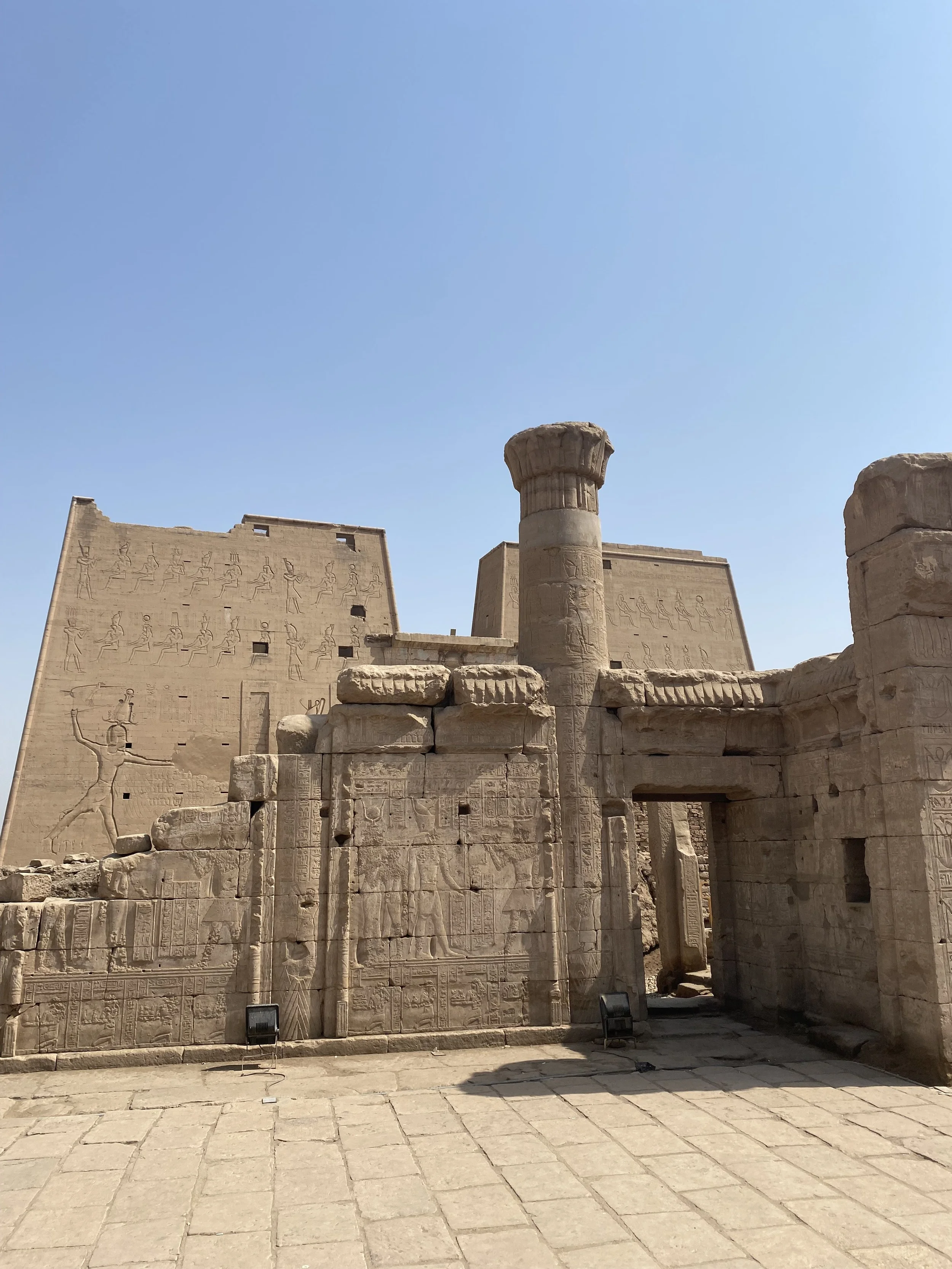
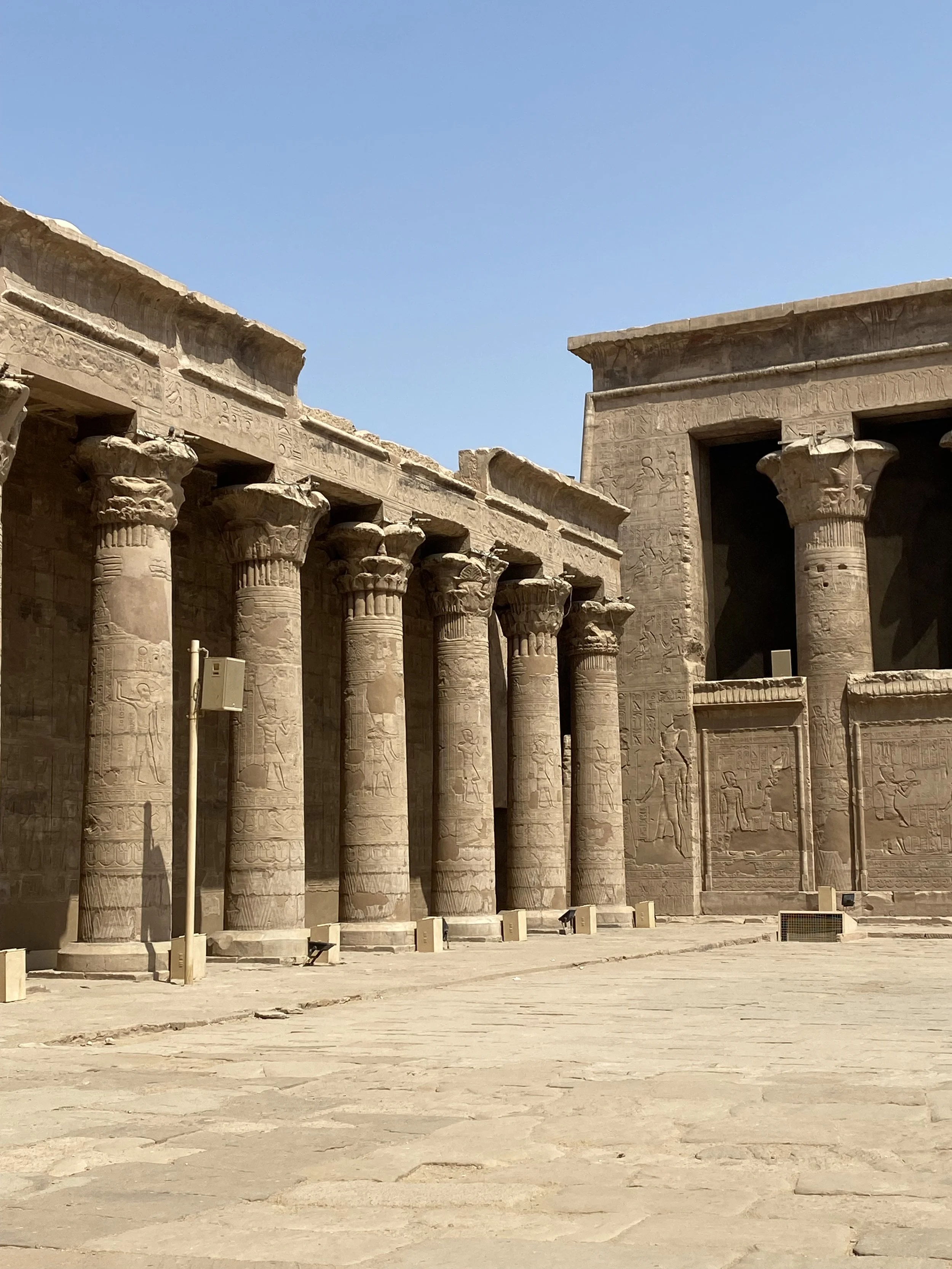
As you enter there is a monumental pylon, an open courtyard lined with porticos, a hypostyle hall, then a succession of rooms leading to the sanctuary where the divine statue was kept. The temple is enclosed by two perimeter walls:
an inner sandstone wall surrounding the heart of the temple,
an outer wall made of mudbrick, wider and integrating annex buildings (the birth house or mammisi, the nilometer, the sacred lake, storerooms, and the priests’ quarters).
Everything leads toward the naos, the most central, darkest, and holiest space of the sanctuary.
At the entrance stands this monumental granite statue of Horus depicted as a falcon (see left), symbol of the avenger of Osiris. Behind him, King Ptolemy VIII Euergetes II is shown offering gifts to the deity.
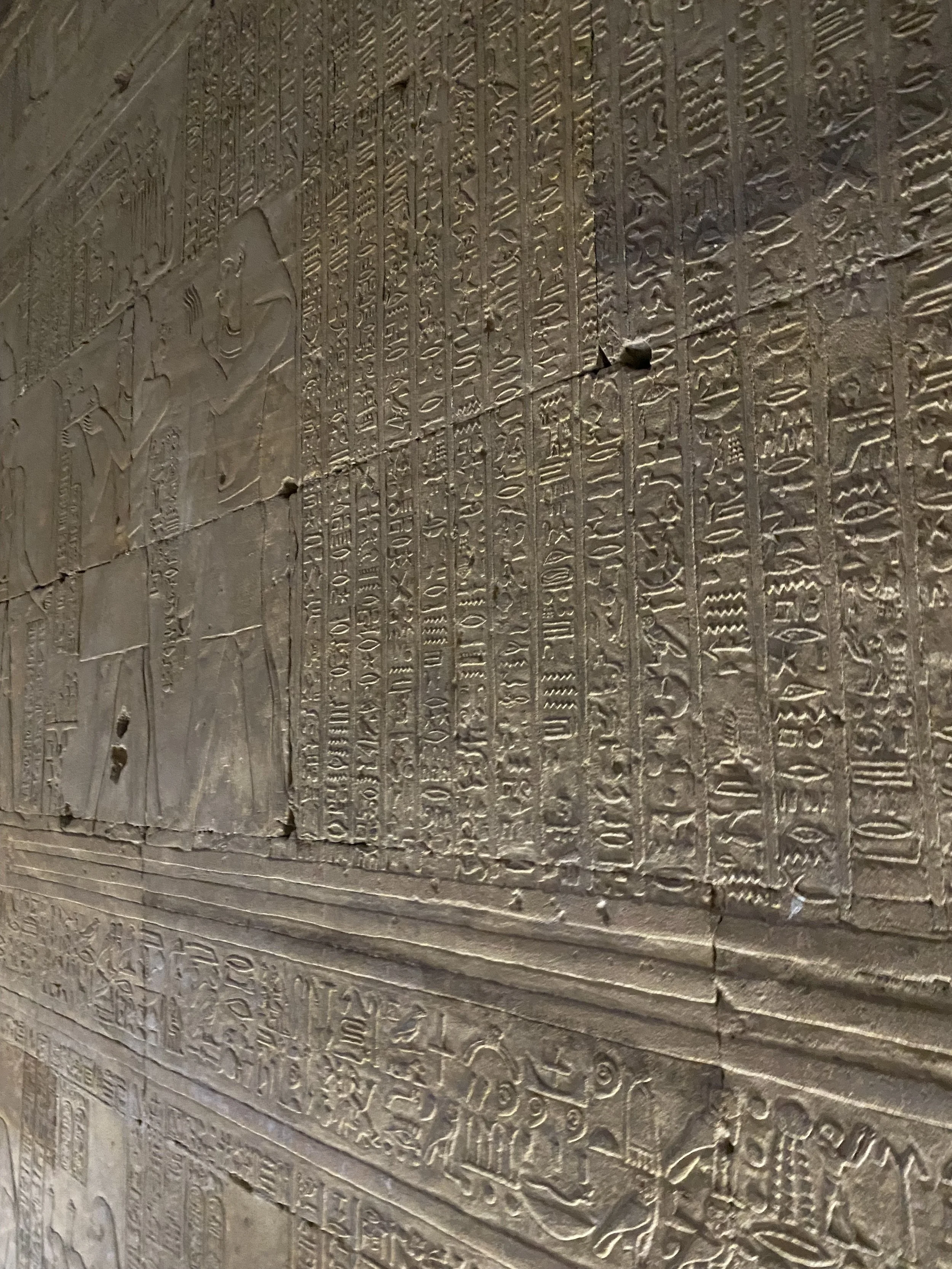
Inside, the reliefs and inscriptions follow a very strict organization. Scenes are arranged in perfectly ordered registers, framed by columns of hieroglyphic text. The figures are recognizable by their rounder silhouettes and richly decorated crowns: no longer just symbolic, but more ornamental. The themes go from royal iconography, creation myths to scenes of worship and from daily rituals to major religious ceremonies.
Step 3: Kom Ombo
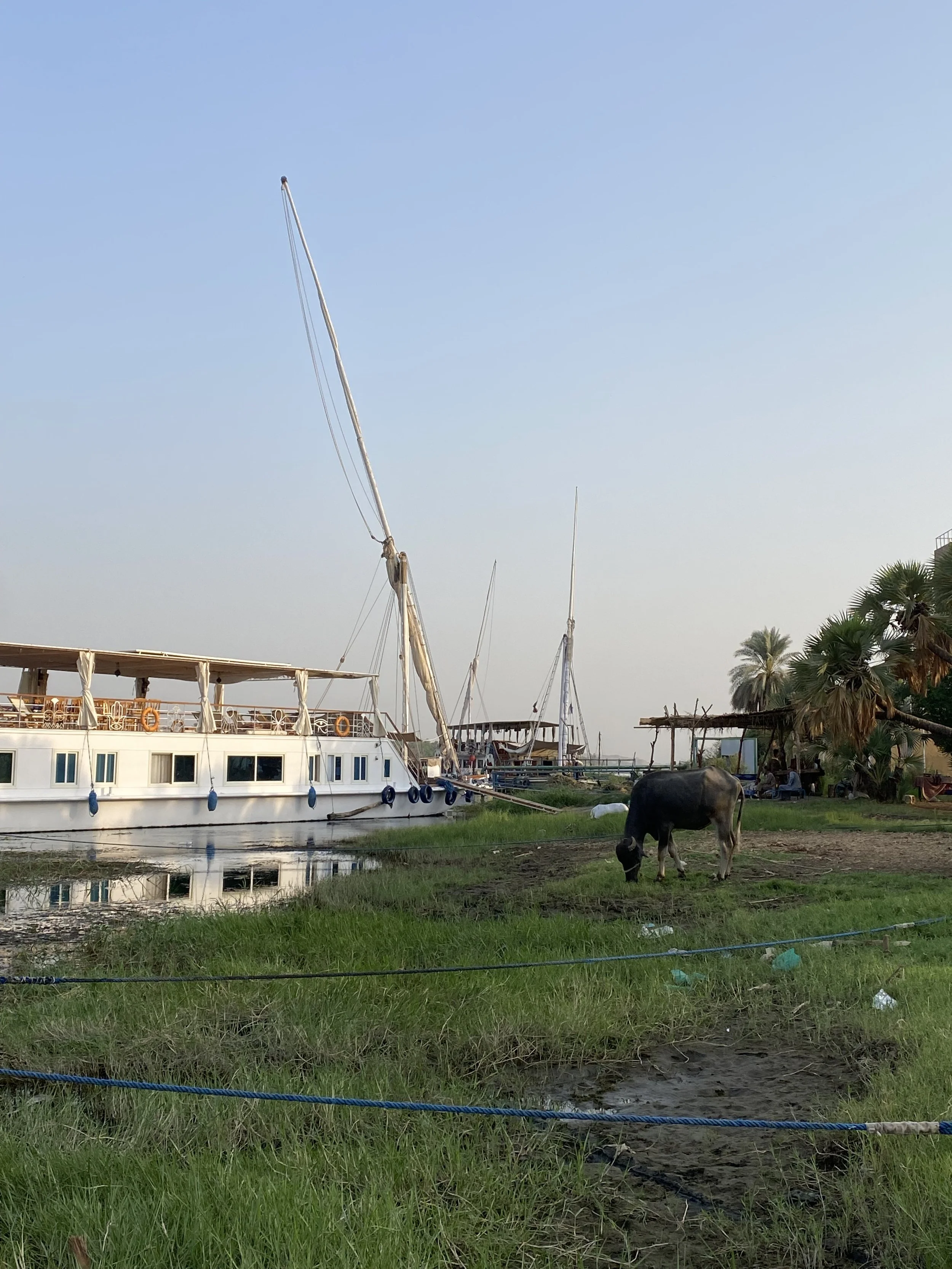
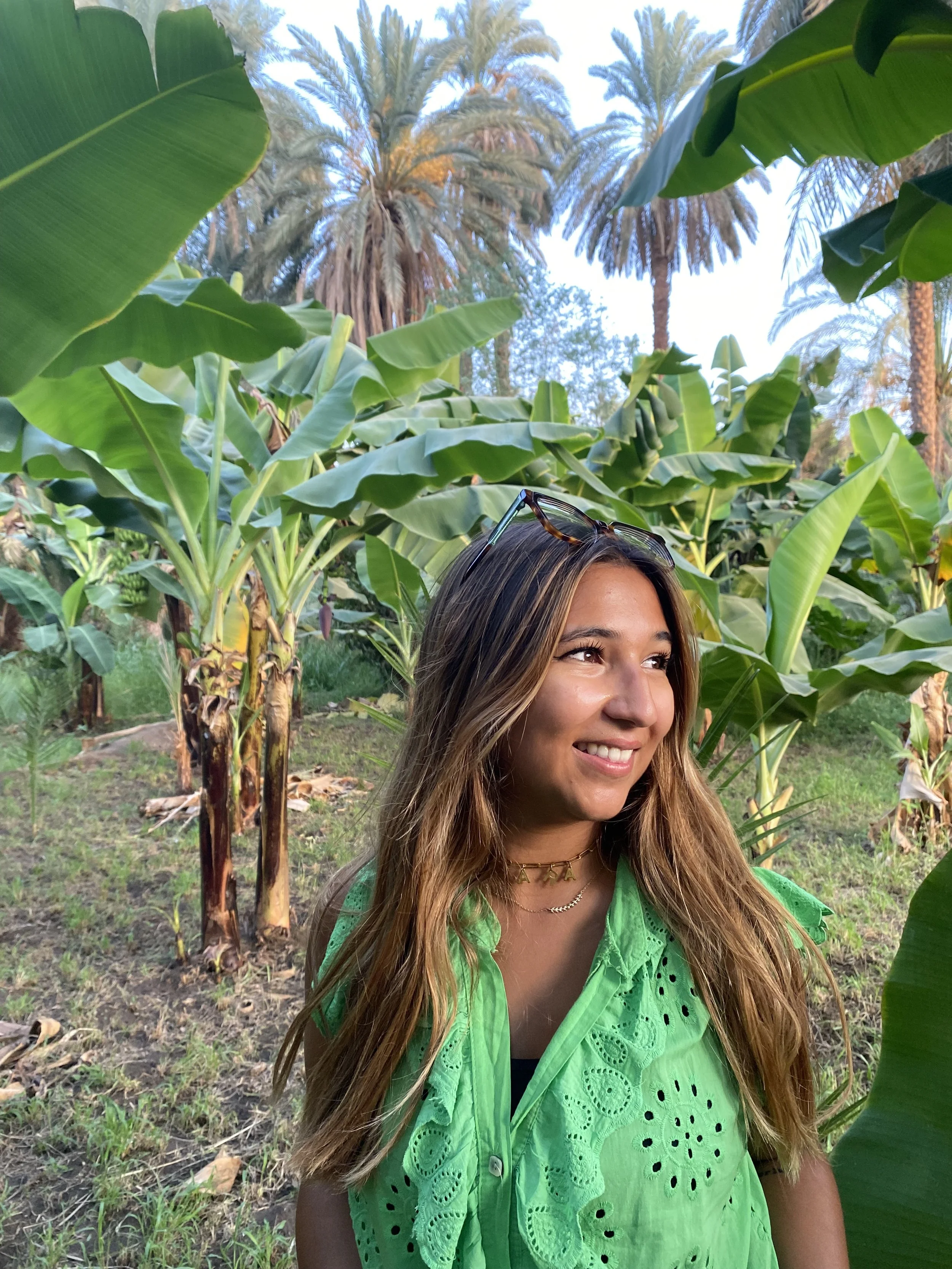
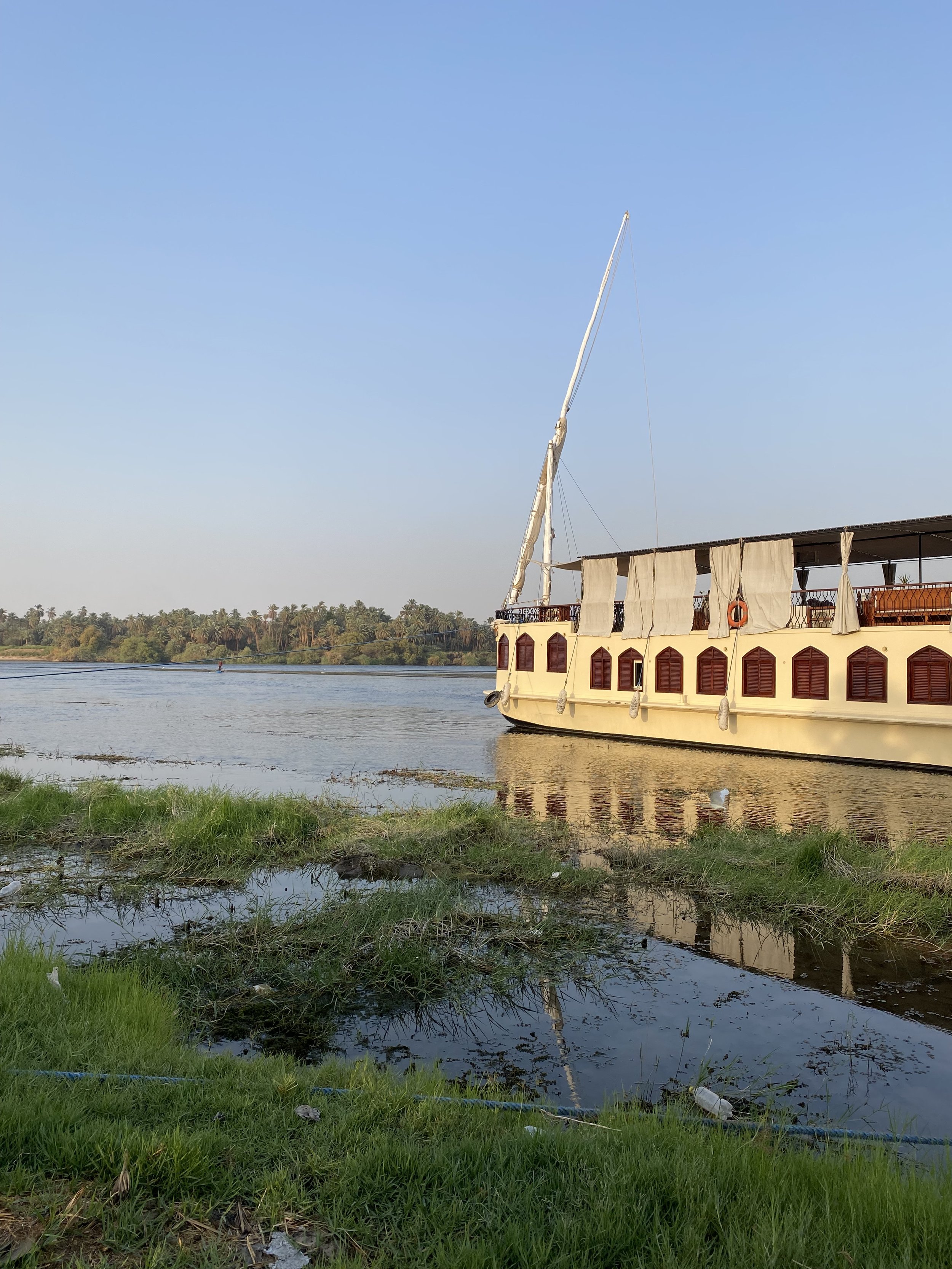
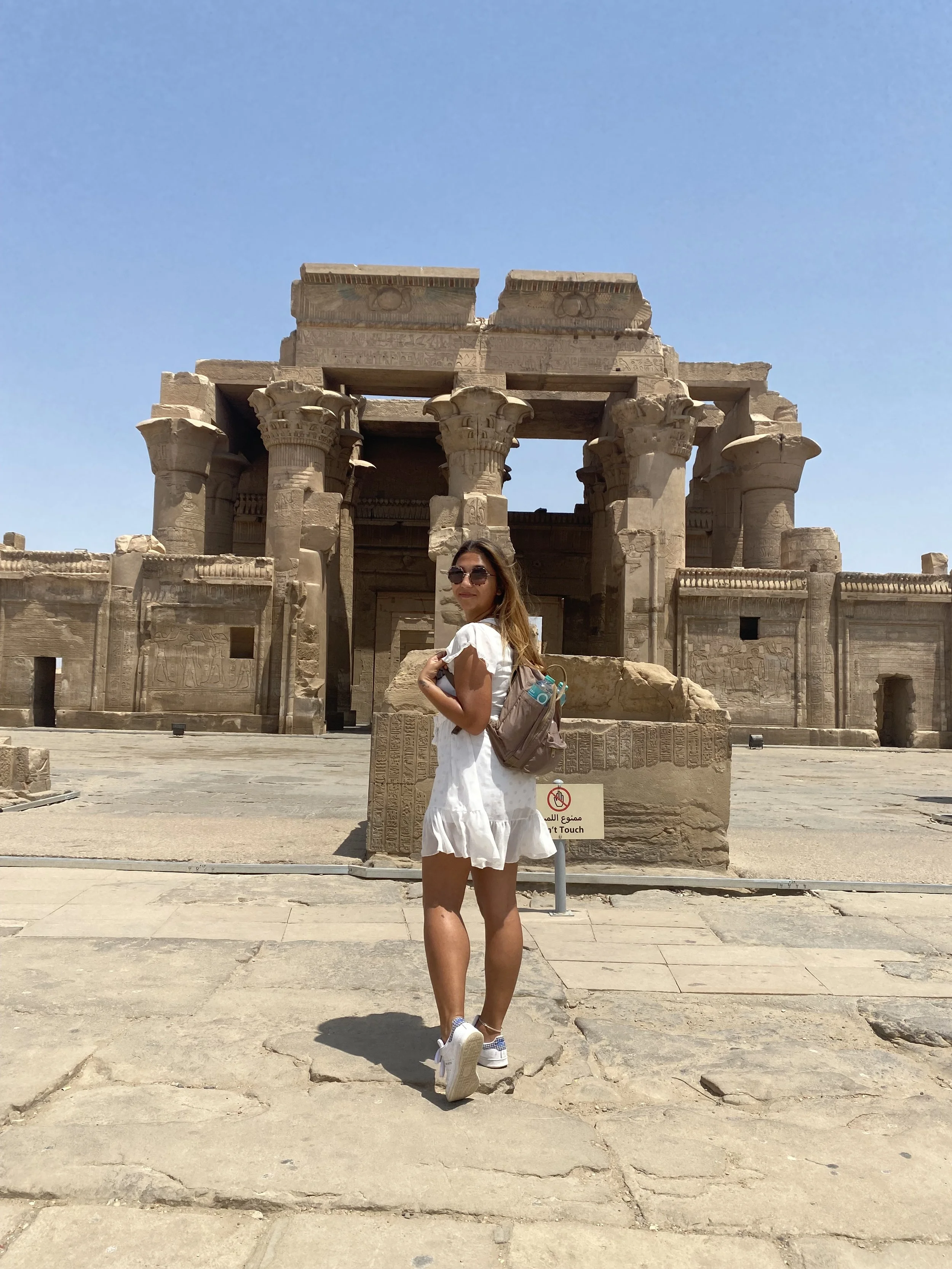
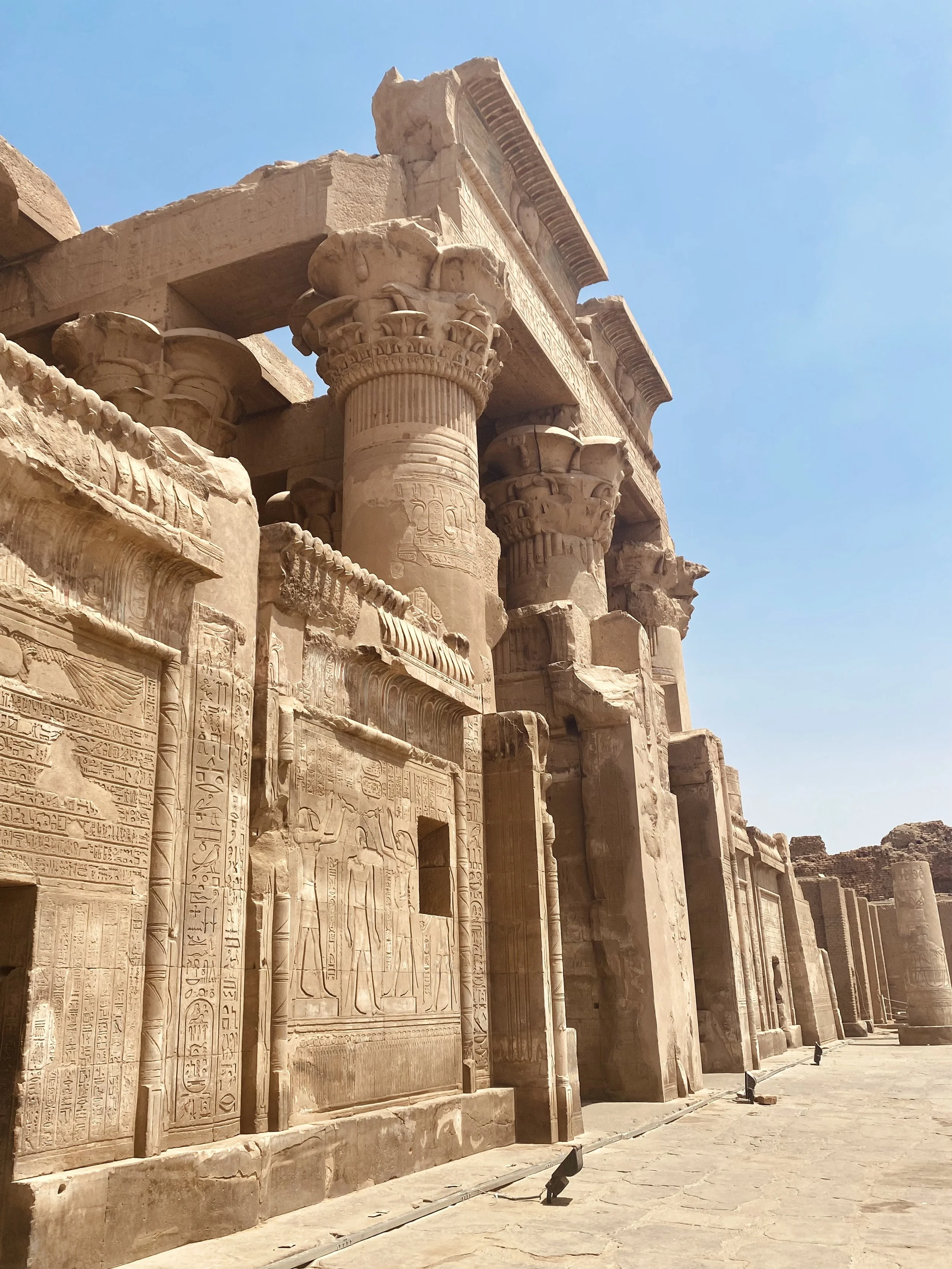
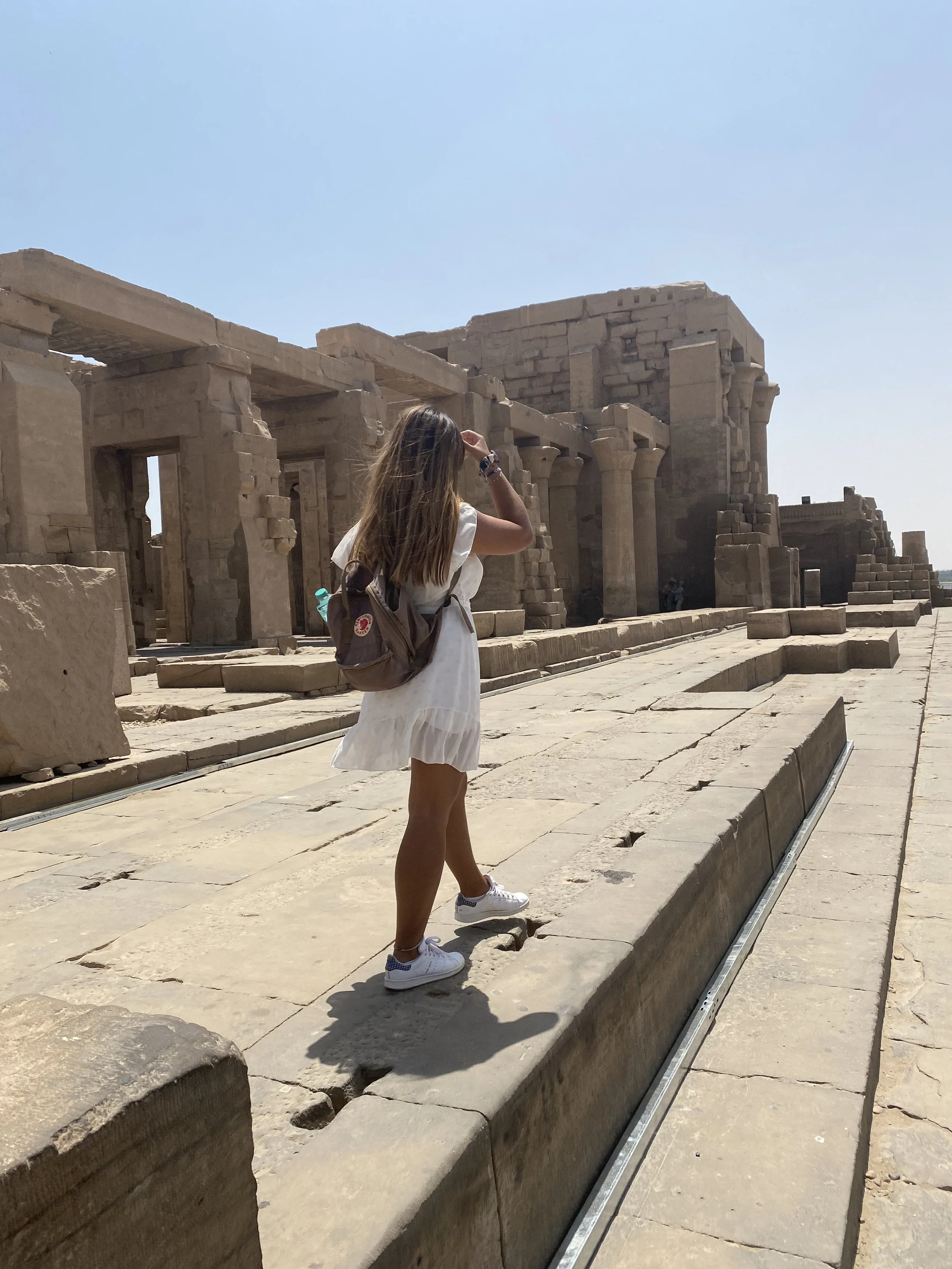
If you decide to travel on the Nile, about 45 km north of Aswan, perched on a promontory overlooking it, you’ll see one of the most unique temples in Egypt and I’d recommend stopping for the Temple of Kom Ombo. It is unique because… it is a double temple
A Ptolemaic temple built on strategic land
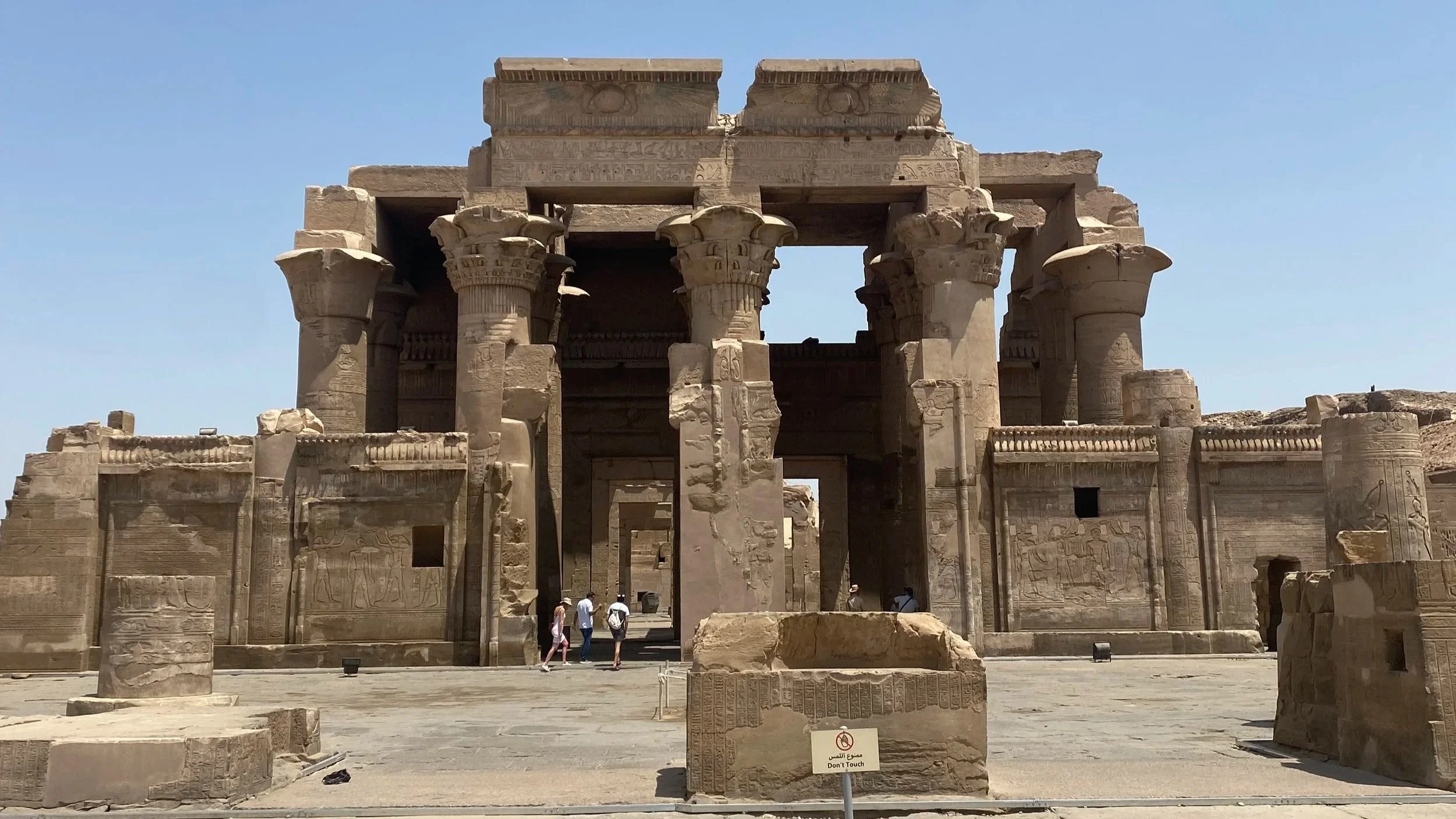
Kom Ombo rose to prominence during the Ptolemaic period (3rd–1st century BCE), when agricultural development made this area both fertile and strategically important. The Ptolemies built a large temple here, later enhanced by the Romans, who added a courtyard and decorative elements. Although traces of older structures (from before the New Kingdom) have been found, most of what we see today belongs to this later period. And that explains its excellent state of preservation.
Two Deities
The temple is dedicated to two major gods: Sobek, the crocodile god, master of the waters and symbol of fertility and Haroeris (Horus the Elder), an ancient form of the falcon god.
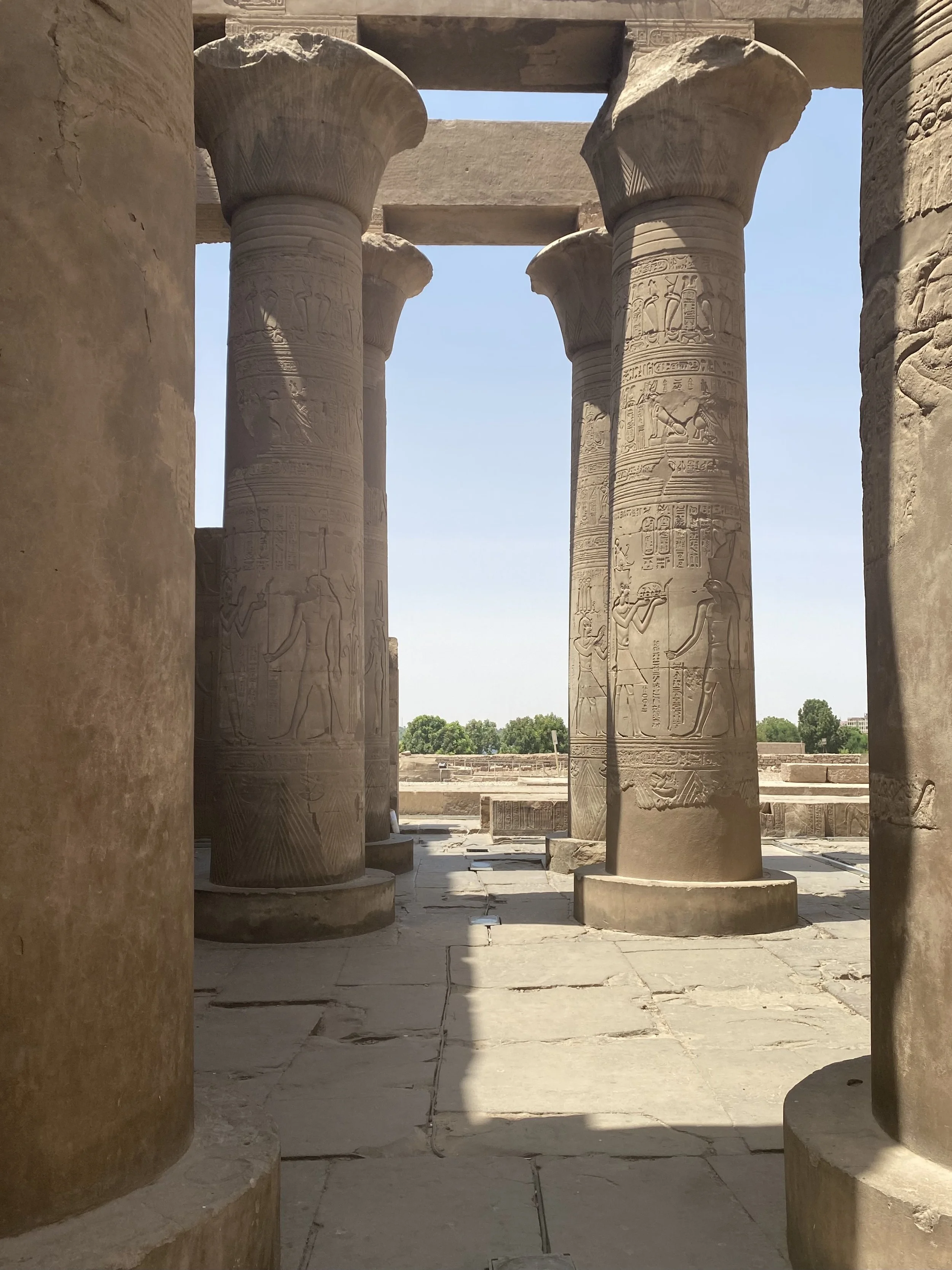
The temple’s layout mirrors this duality. Everything is doubled, from the hypostyle halls all the way to the final sanctuaries. But Kom Ombo is also famous for several unique reliefs:
On an external corridor wall, a scene depicts medical instruments like scalpels, forceps, probes. As our guide told us, many researchers interpret this as evidence of early surgical or medical practices in ancient Egypt.
Another relief representing Haroeris features the god’s eye carved in such a way that it captures natural light to make the relief appear more lifelike, which is a really sophisticated technique.
Near the temple, a small Roman-era building has been turned into the Crocodile Mummy Museum. Sacred crocodiles, considered living manifestations of Sobek, were found there extraordinarily well preserved. Yes you read quite right: mummified crocodiles (see my photo below).
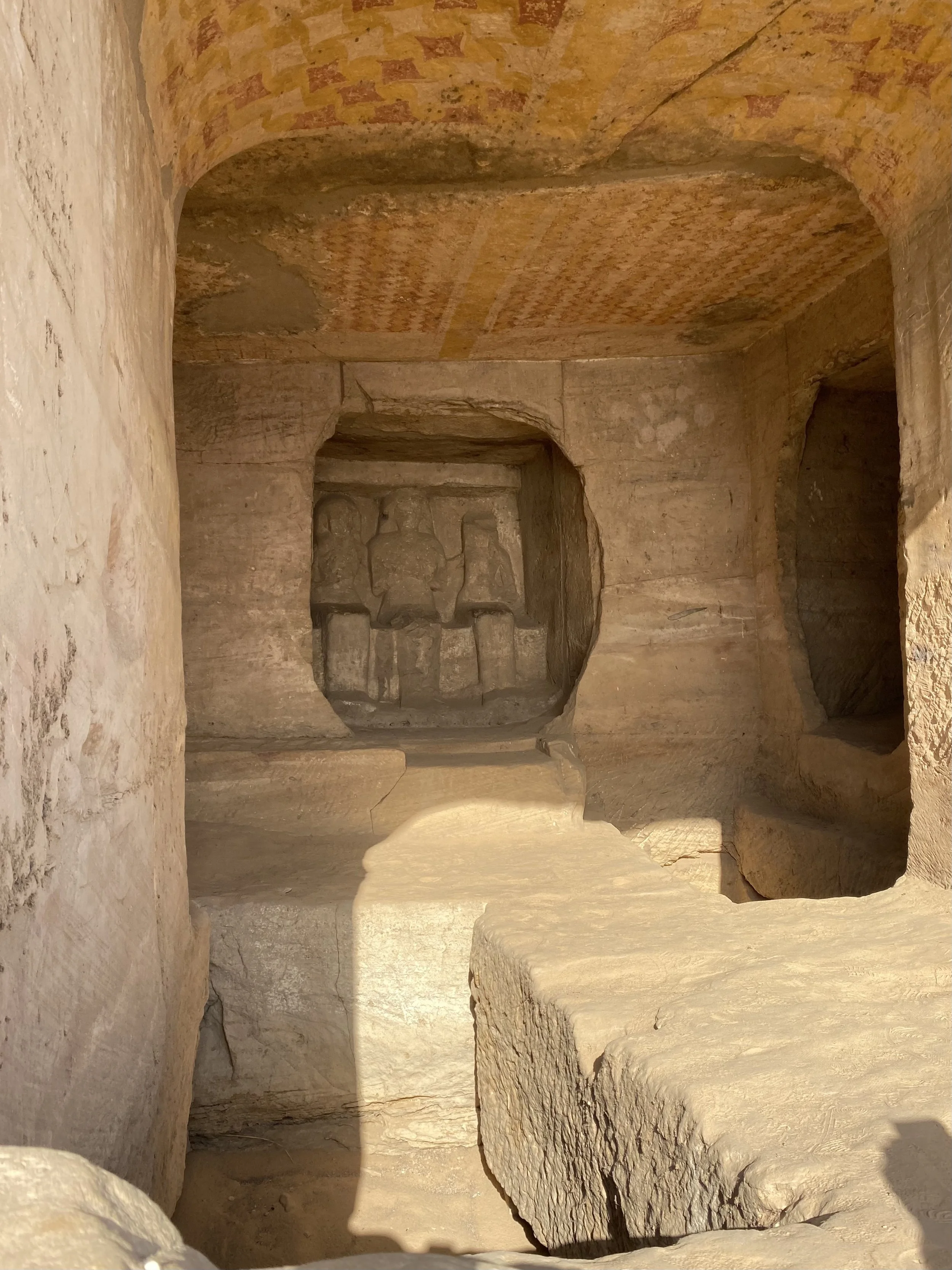
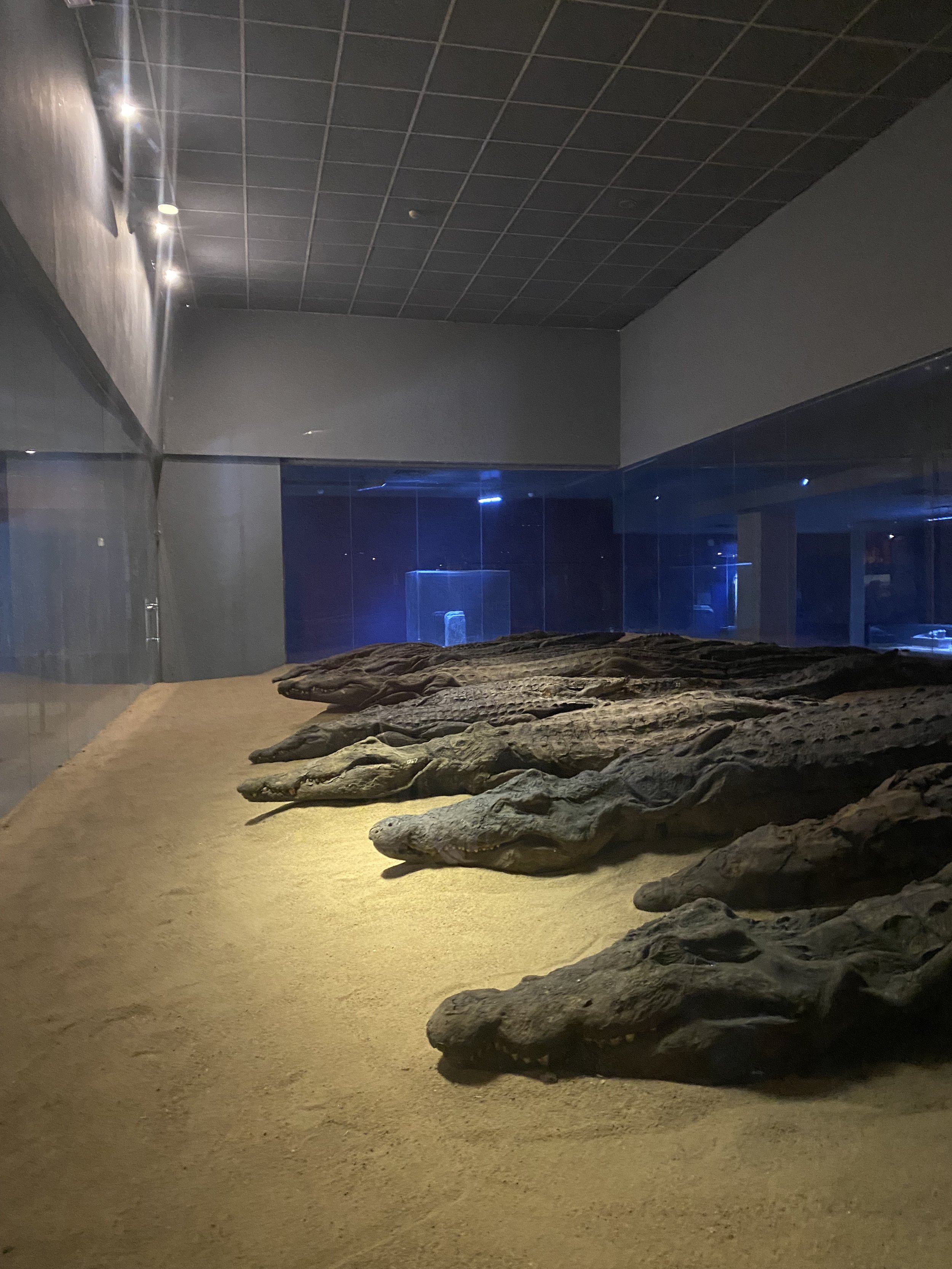
“The ancient Egyptians believed that the gods sent physical manifestations of themselves to earth in the form of their totemic animals. Thus, at Sobek temples a live crocodile, recognisable by specific markings, was thought to contain a spark of the god within, and was worshipped and cared for by the priests during its lifetime. After its death, the spirit of the god would move to another crocodile’s body, while the dead crocodile would be mummified and ceremoniously buried in a special cemetery. Pilgrims who came to pray to Sobek would also give votive offerings in the form of small mummified crocodiles, stelae, or statues to the god; these too would be buried in cemeteries, such as that of el-Shatb.”
Step 4: Aswan, the Gateway to Nubia
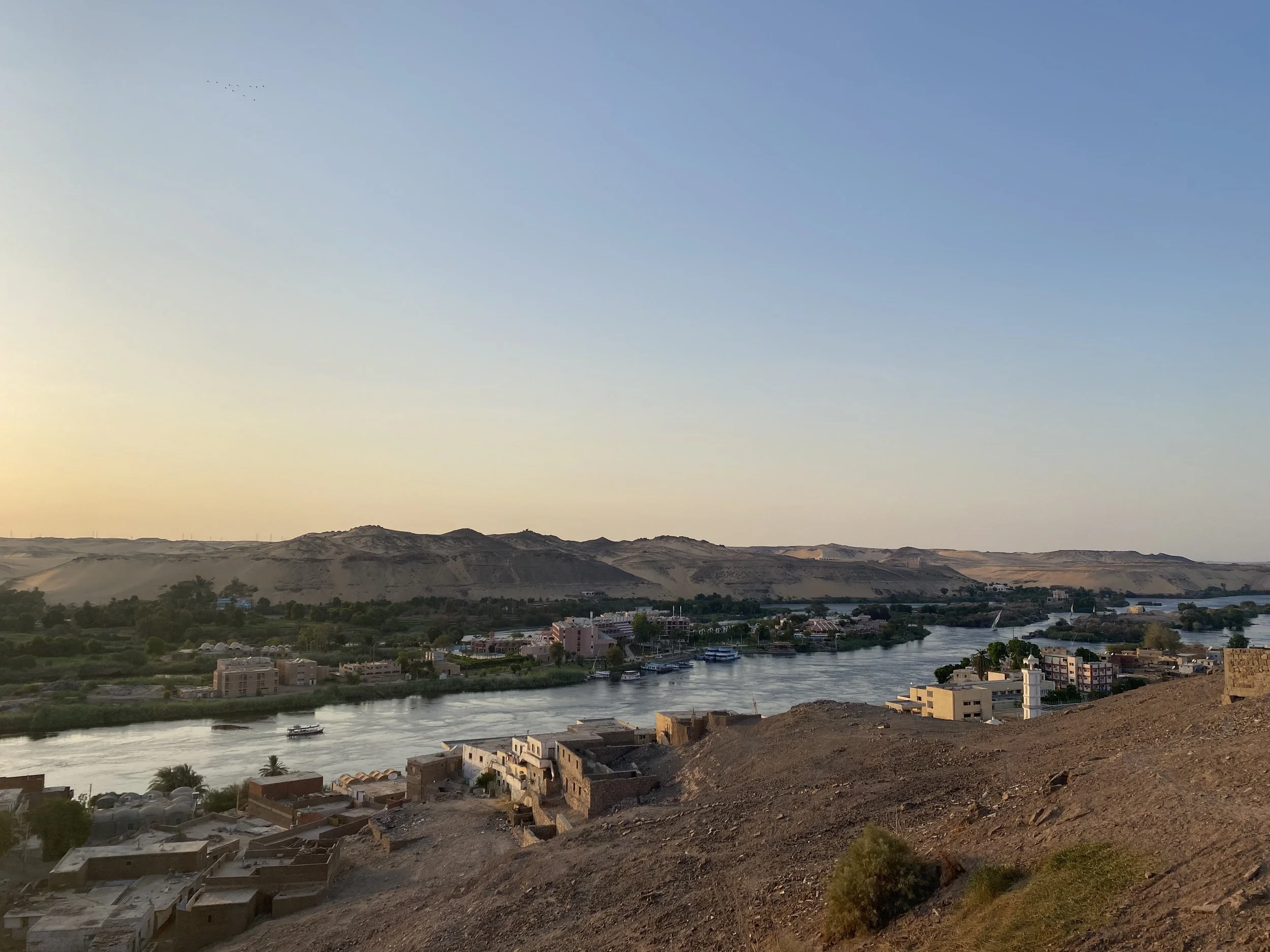
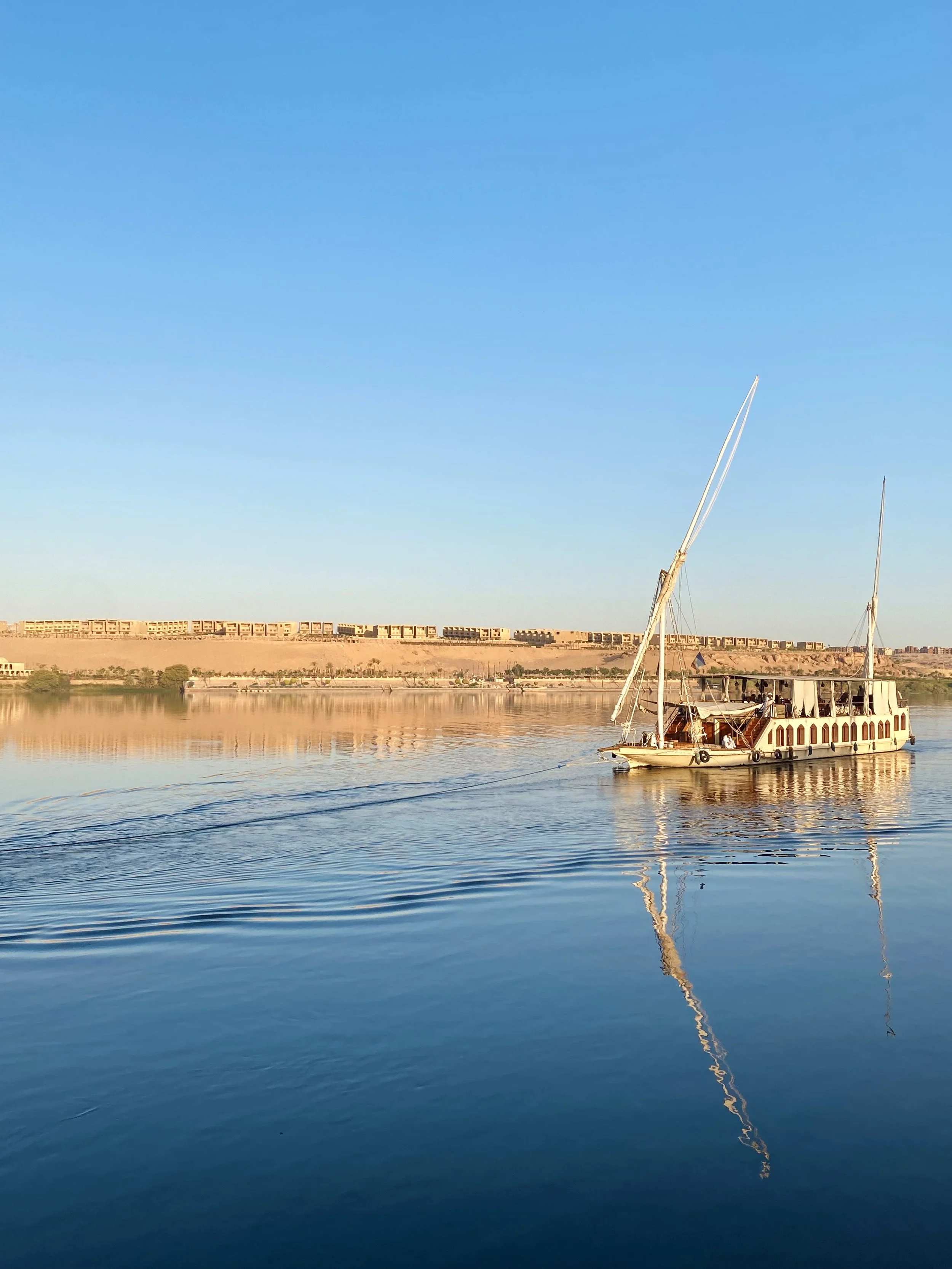
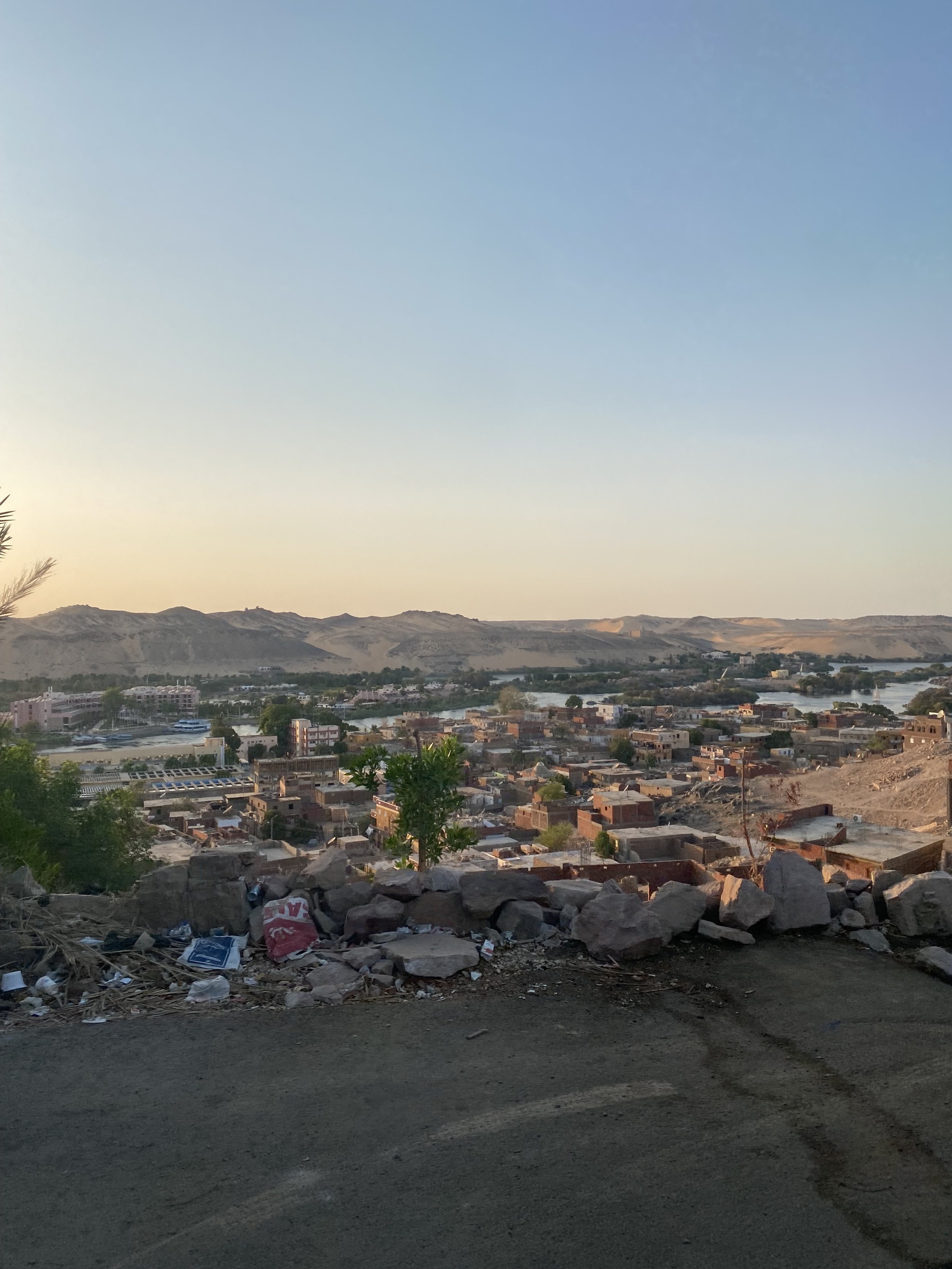
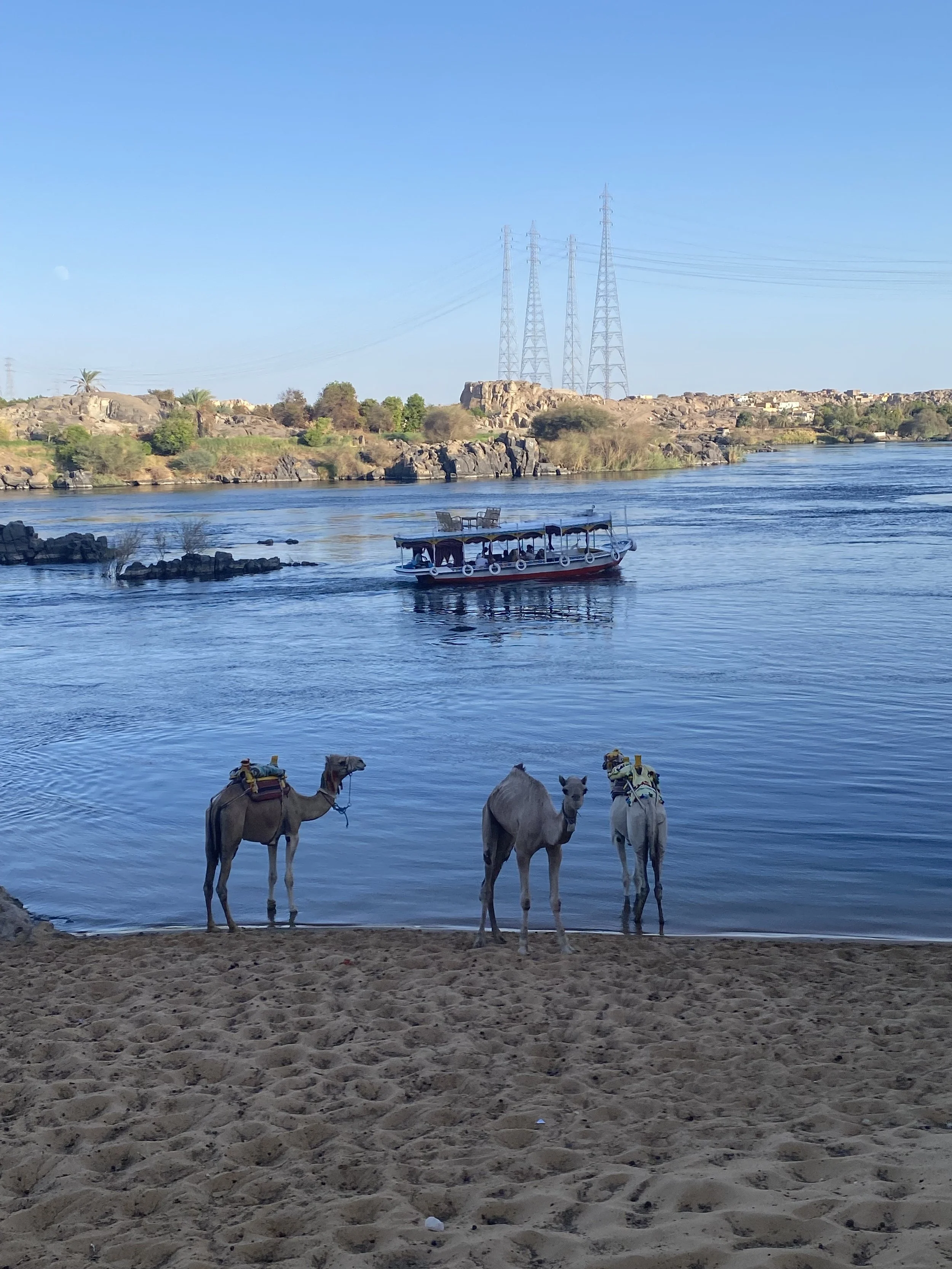
We then stopped at Aswan, which marks the southern edge of ancient Egypt. Here, the Nile is no longer the calm, wide river seen farther north. In antiquity, a natural barrier known as the First Cataract formed a zone of rapids. Beyond this point began Nubia stretching all the way to Khartoum (today’s Sudan).
The city served as a military post, a commercial hub, and a meeting point between two cultures that alternately fought, traded, and influenced one another. Aswan was also the capital of Egyptian granite known for its quarries and the massive blocks used for statues, obelisks, and temples throughout the country.
The unfinished Obelisk
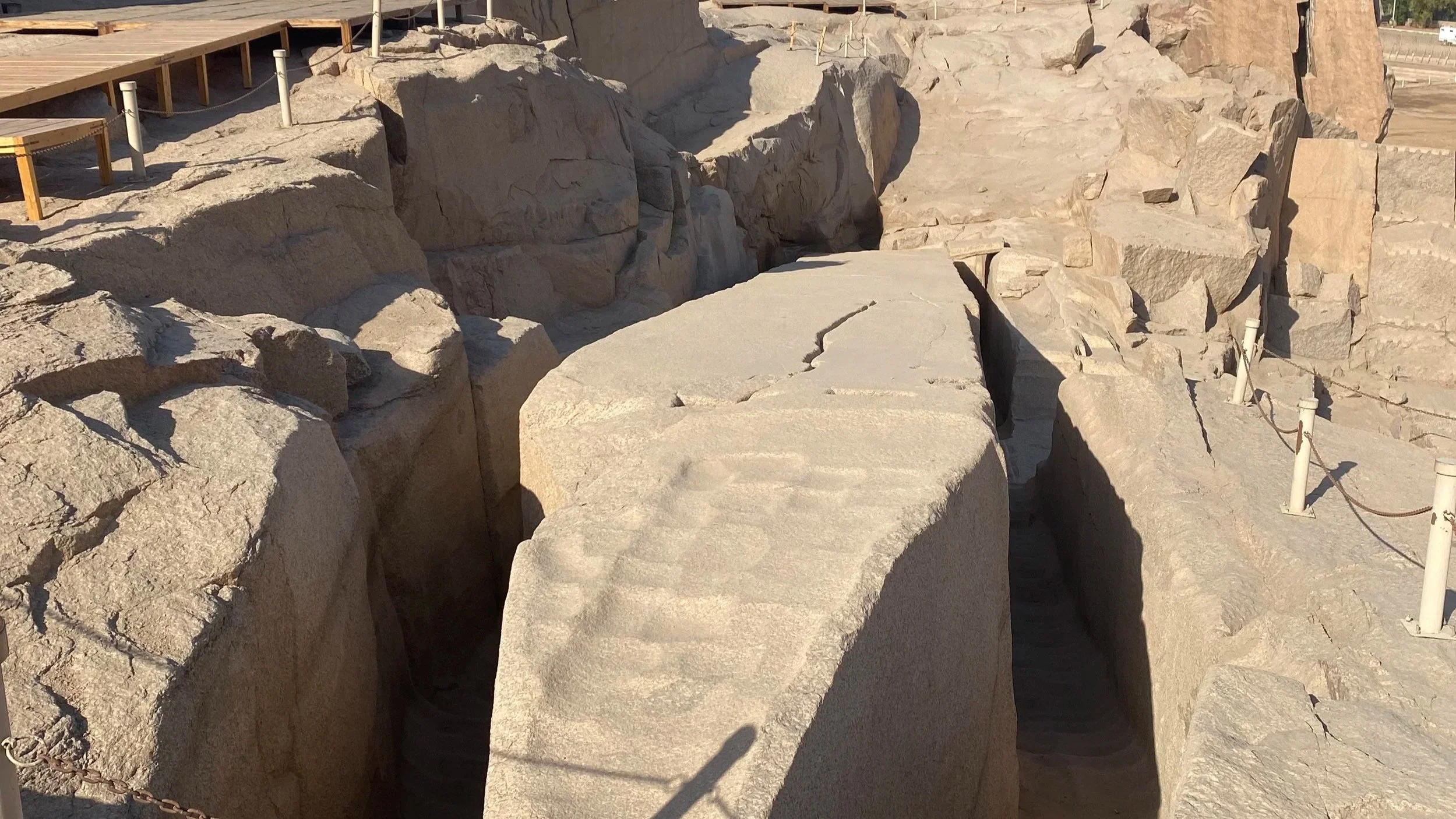
That was on my list of the to-do things in Aswan : near the old Fatimid cemetery is one of the most important pink granite quarries of the ancient world and there, still attached to the bedrock, lies the Unfinished Obelisk.
It is 42 meters long, carved from a single block of granite and intended to be the largest obelisk ever erected but a crack discovered during carving doomed the project. If you go there, you can still see the marks of the tools on the rock.
Aswan Souk
At sunset, our guide suggested diving into the energy of the souk. You’ll find spices, hibiscus tea and Nubian herbs and perfumes. I brought home some safran and hibiscus tea and as Mohammed (our guide) told us this is where locals “shop and chat”.
The High Dam and Lake Nasser
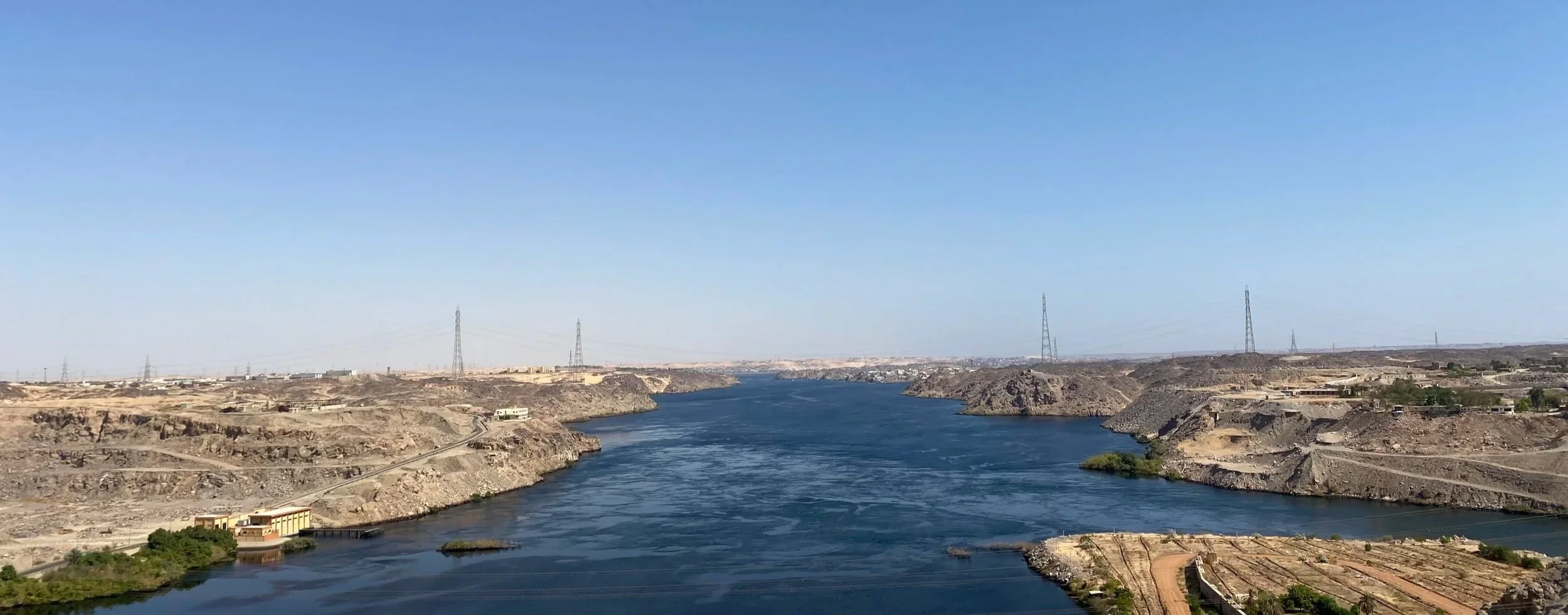
Built in the 20th century, the High Dam is a reaaaally ambitious hydraulic project, one of the most ambitious of the world. It can retain up to 169 billion m³ of water and put an end to the Nile’s annual flooding. Before the dam, the river overflowed every summer, depositing fertile silt on the fields. It created what is today known of Lake Nasser
It also had a considerable impact on heritage… leading to one of the greatest rescue operations in archaeological history…which is…
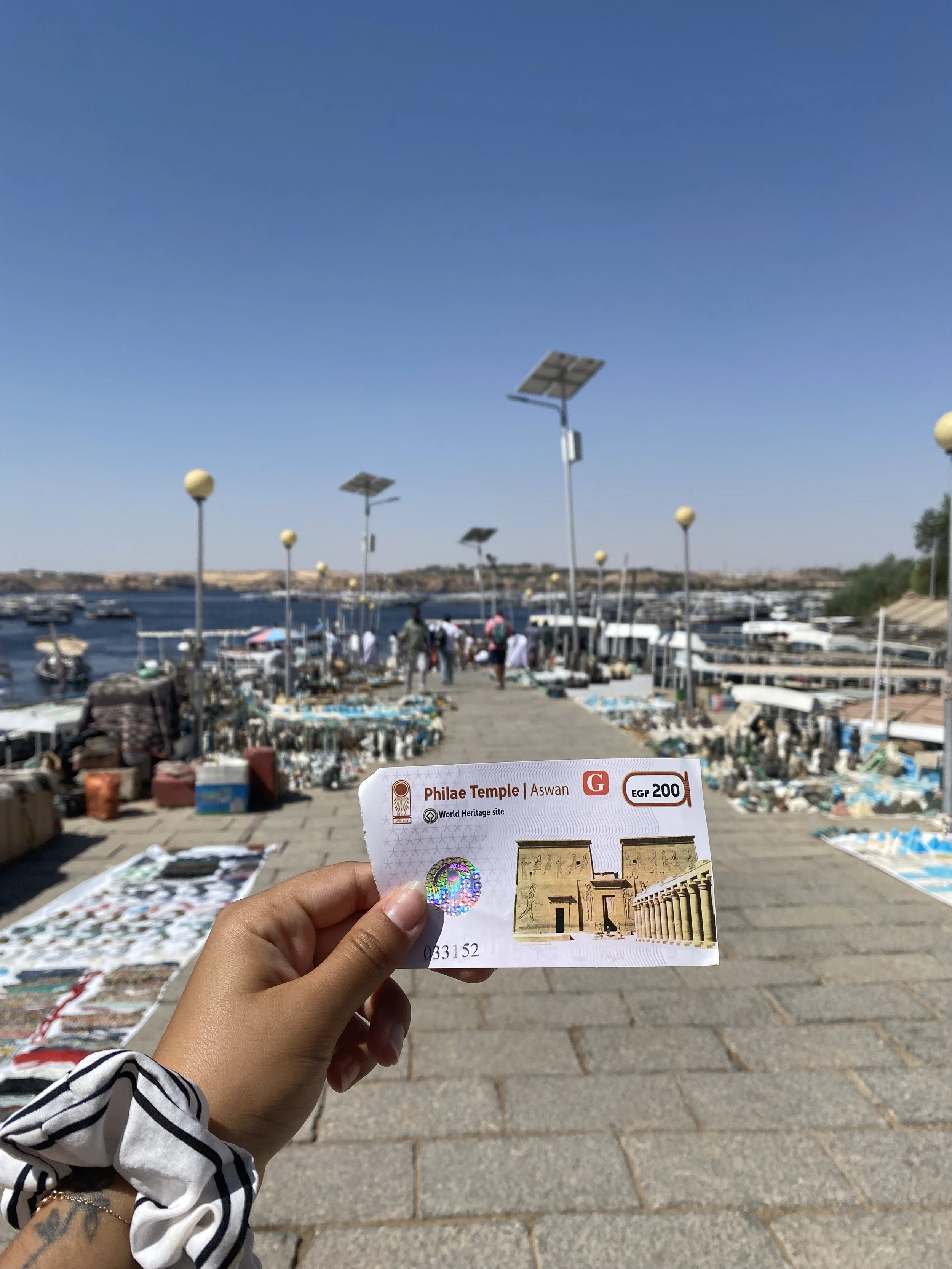
The Philae Temple
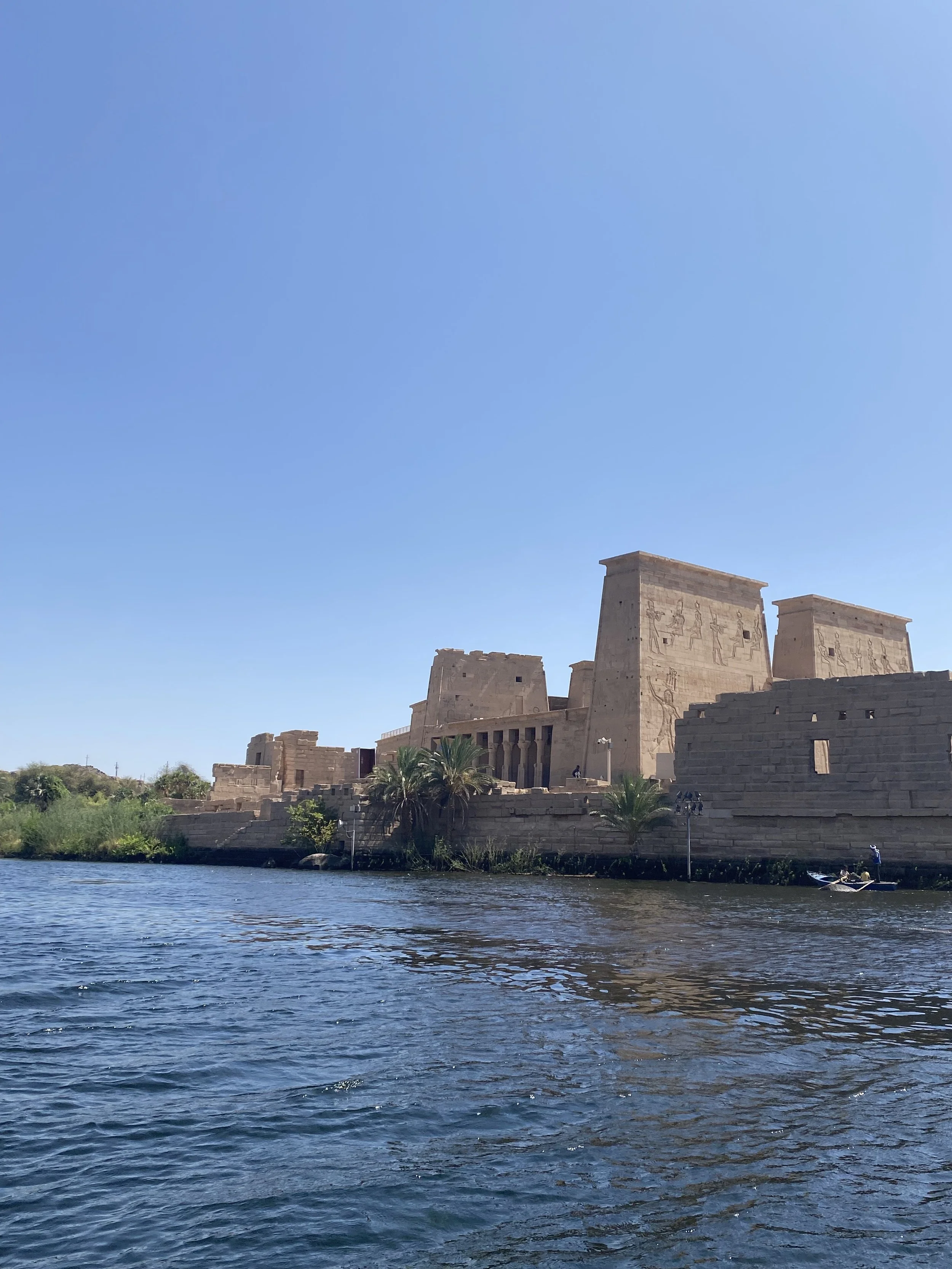
Philae was literally saved from the rising waters. When the dam was built, rising water gradually submerged the previous island where the Temple of Isis stood. Between 1972 and 1980, in a massive international effort, the temple was dismantled block by block and rebuilt on the neighboring island of Agilkia.
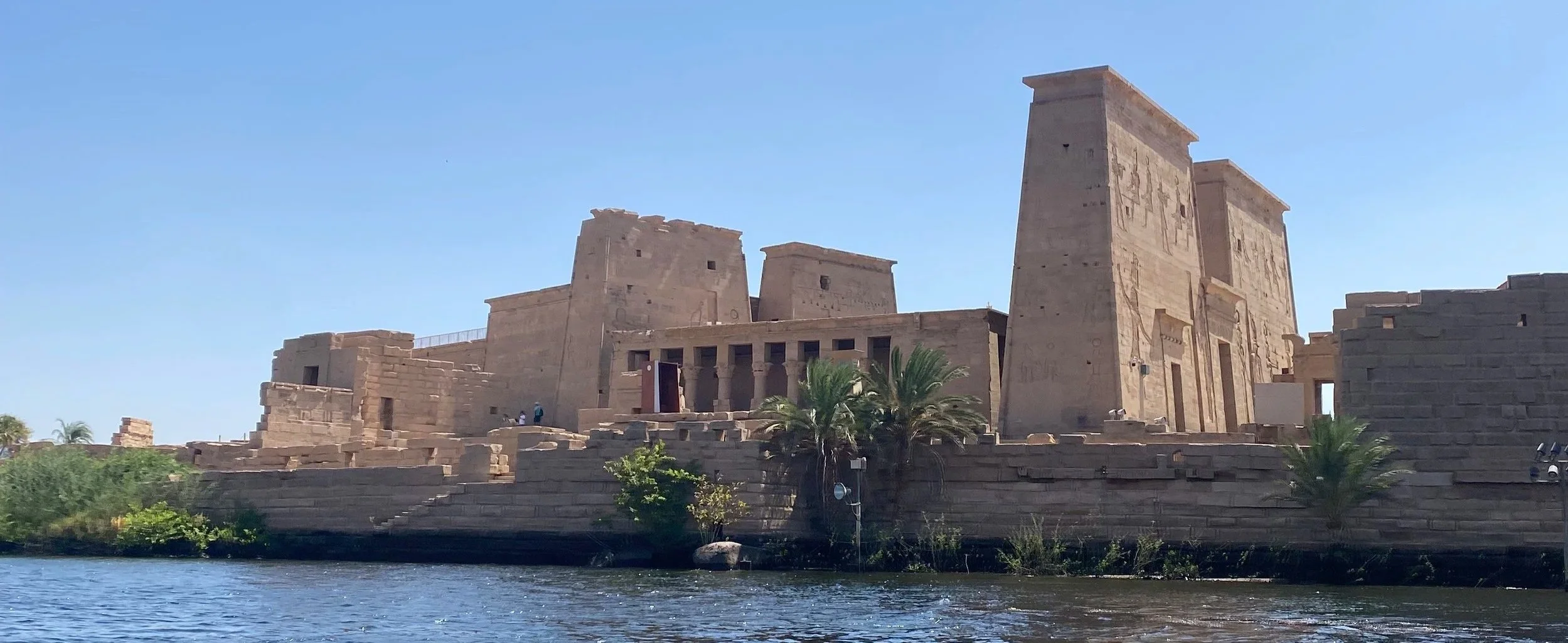
What not to miss on Philae Island
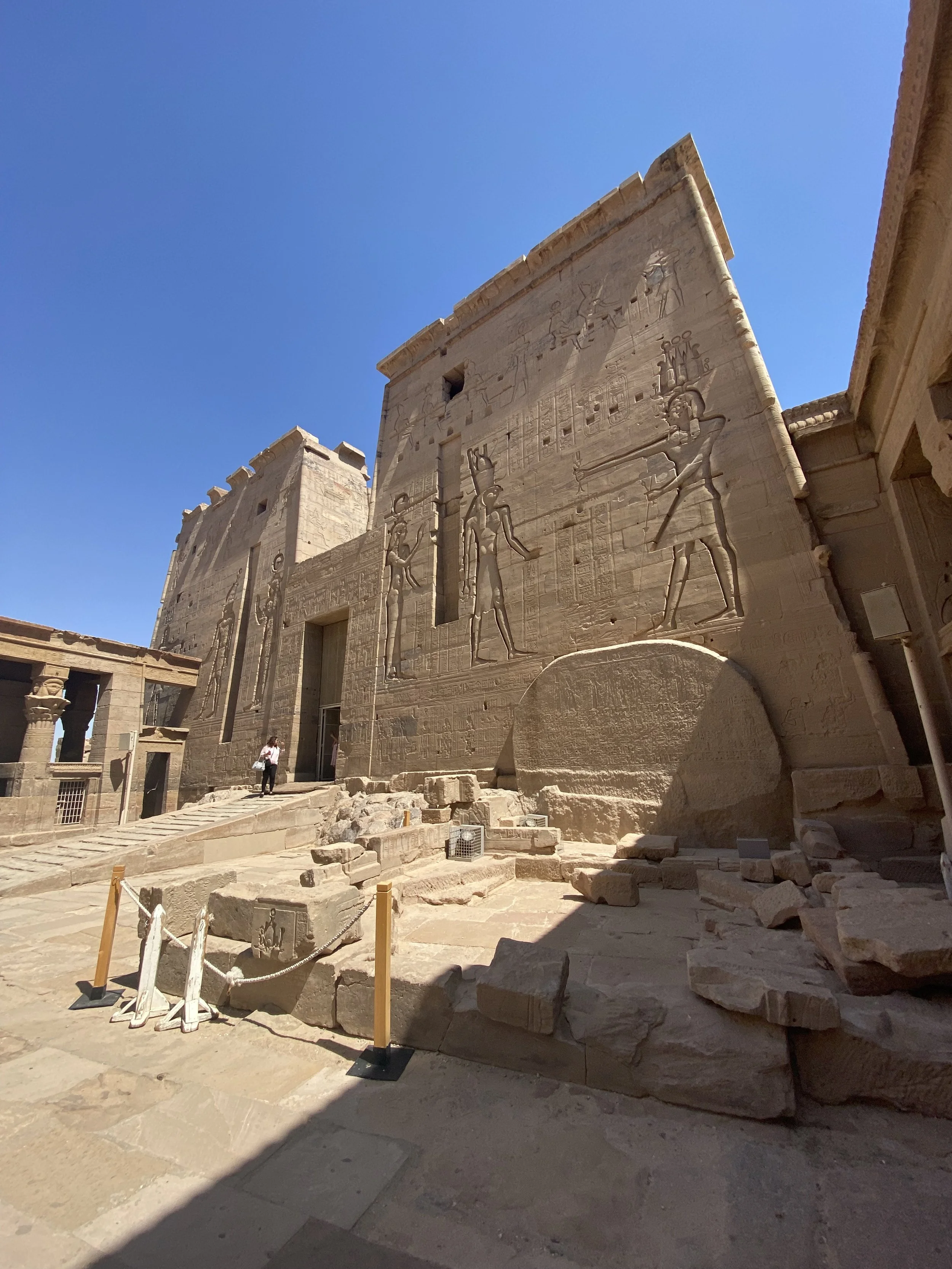
The temple of Isis
According to ancient belief, this was a place where the boundary between the human world and the divine became thin. Every ten days, the statue of Isis was carried in procession across the river to the island of Biggeh (considered the tomb of Osiris) to symbolically reunite the goddess with her beloved.
Over the centuries, Egyptians, Greeks, Romans, and Nubians all left their mark here, creating a blend of artistic and spiritual influences.
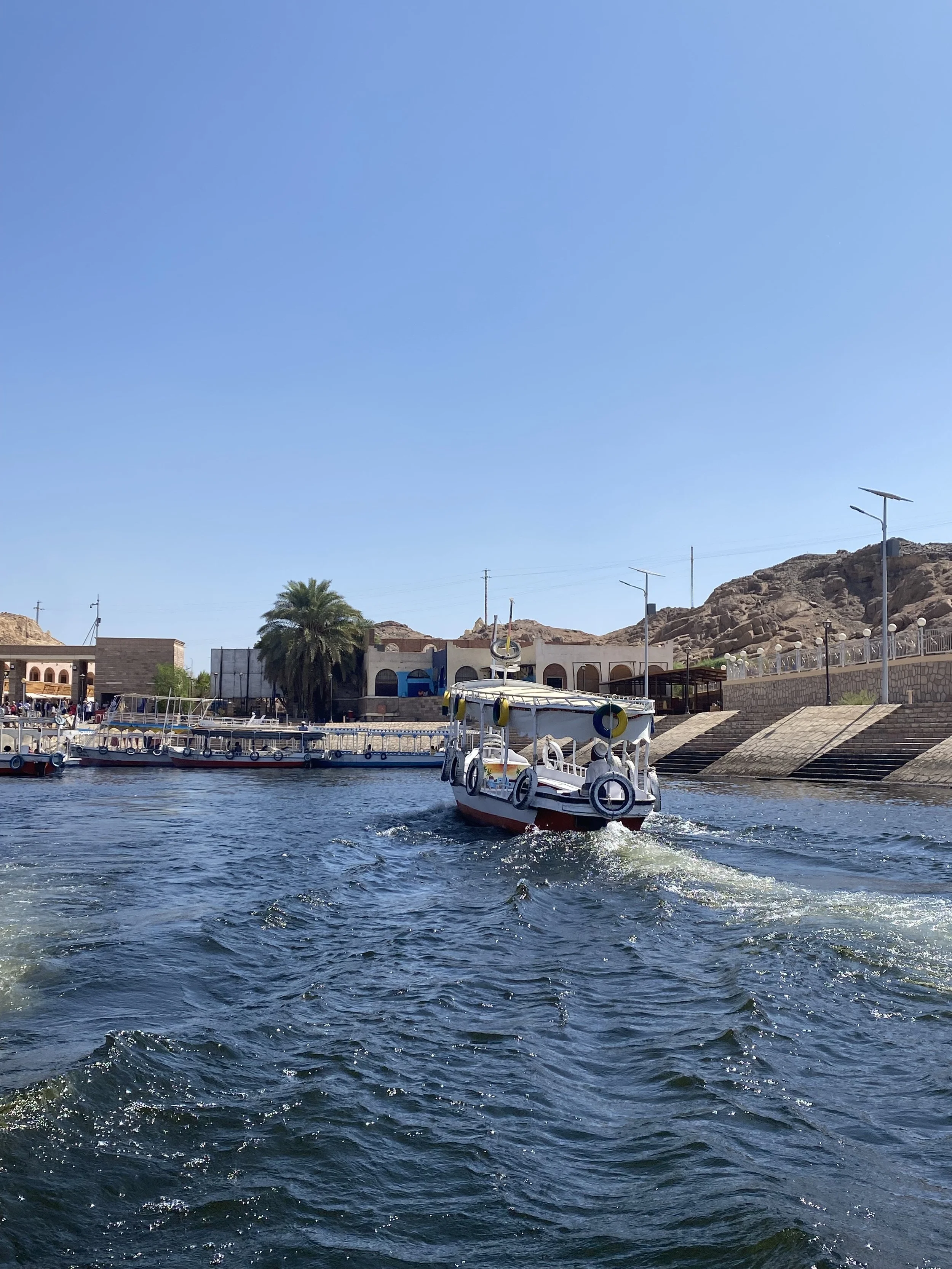
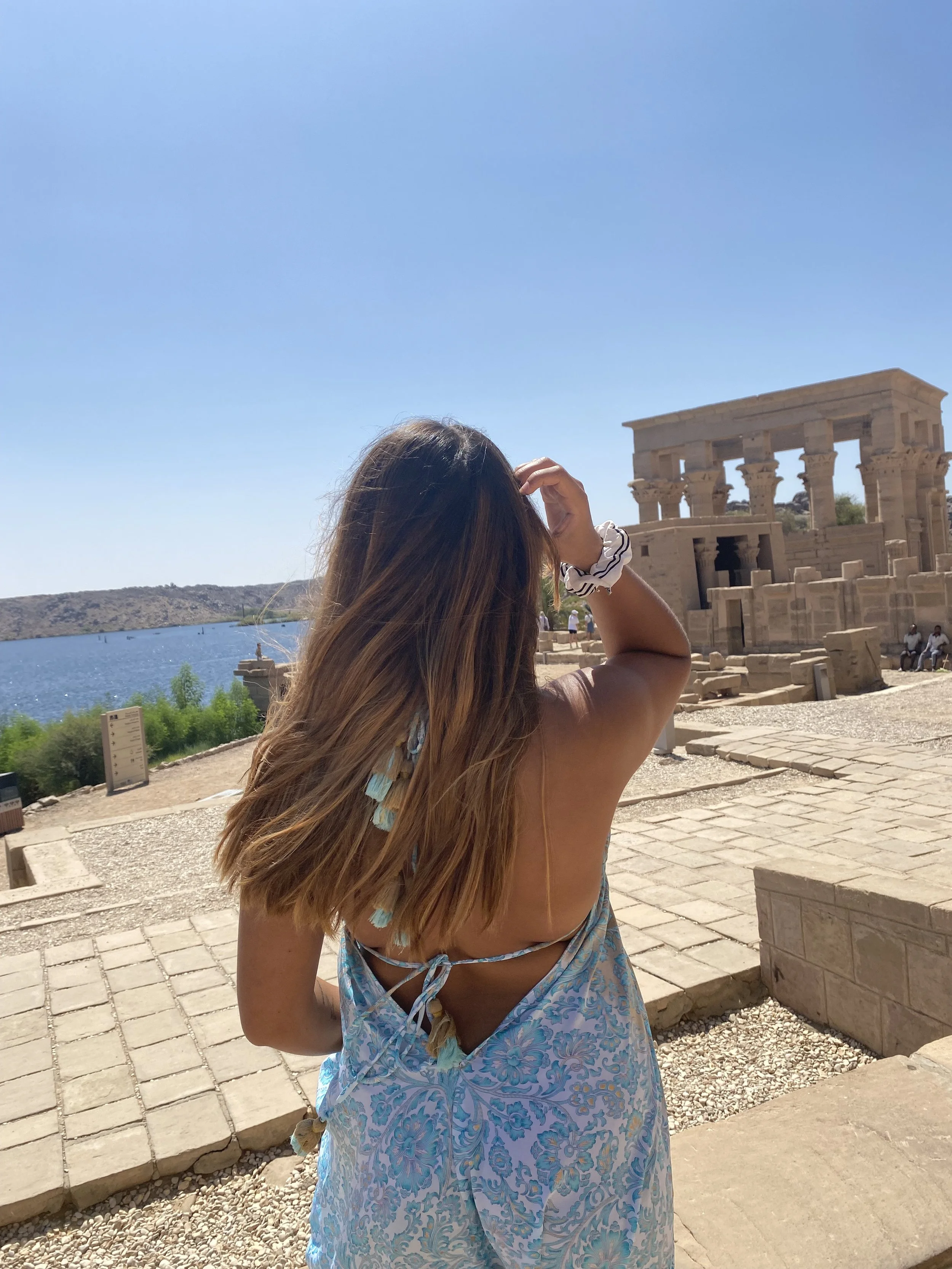
Trajan’s Kiosk
This open-air temple is surrounded by up to fourteen columns with delicate floral capitals. Only two reliefs remain, showing Emperor Trajan burning incense before Isis and Osiris. It is the most photographed monument of Philae from what I read online.
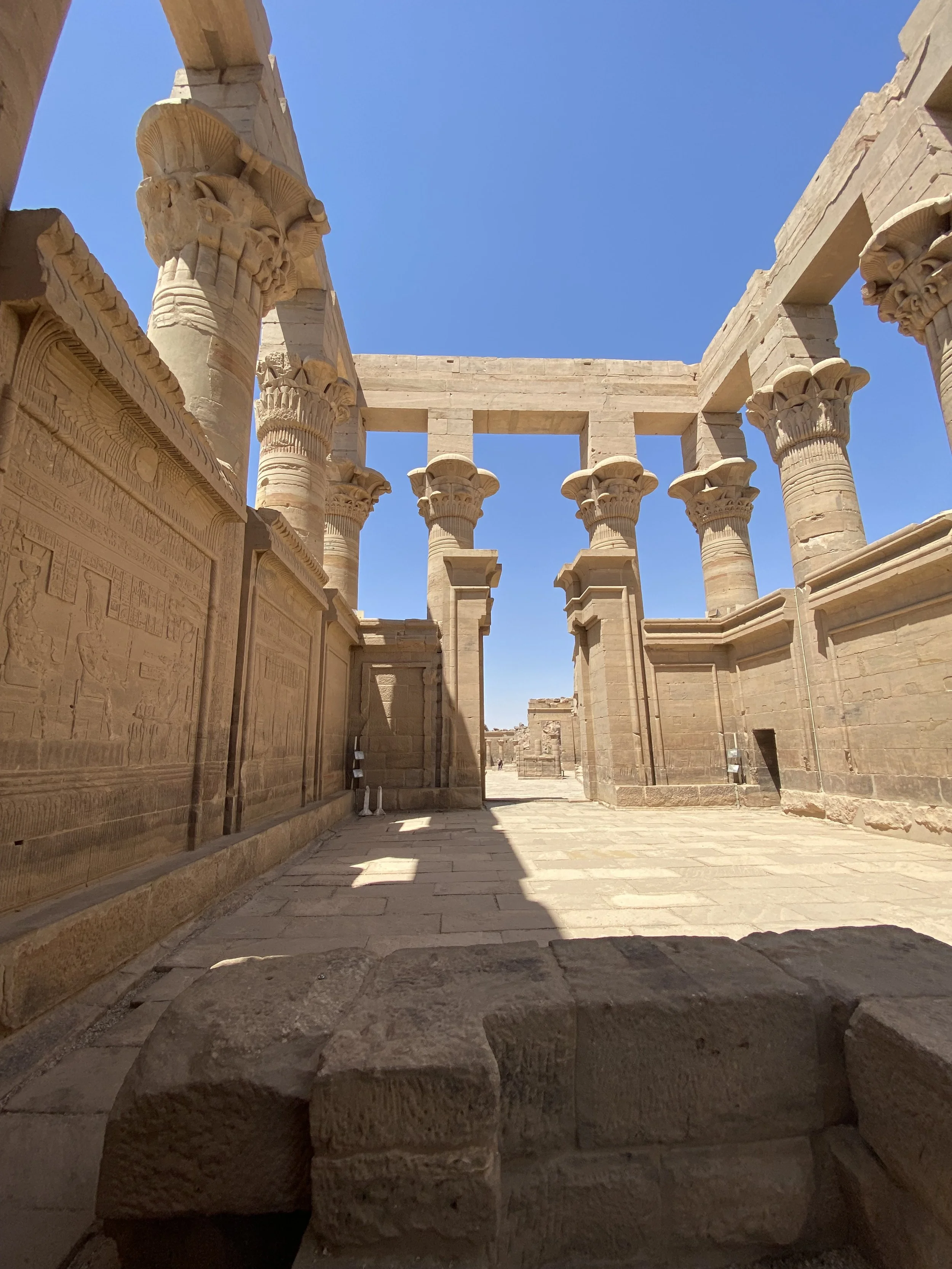
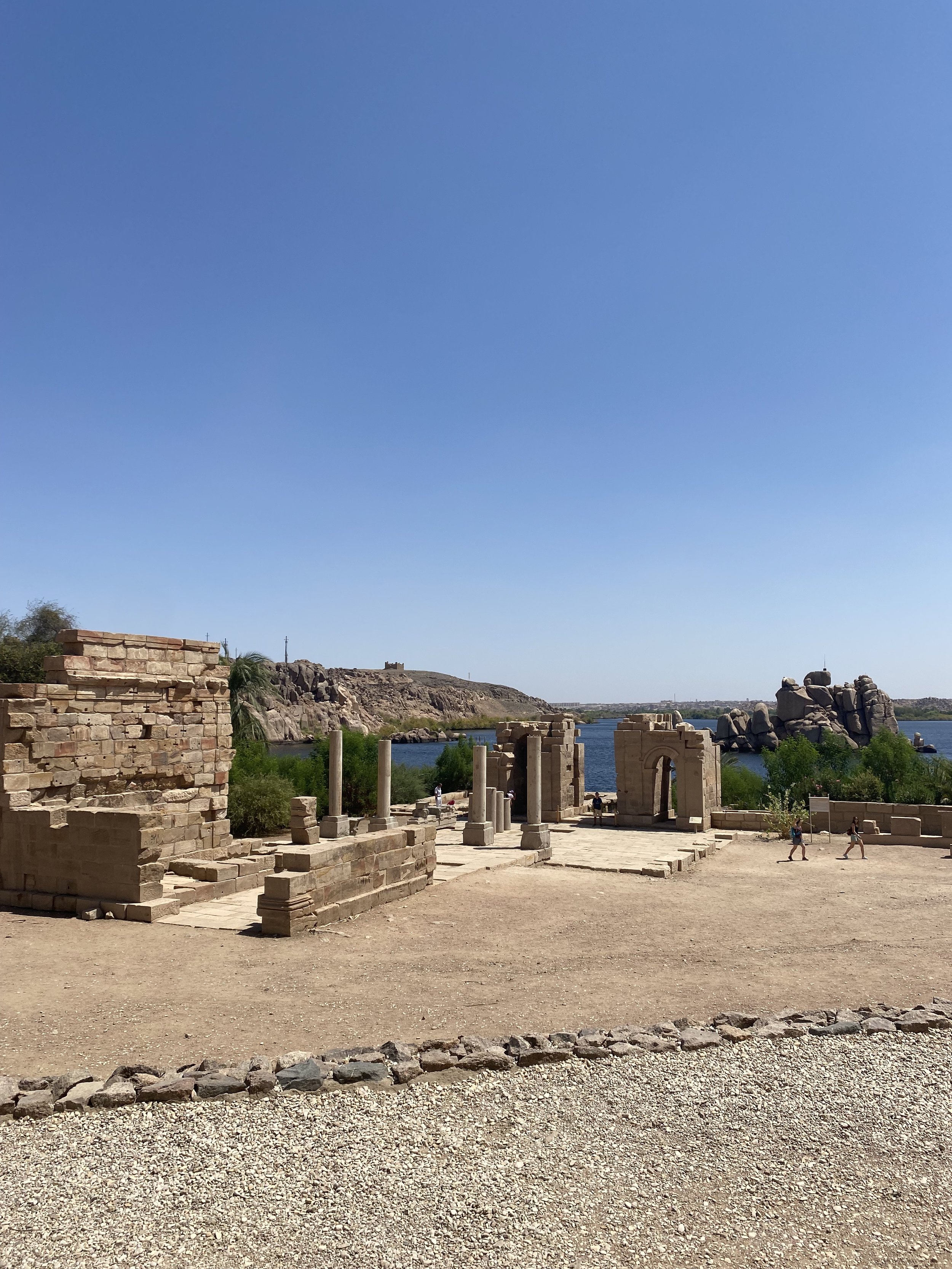
The Kiosk of Nectanebo: the oldest structure on the island
Each column here features a capital carved with the face of the goddess Hathor, recognizable by her cow ears.
Hathor was one of the most beloved deities of Ancient Egypt: a celestial goddess, protector of joy, love, music, and beauty. Often associated with Aphrodite by the Greeks and Romans, she could be depicted as a cow or as a woman wearing a solar disk held between two cow horns (a symbol of her cosmic nature).
In mythology, Hathor embodies the sky itself: every morning she gives birth to the sun, which grows throughout the day, fertilizes her at dusk, and disappears into her embrace making her at once the sun’s mother and consort.
Hathor was mostly revered at the Temple of Dendera, but on Philae, her presence is still tangible through these columns.
Finally, on the outer walls, carved crosses recall the moment when Philae was transformed into a Coptic church dedicated to Saint Stephen. On others, you can still spot graffiti left by early European travelers — timeless signatures etched into history.
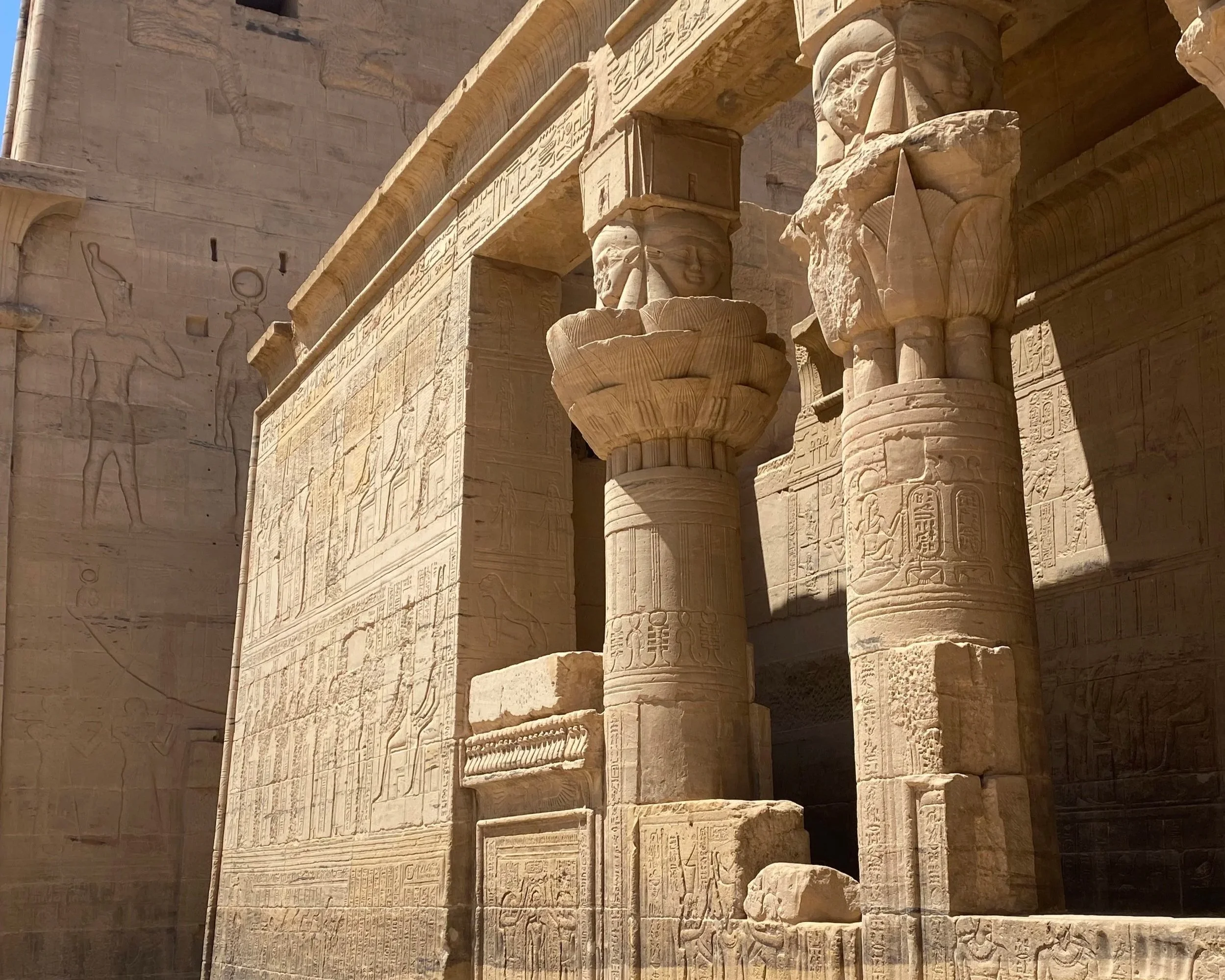
Philae by night
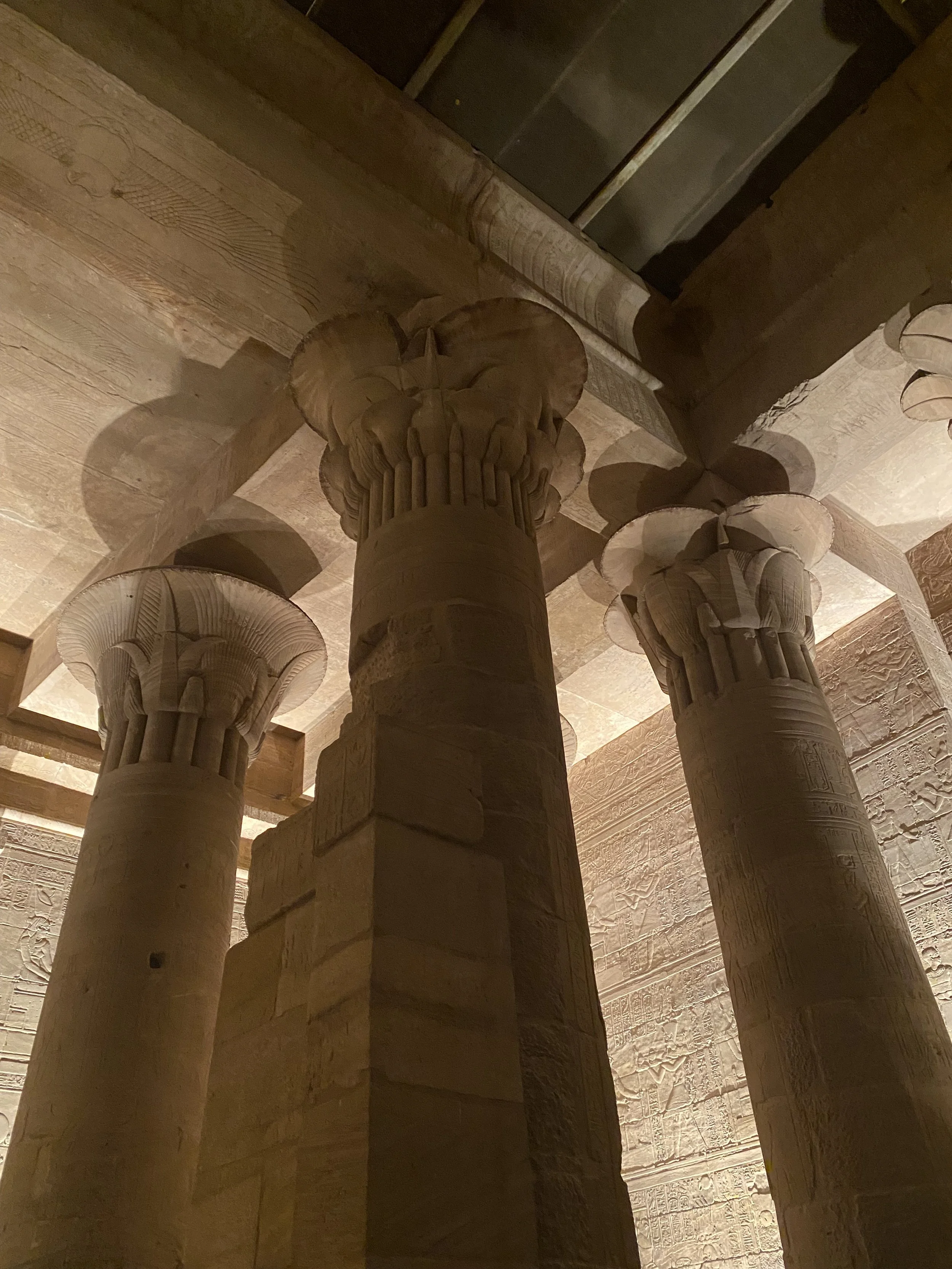
If you haven’t had enough of Philae I’d recommend not missing the Sound & Light Show that takes place in the evening around 7pm. The temple is illuminated with colors, voices narrate the legends of Isis and Osiris and there are different shows for different languages.
Step 5: Abu Simbel
At the far end of Lake Nasser, we went to see Abu Simbel. I was wondering where the name came from but Mohammed (our guide) told us Abu Simbel just means “place of Abu Simbel”, named after the local child who revealed the site to the Swiss explorer who discovered the temple in the 19th.
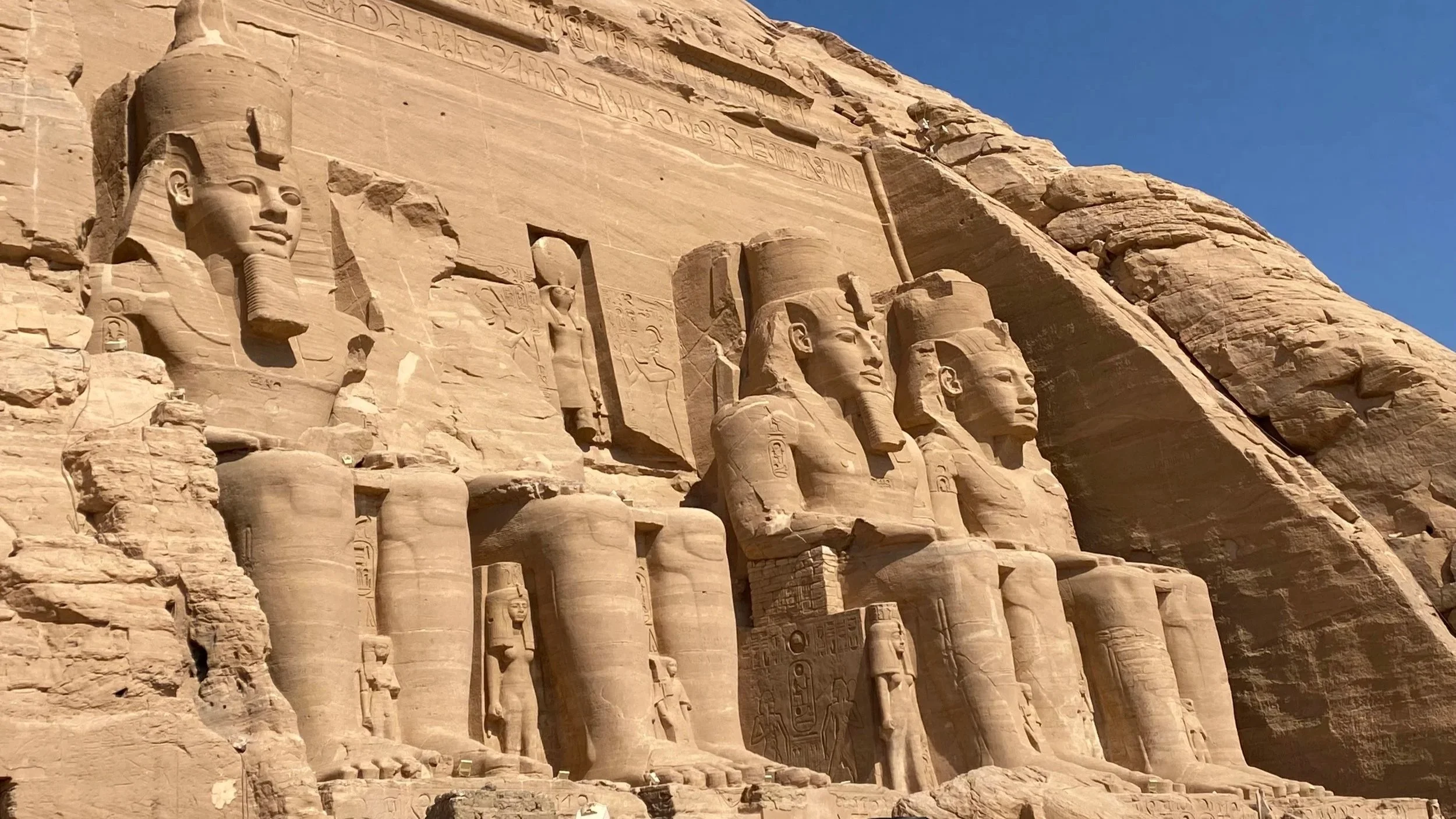
Abu Simbel are in fact two colossal temples carved directly into the mountainside that stand guard over the desert and what most visitors don’t realize is that this isn’t their original locatio, just as Philae. And it remains one of the most daring archaeological rescues of the 20th century.
Ramses II, the deified pharaoh
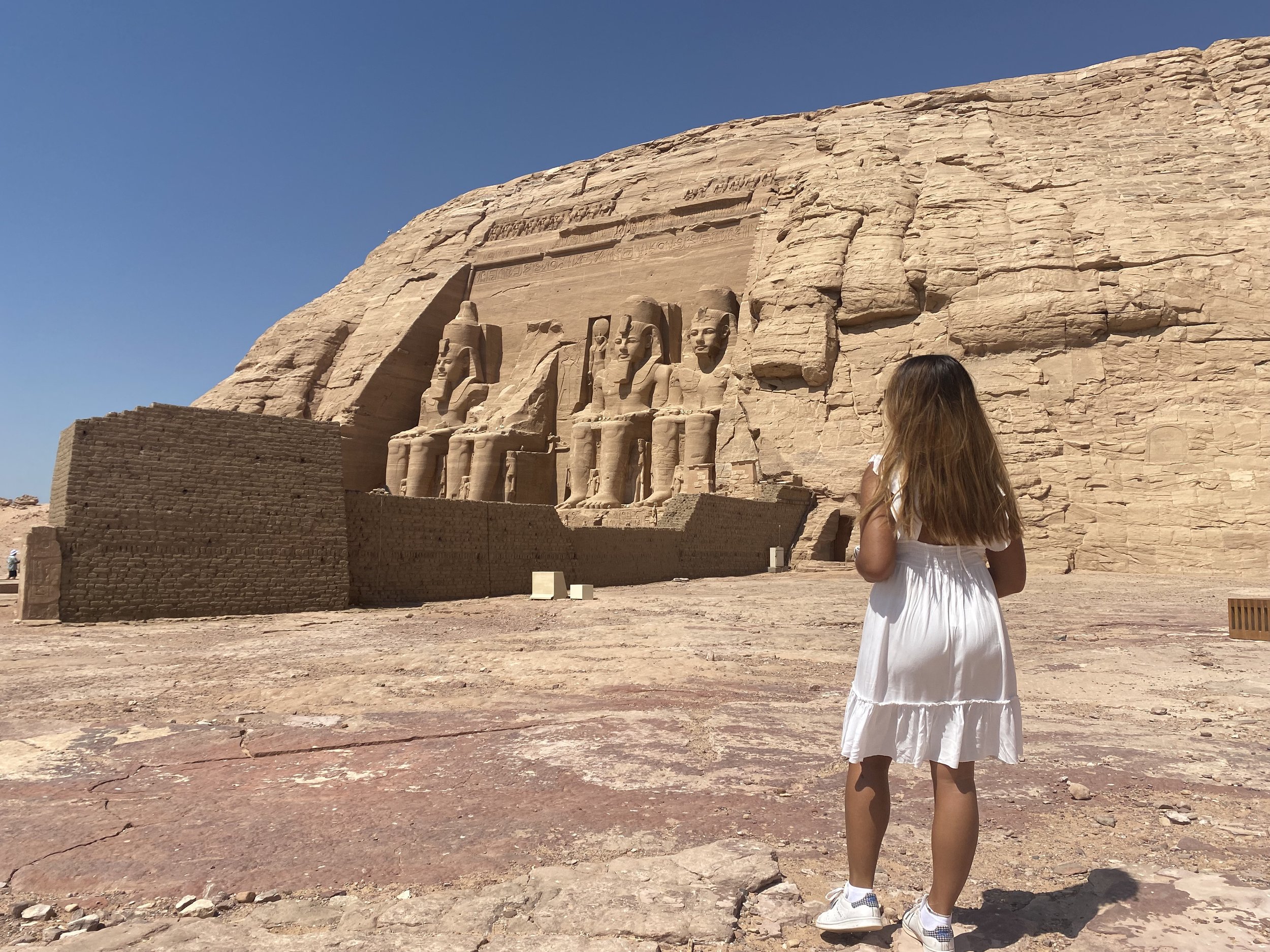
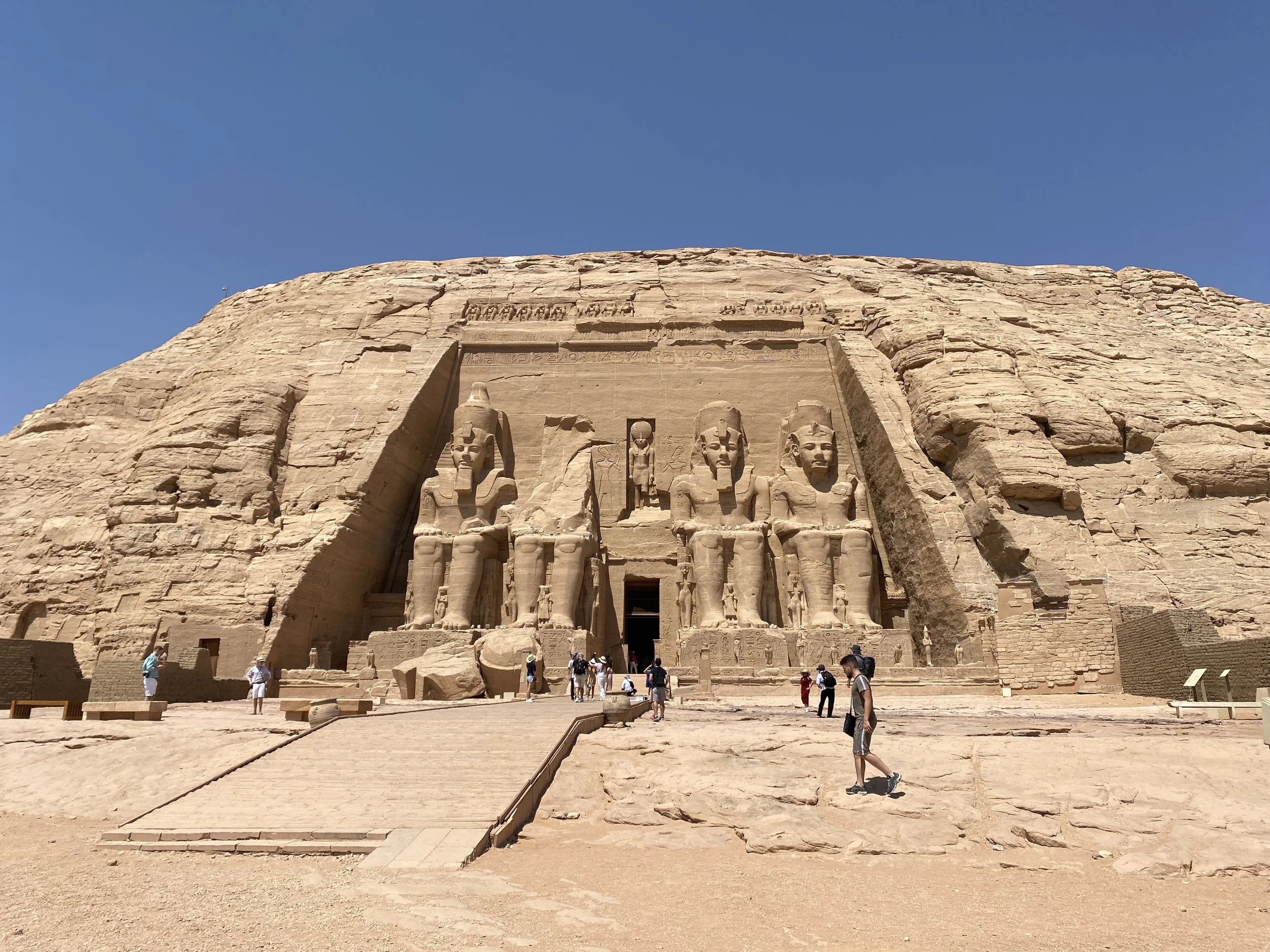
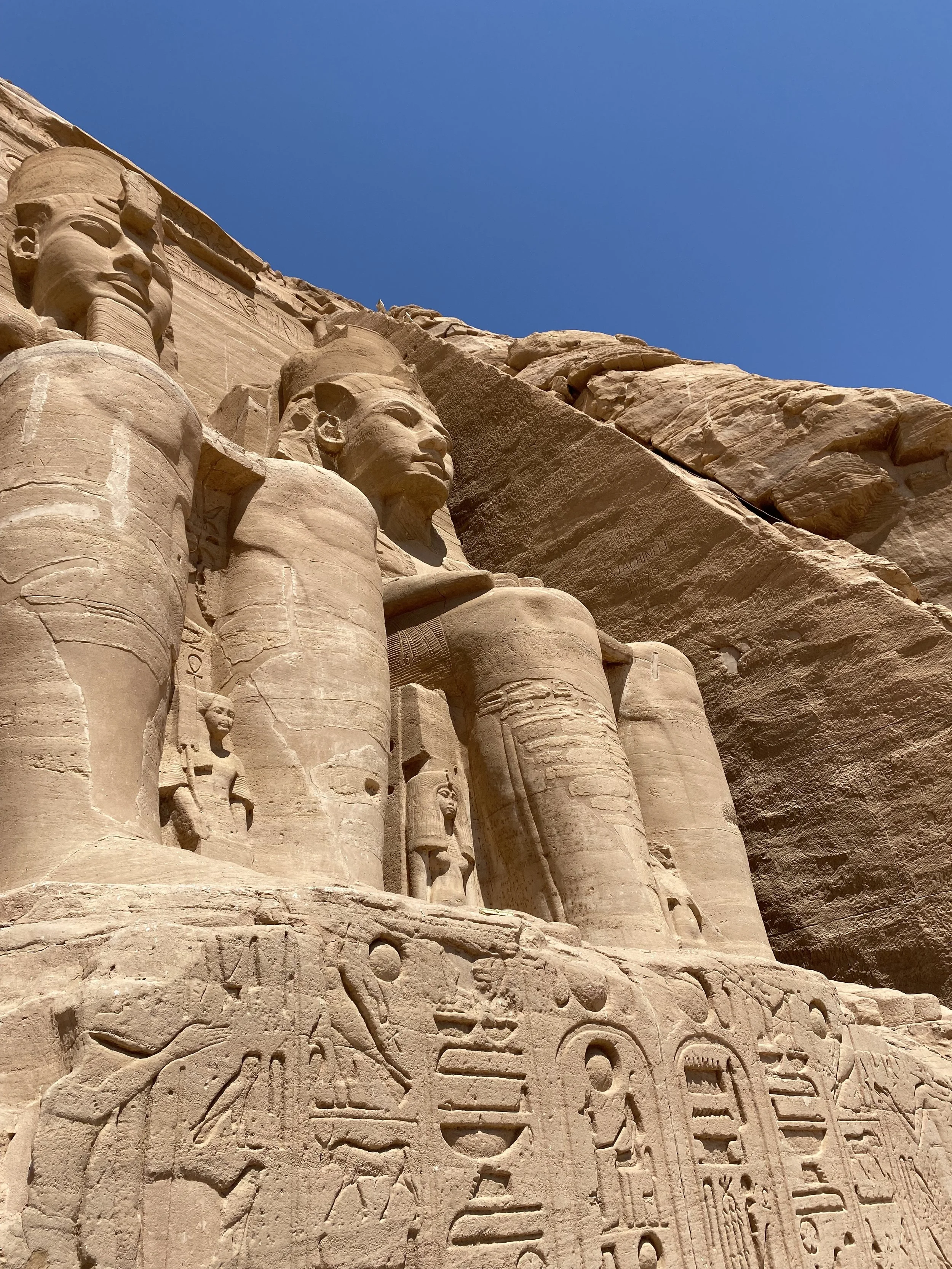
At your first sight you’ll see four colossal statues, each 20 meters high, depicting Ramses II seated on his throne, and the statues are placed gazing toward the rising sun. Also, you’ll see far more people at this temple than anywhere, it was the most crowded place we’d been for now and I have to say I don’t even think Gizeh did beat that.
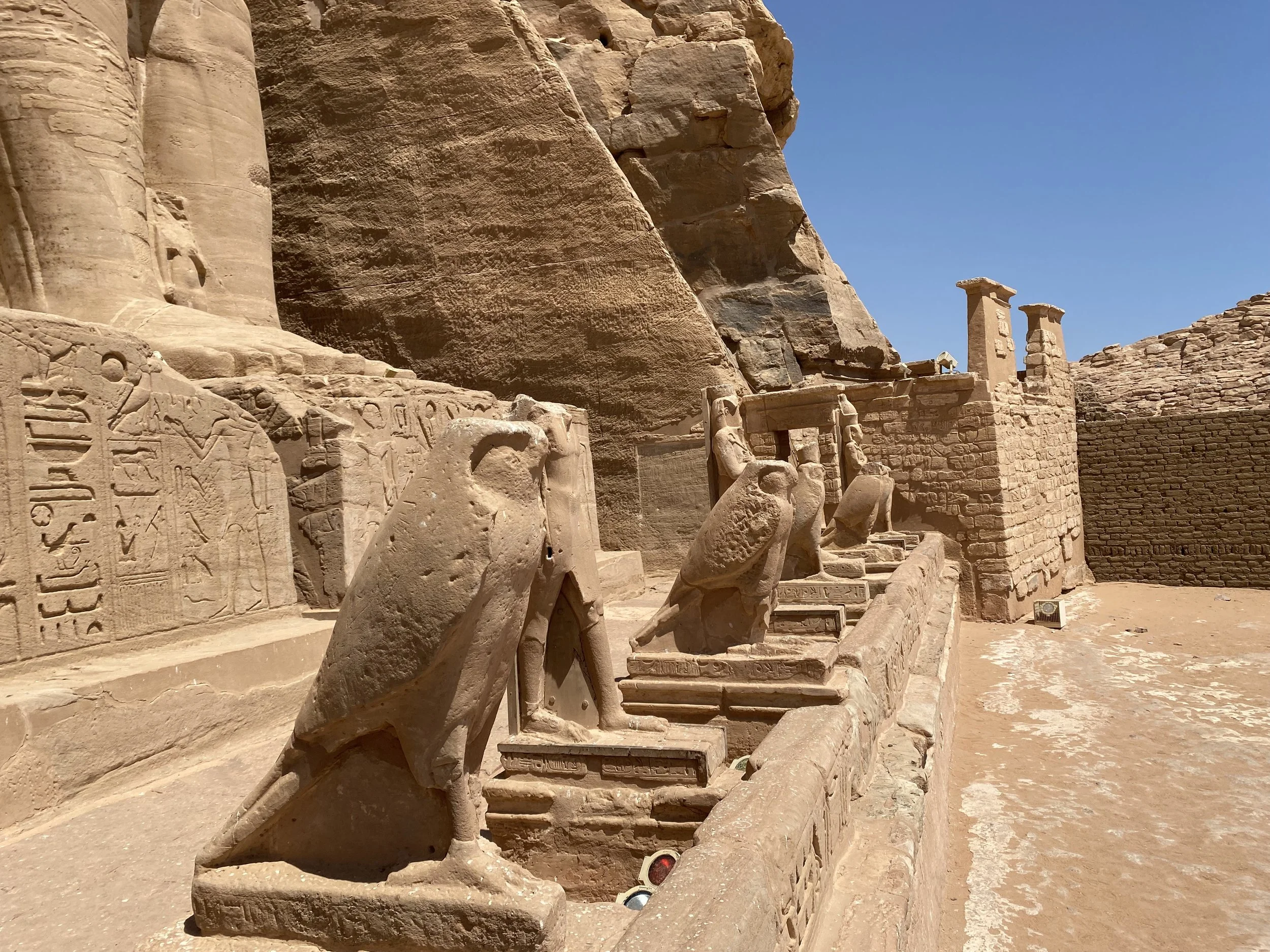
Beneath the pharaoh’s statues feet (but tiny in comparison) stand carvings of his wife, his children, and members of his family. It was the first time in Egyptian history that a pharaoh had himself depicted surrounded by his family.
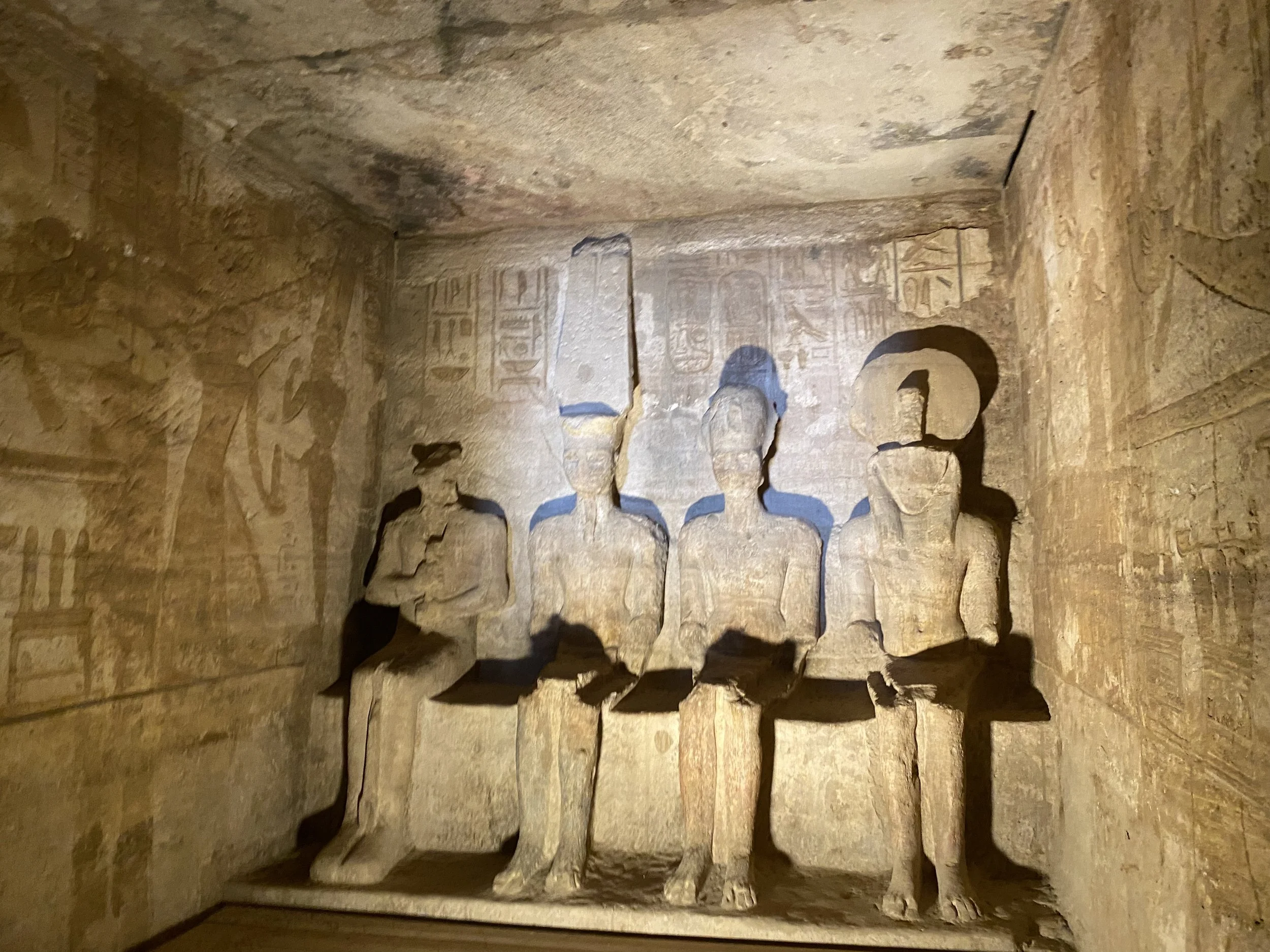
Once you step inside you’ll walk a long corridor carved straight into the mountain that leads to a sanctuary dedicated to the gods. On the walls are glorifications to Ramses II: him charging into battle, crushing his enemies, triumphing at the Battle of Kadesh. It’s a blend of history and divine myth.
The temple was built on a solar axis. Twice a year, at dawn, a sunbeam travels the entire length of the temple and illuminates the statues in the sanctuary. Even after its relocation, the phenomenon still occurs only two days later than originally intended.
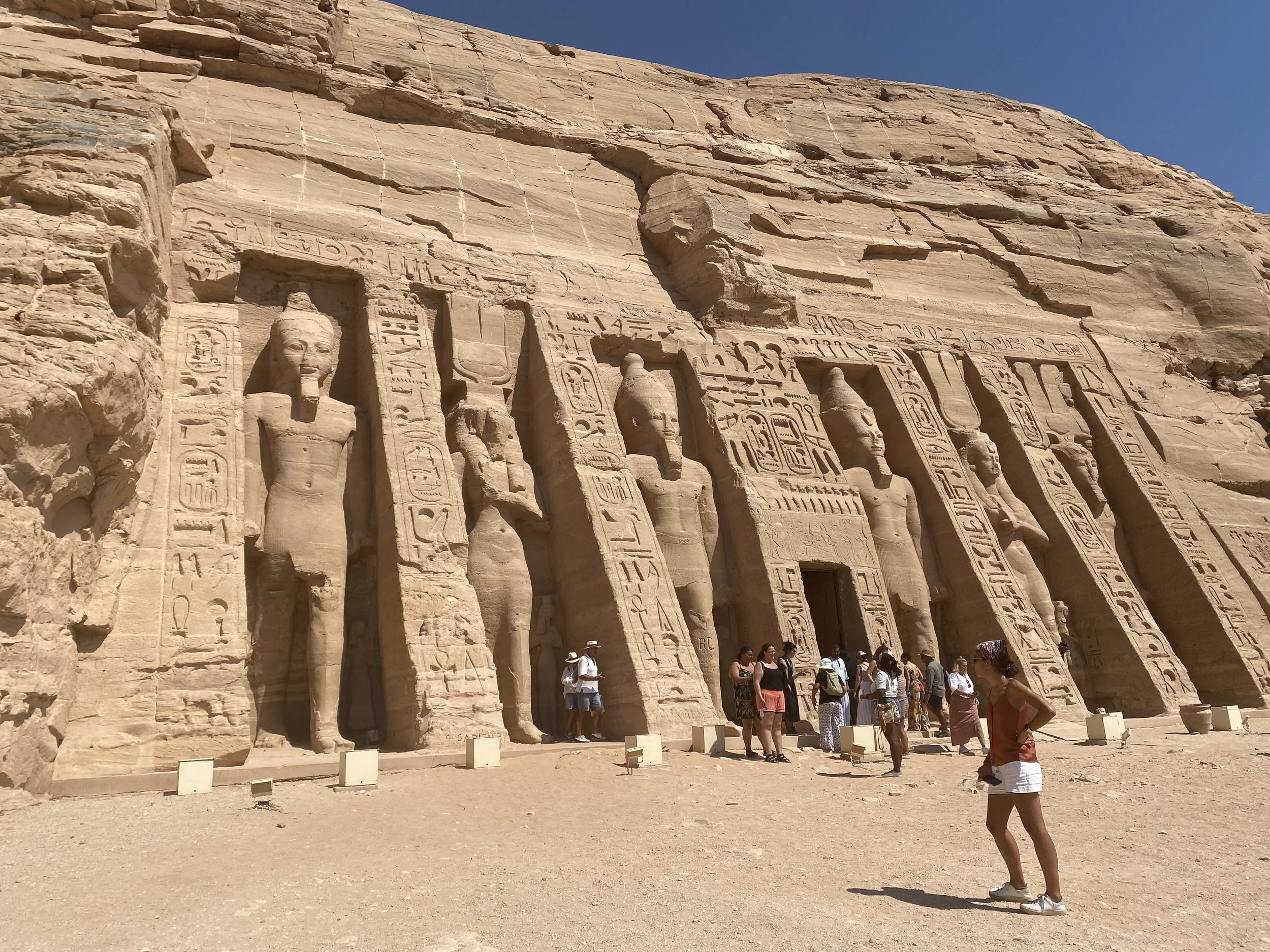
The Small Temple : for Nefertari
You have here a monument not to power, but to love: this temple is dedicated to Nefertari, Ramses II’s beloved wife, and to the goddess Hathor. Six colossal statues decorate the façade. Nefertari appears at the same height as Ramses II which is quite an honor in Egyptian symbolism. The walls inside show Nefertari worshipping Hathor.
The temple's location is due to Nubia being a strategic region: a gateway to Africa, land of gold mines and at the crossroads of trade and expeditions.
Building temple-monuments of this scale in Abu Simbel was a message to assert Egyptian authority and also Ramses II kind of ensured he would be remembered for eternity.
Step 6: Valley of the Kings and Valley of the Queens
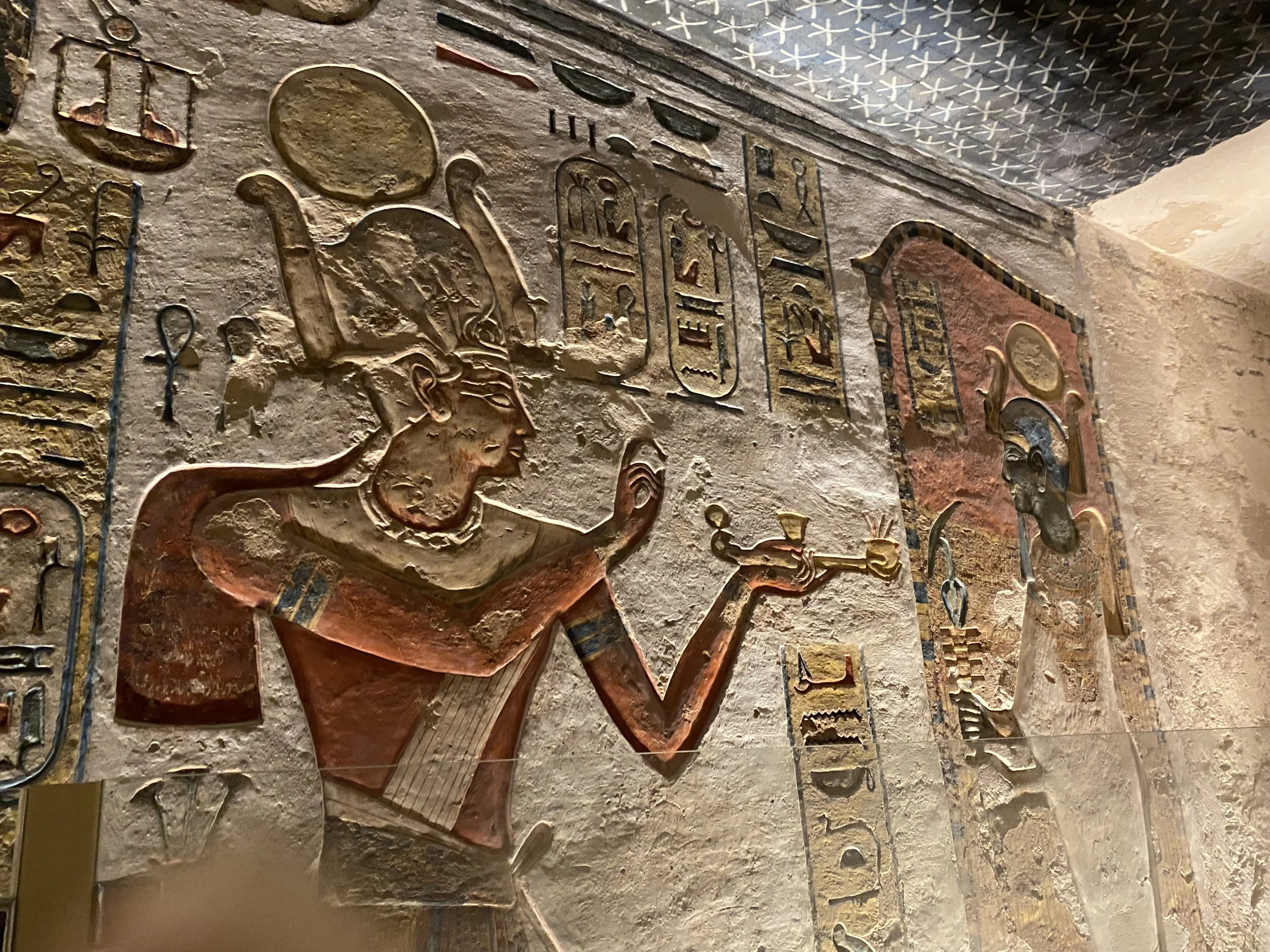
For the ancient Egyptians, a pharaoh’s reign only reached its true culmination when he joined the realm of the gods and that’s why the Valley of the Kings became one of Egypt’s most sacred sites.
Located on the west bank of the Nile, opposite Luxor, this valley houses the tombs of New Kingdom rulers, as well as those of select queens, children, and nobles.
The choice of the western bank was no accident: the sun rises in the east, thus, the Theban necropolis stretches along the western cliffs of the Nile, where the sun disappears each evening. Funerary temples and tombs were designed to ensure the continuity of life in the afterworld: through mummification, offerings at temples, and statues to receive daily rituals.
The architecture of the tombs
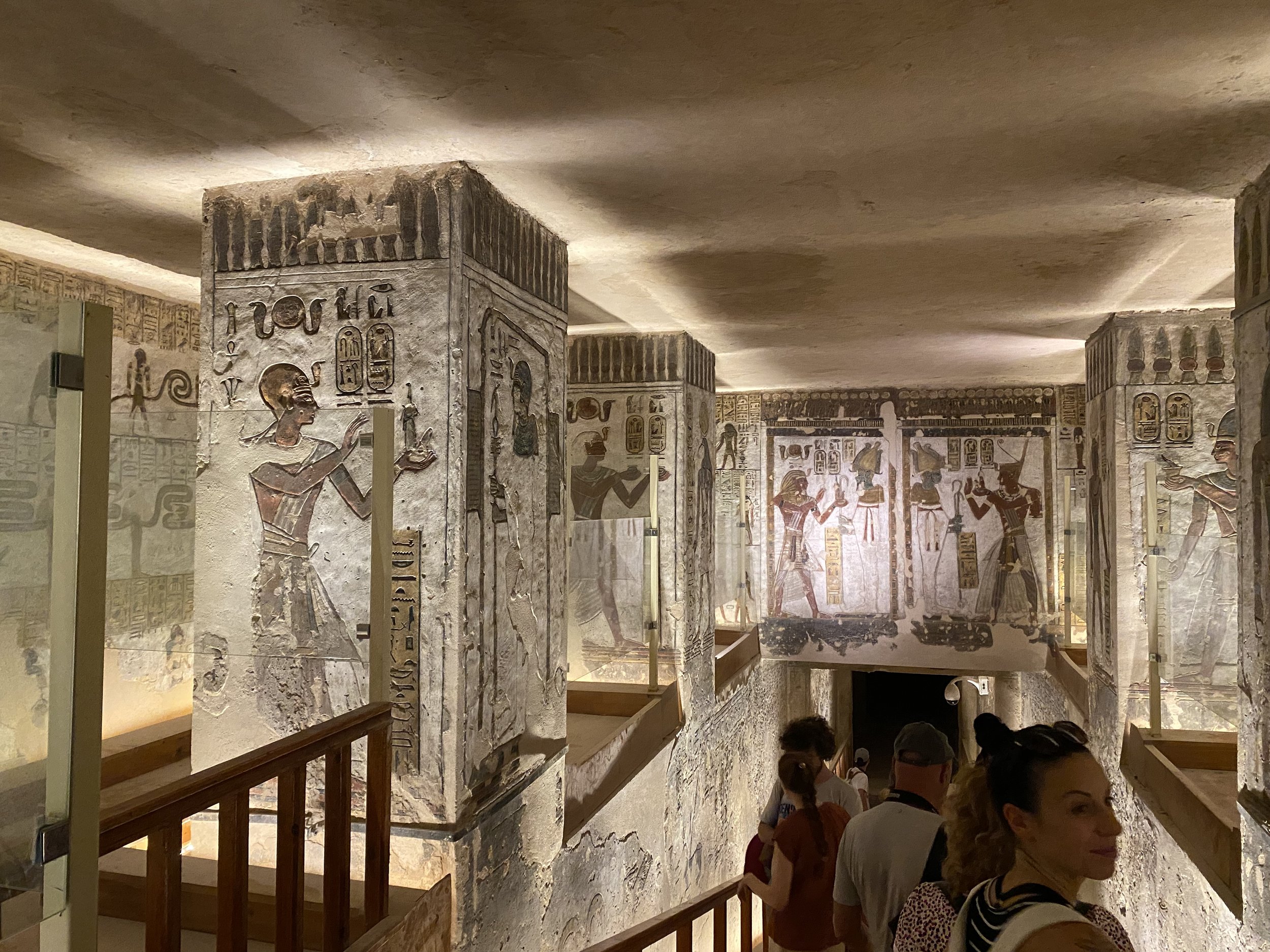
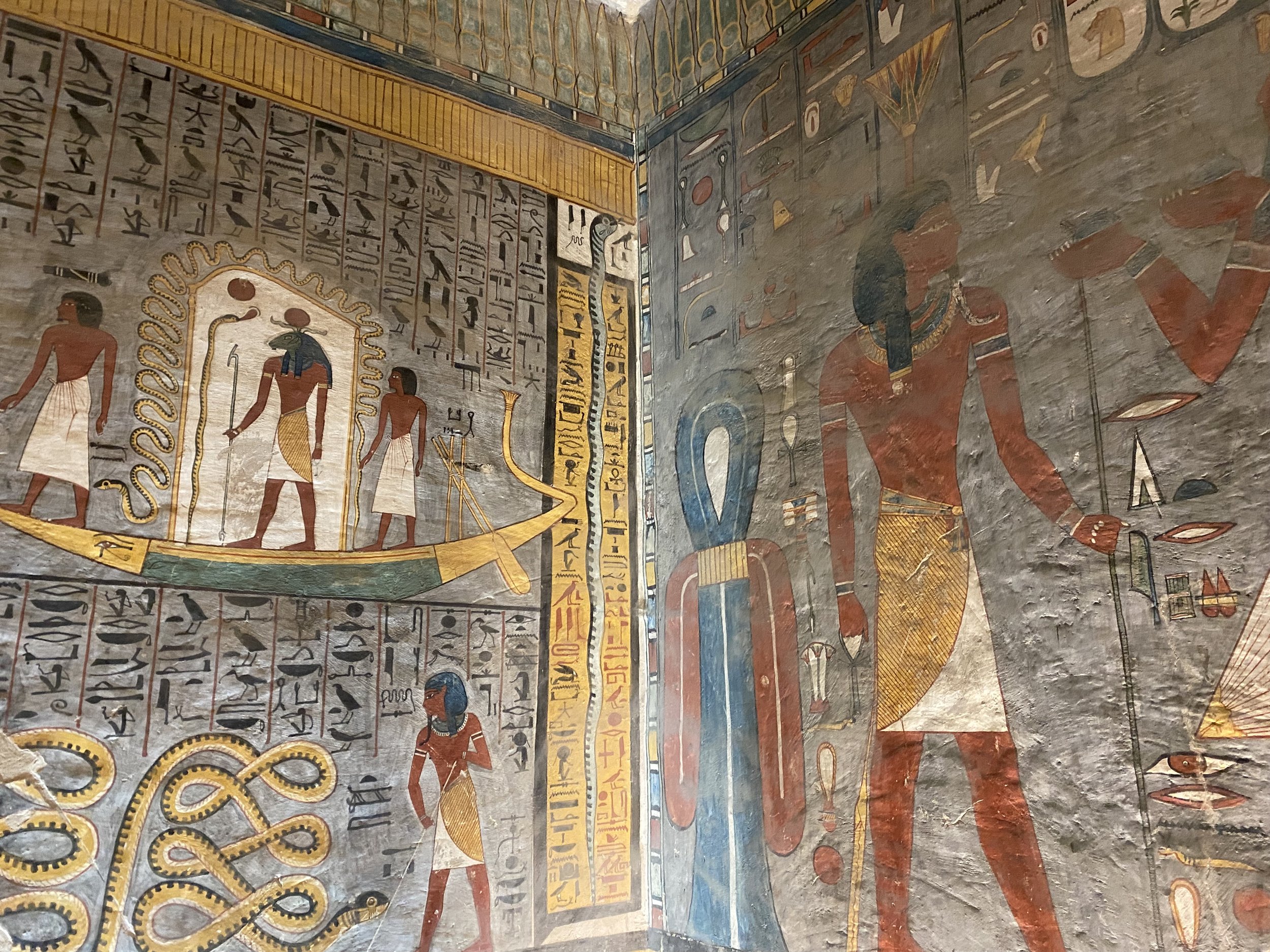
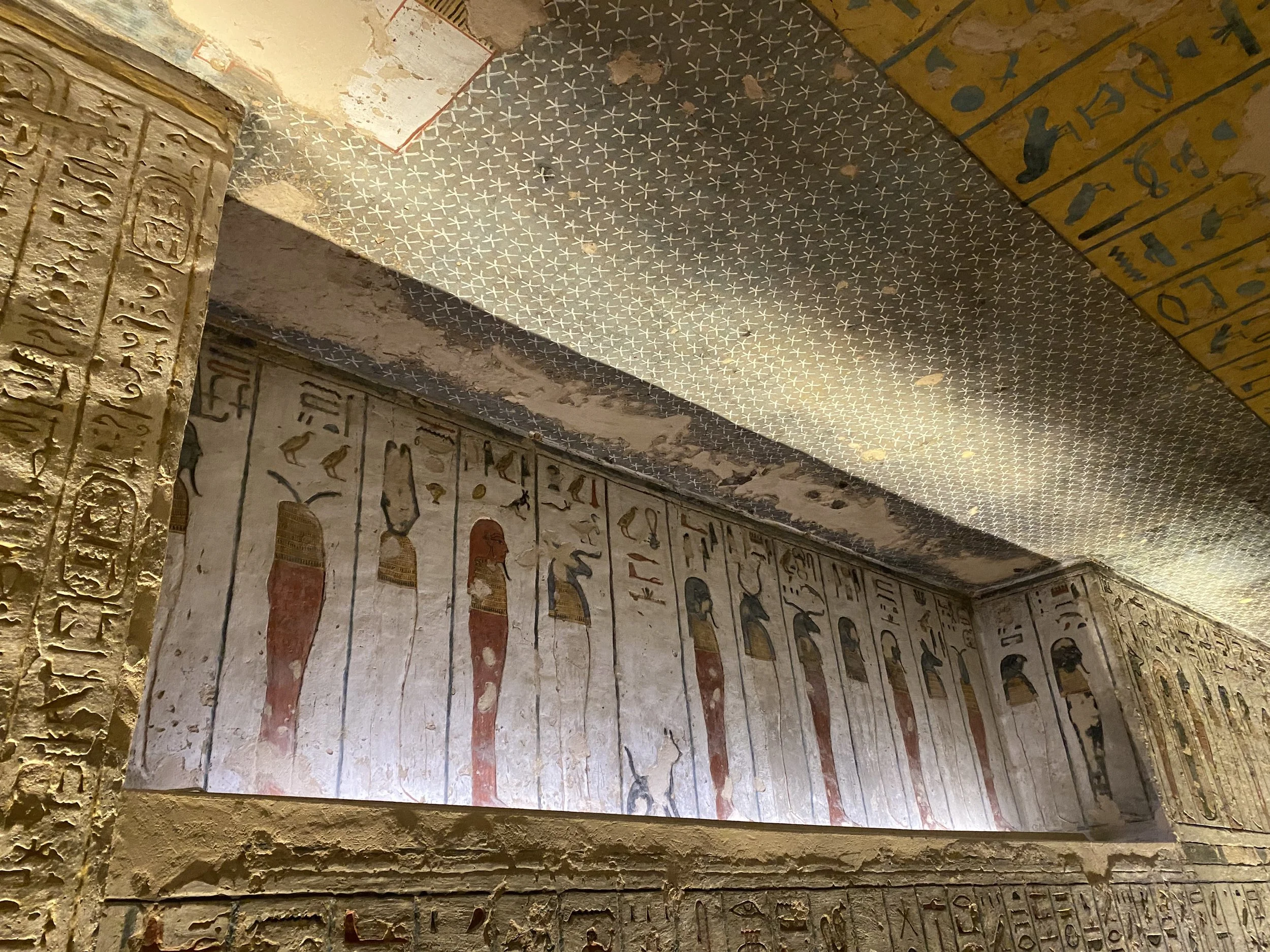
A royal tomb often follows an initiatory journey: first a descending corridor represents the sun god’s nightly journey through the underworld and is followed by a series of chambers leading to the burial chamber.
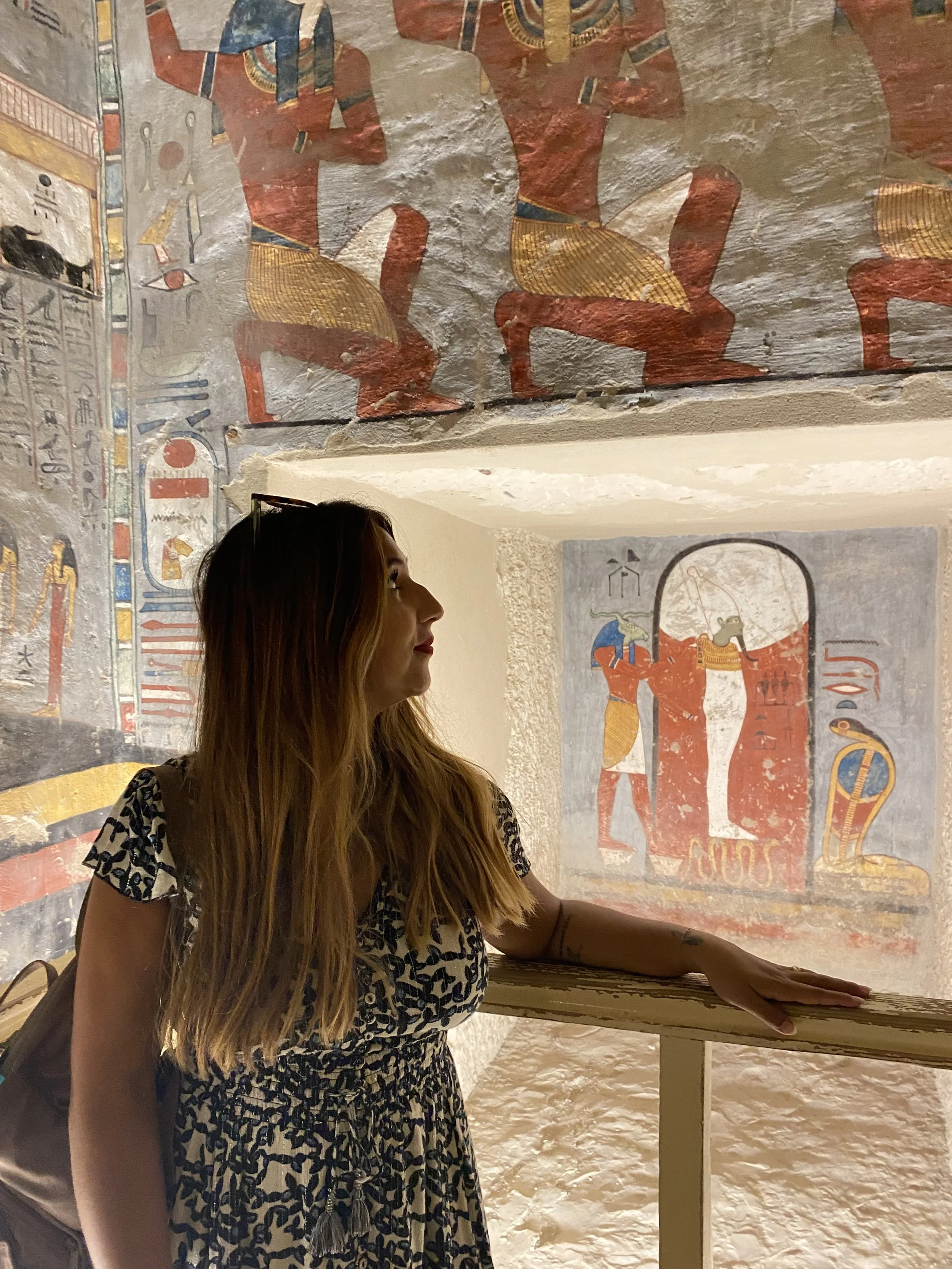
The walls are covered with paintings and hieroglyphs, illustrating the soul’s voyage into the afterlife.
In older tombs, scenes from the Book of the Amduat depict the sun’s twelve nightly hours in the underworld. Each tomb is conceived as an eternal home for the deceased, complete with furniture: beds, chairs, vases, chariots, weapons, and other possessions for life beyond death. Some ritual objects accompany the pharaoh like Shabti figures, magical servants who would work for him in the afterlife or Canopic jars, containing his organs and finally food and provisions to sustain him on his journey.
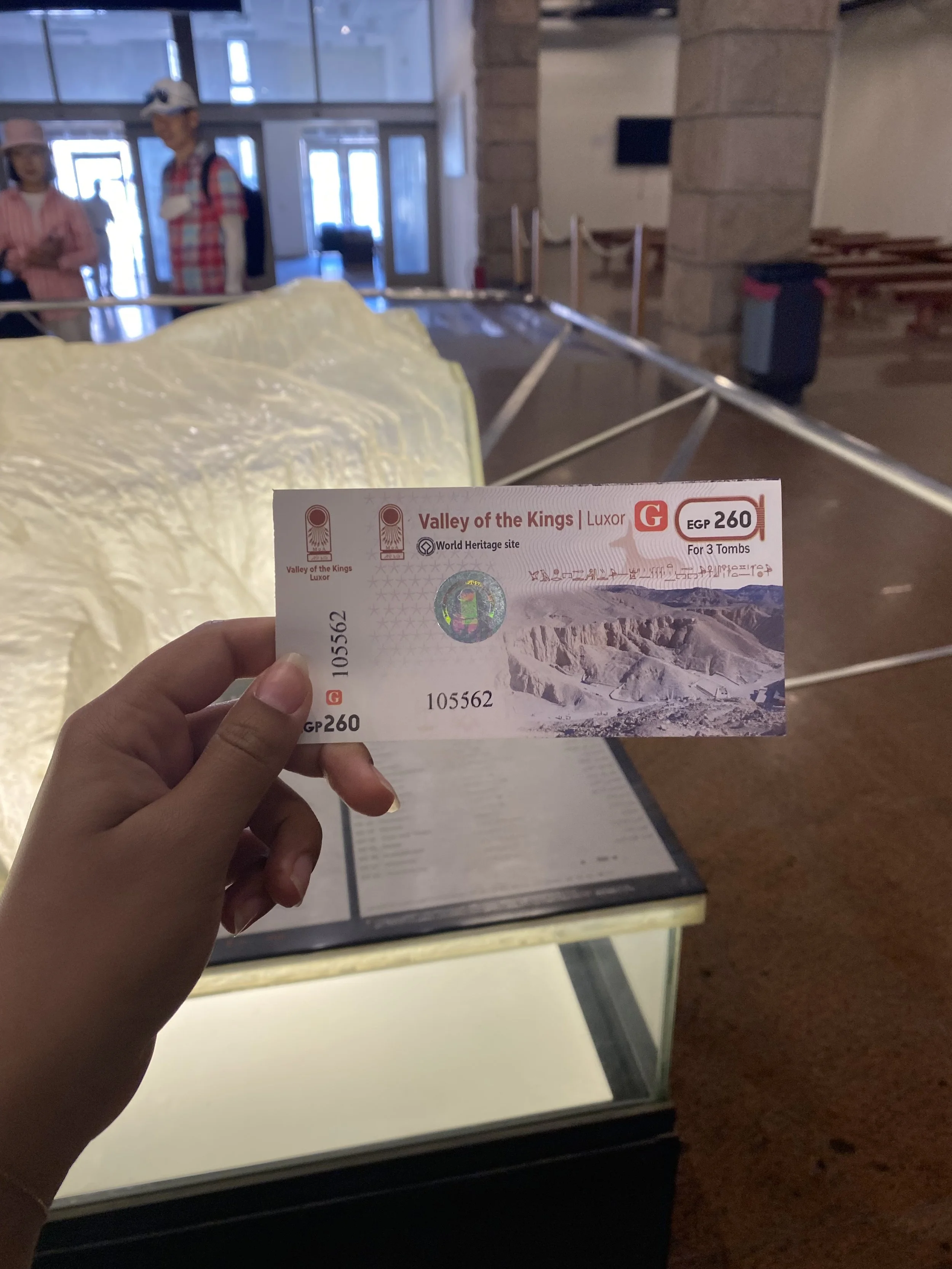
The site is organized by tombs following John Gardner Wilkinson’s system of numerotation from the 19th century. My mom and I visited the KV62: the tomb of Tutankhamun, discovered intact and famous for its incredible treasure, the KV11 with Ramses III and KV5 the vast tomb of Ramses II’s sons, one of the largest in the valley.
The Valley of the Queens
From the reign of Ramses I onward, a separate area was reserved for royal wives: the Valley of the Queens. While some women were still buried alongside their husbands, most received their own decorated sanctuaries, furnished with the same ritual objects as the pharaohs’ tombs.
Step 7: The Temple of Hatshepsut
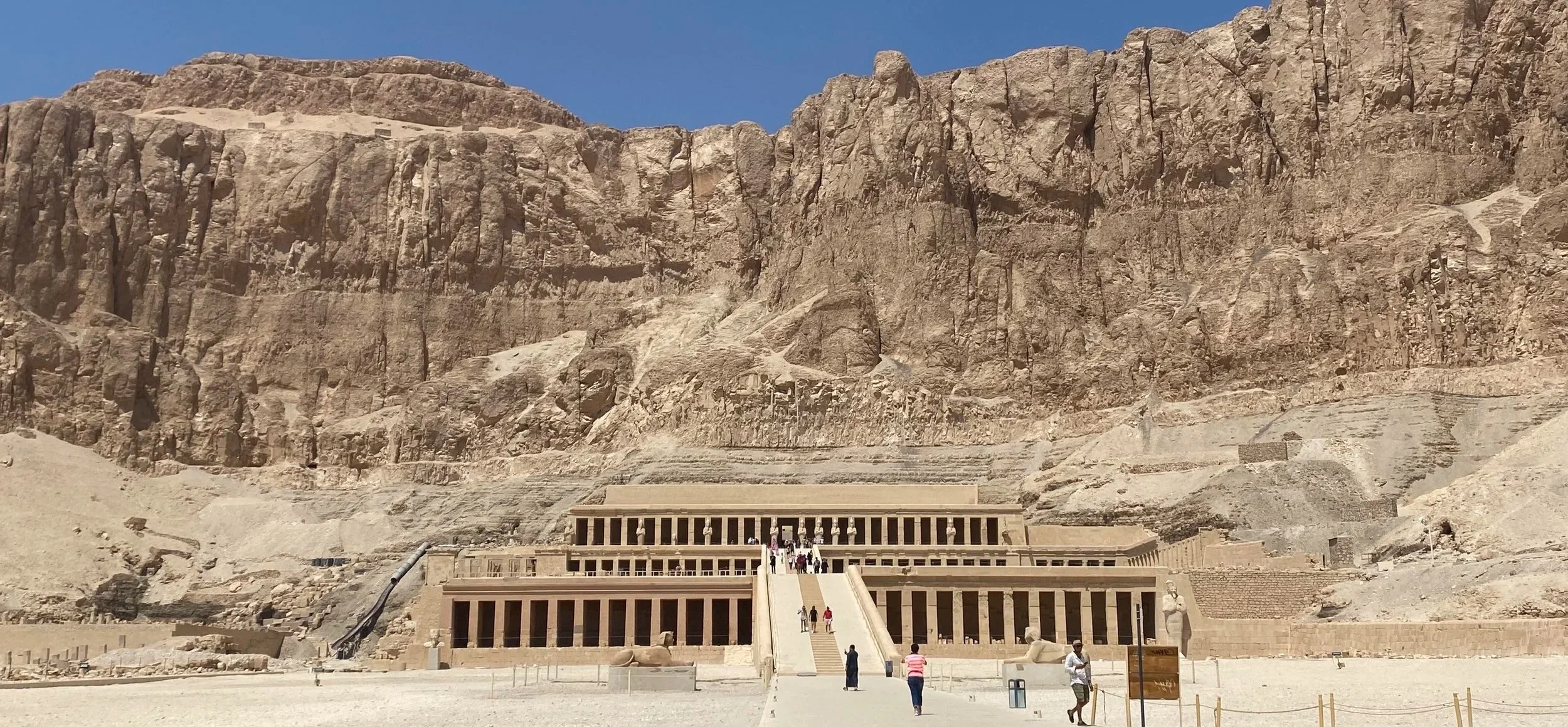
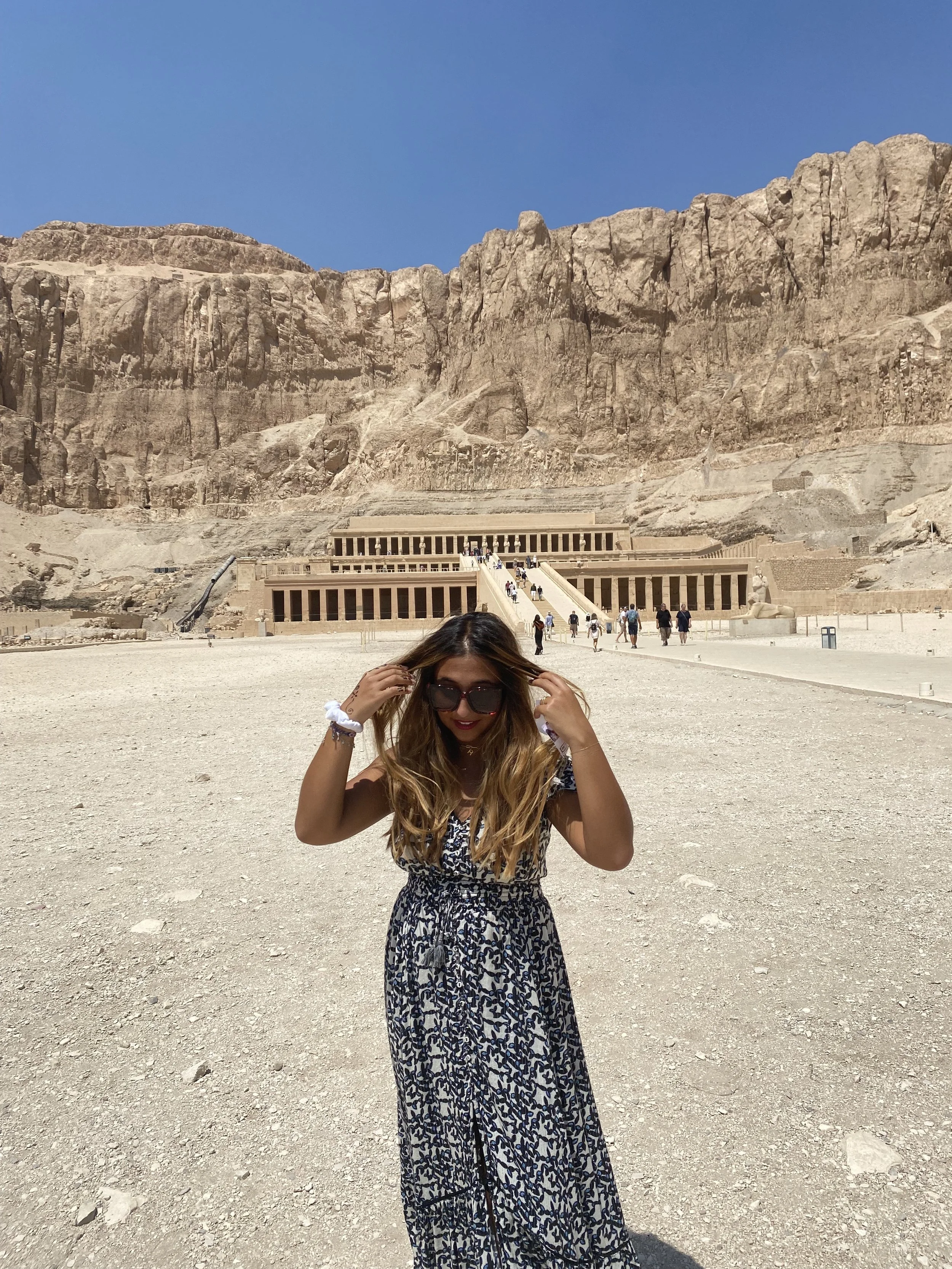
Carved into the base of an ochre cliff that shelters it like a natural amphitheater, the mortuary temple of Hatshepsut is a mortuary temple, where rituals were performed to honor Hatshepsut after her death and to ensure her eternal life.
She was one of the most extraordinary rulers of ancient Egypt and one of the very few women to become pharaoh. She launched major trade expeditions, especially the famous one to Punt, bringing exotic goods like incense and myrrh trees and she commissioned impressive building projects, including this masterpiece.
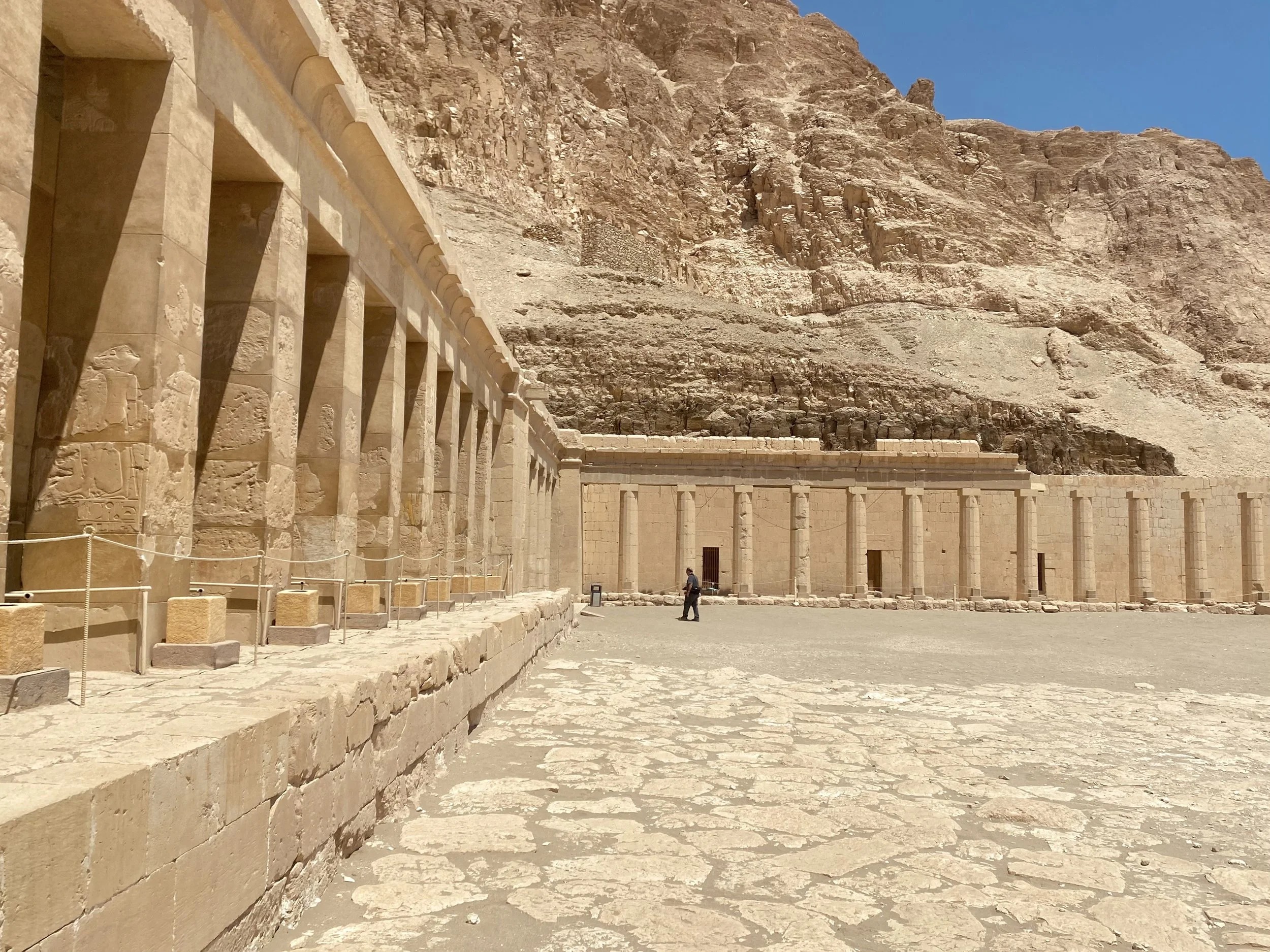
From the moment you approach the site, its geometric silhouette stands out in a series of three vast terraces, a unique architecture in Egypt. Of all the temples of Deir el-Bahari, this is the best preserved.FYI Deir el-Bahari is a complex of mortuary temples and tombs on the west bank of the Nile at Luxo
What struck me instantly was its size: the temple unfolds horizontally across three levels, each connected by ascending ramps. Unlike traditional Egyptian temples, which typically lead you through massive pylons and successive courtyards, here everything is about horizontality, balance, and proportion: long colonnades instead of heavy walls. The structure feels open, airy and more minimalist than other temples we had seen until now. Also the cliffs behind were impressive.
Step 8: The Colossi of Memnon
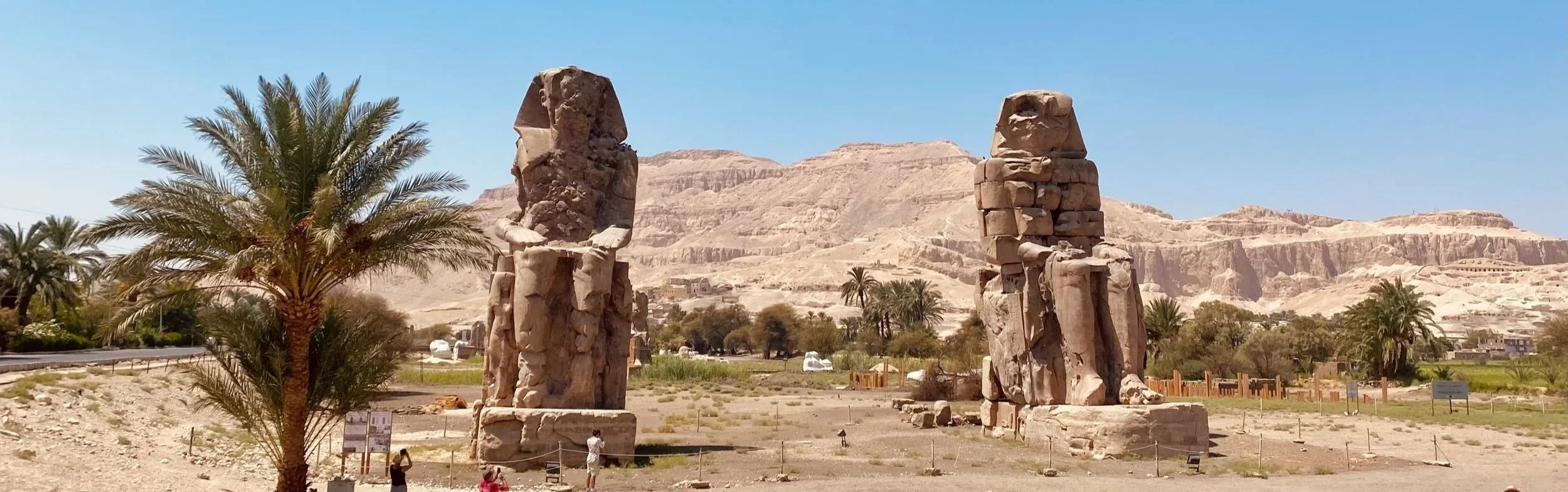
Not far from the Valley of the Kings and Hatshepsut’s temple stand the Colossi of Memnon. So we went to see that the same afternoon as Hatshepsut’s temple.
These are two monumental statues of Pharaoh Amenhotep III, each carved from quartzite sandstone and standing 18 meters high. Seated with hands resting on their knees, their gaze fixed eastward toward the rising sun, they once guarded the entrance to his massive mortuary temple but it’s now mostly vanished due to flooding and the reuse of stone over centuries.
Our guide Mohammed told us that in antiquity, the northern statue was famous for singing. The truth is that after an earthquake in 27 BCE cracked the monument, travelers began reporting that at dawn the statue emitted a soft, haunting sound like a low hum. Well the sound was likely caused by temperature changes and dew evaporating in the stone. But the Greeks and Romans preferred a far more poetic version (me too). So they believed the statue represented Memnon, the heroic son of Eos, goddess of the dawn. The “song,” they said, was Memnon greeting his mother every morning as the sun rose. Pilgrims traveled from across the known world to witness the miracle, leaving inscriptions on the base and those are still visible today.
Step 9: Karnak, or the City of the Gods
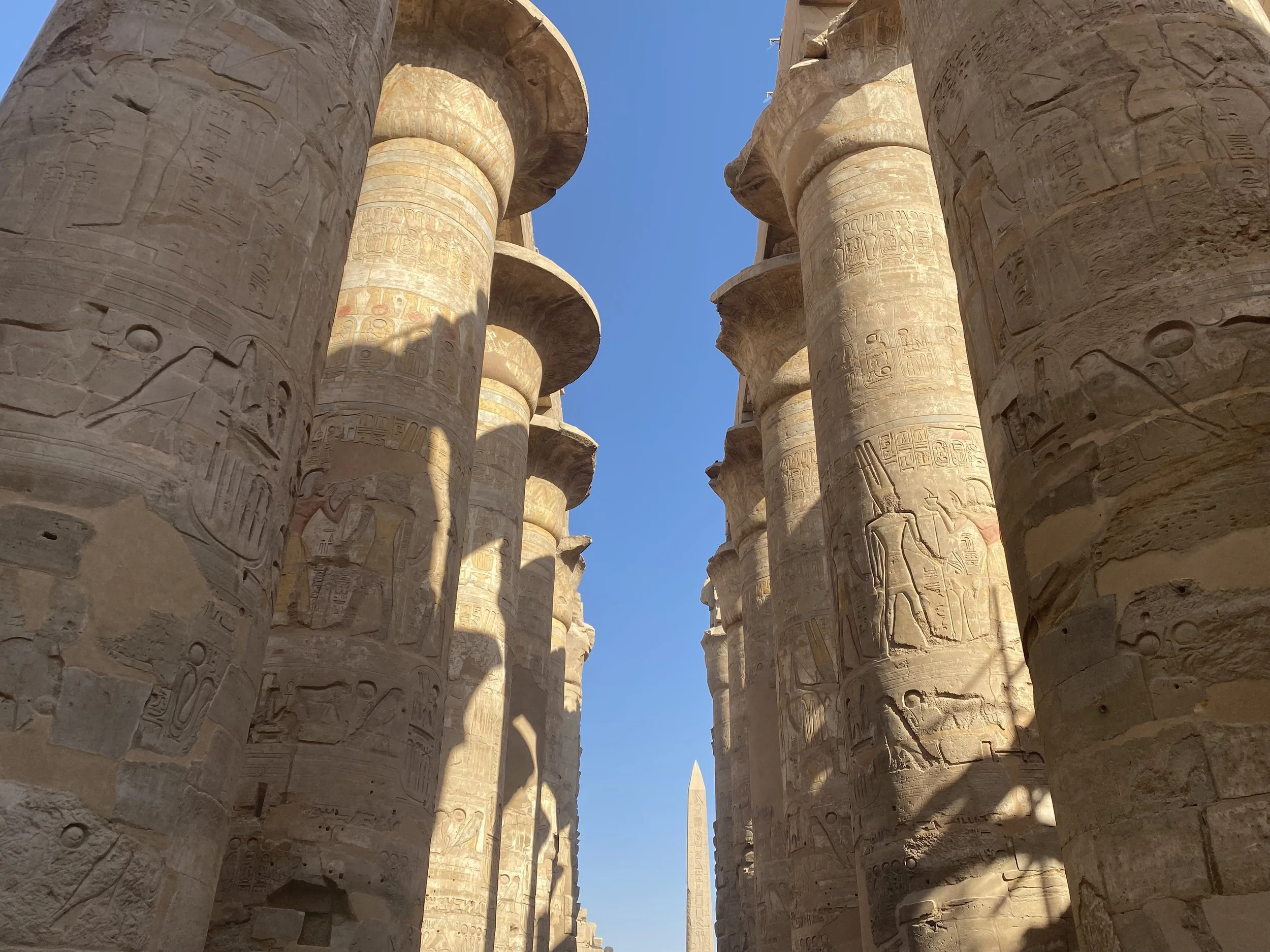
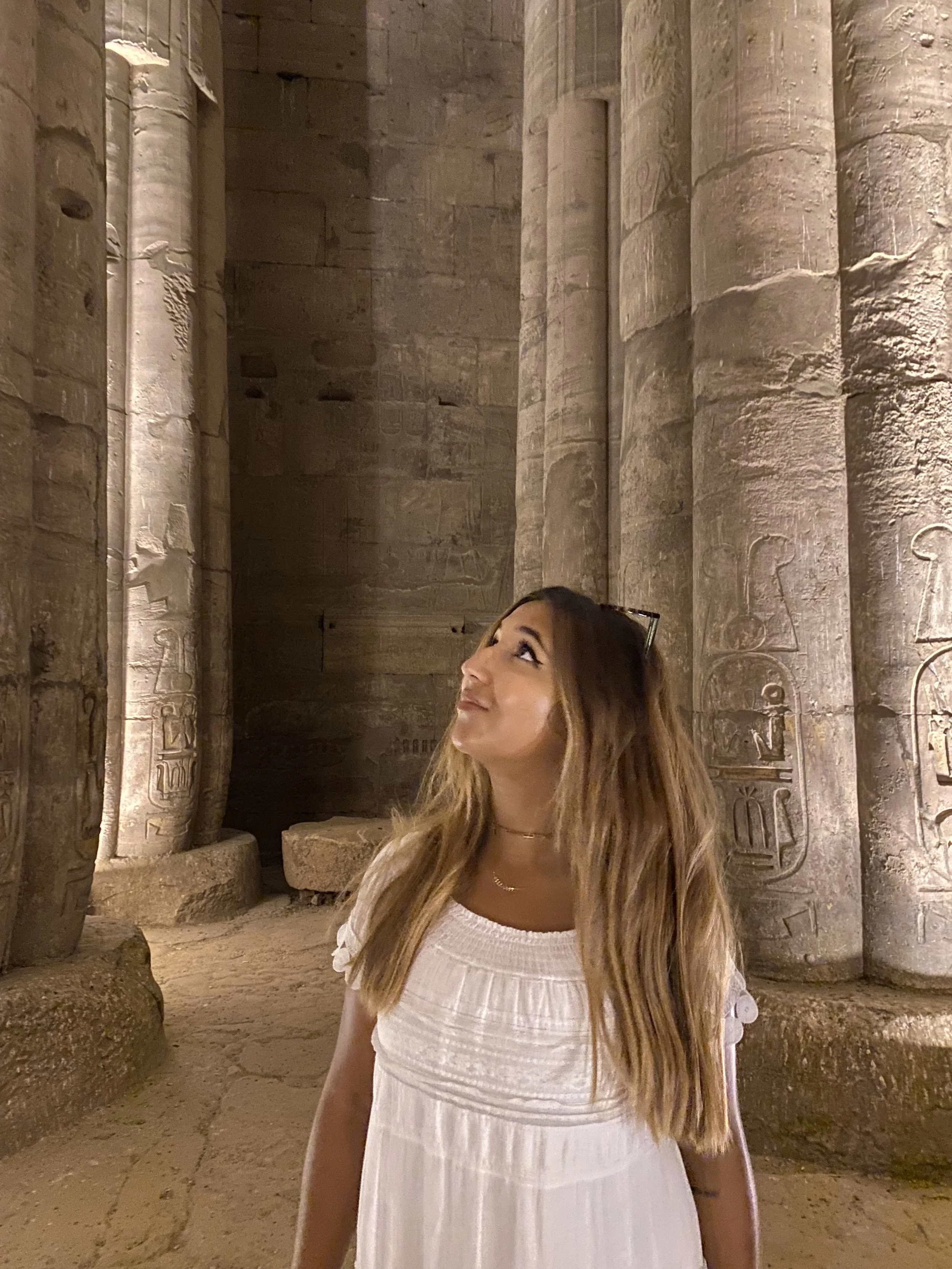
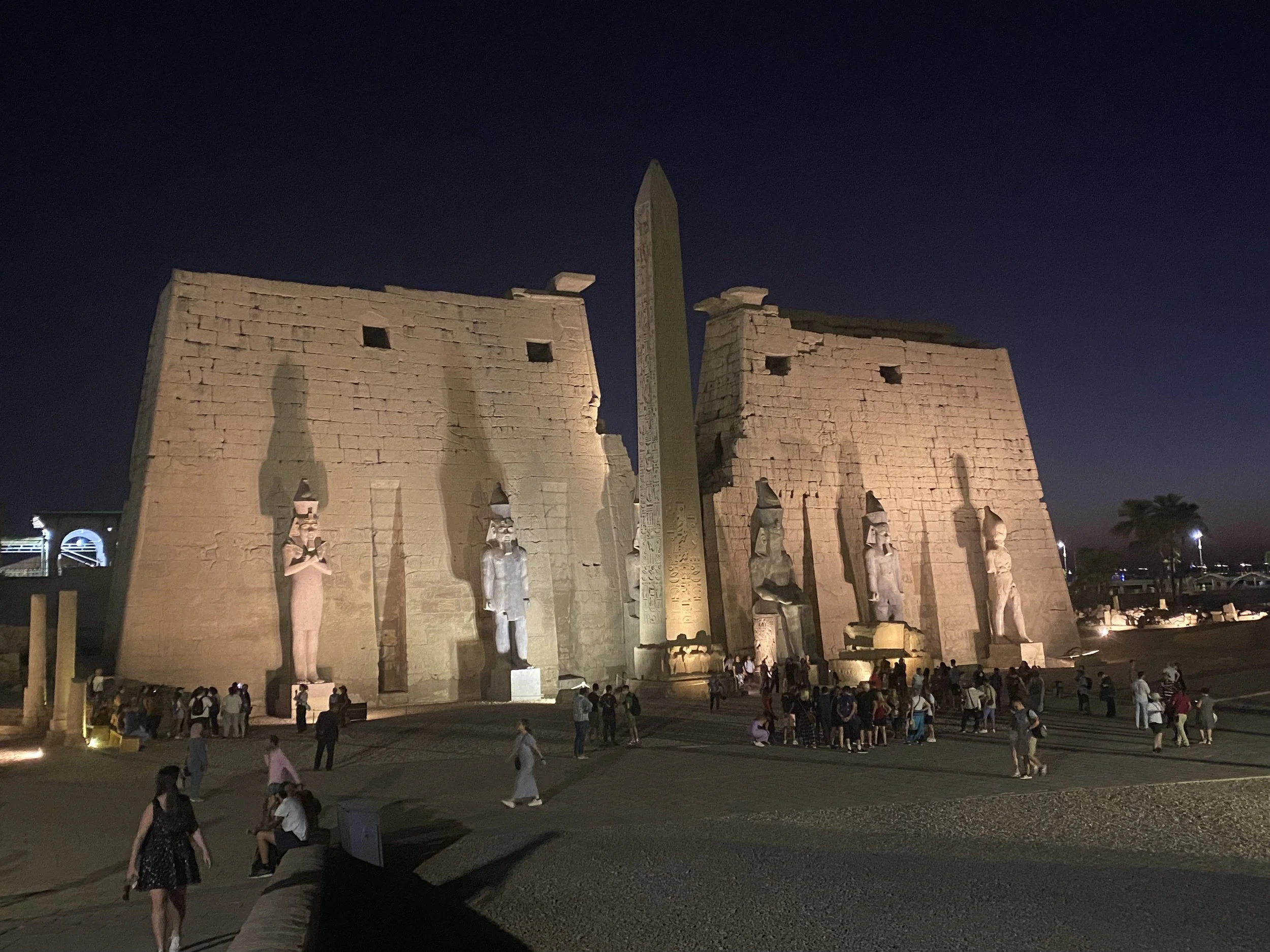
It was the temple I was most excited about it is the largest religious complex of the ancient world, a sacred labyrinth shaped by more than two thousand years of politics. It’s at the heart of Luxor, on the east bank of the Nile
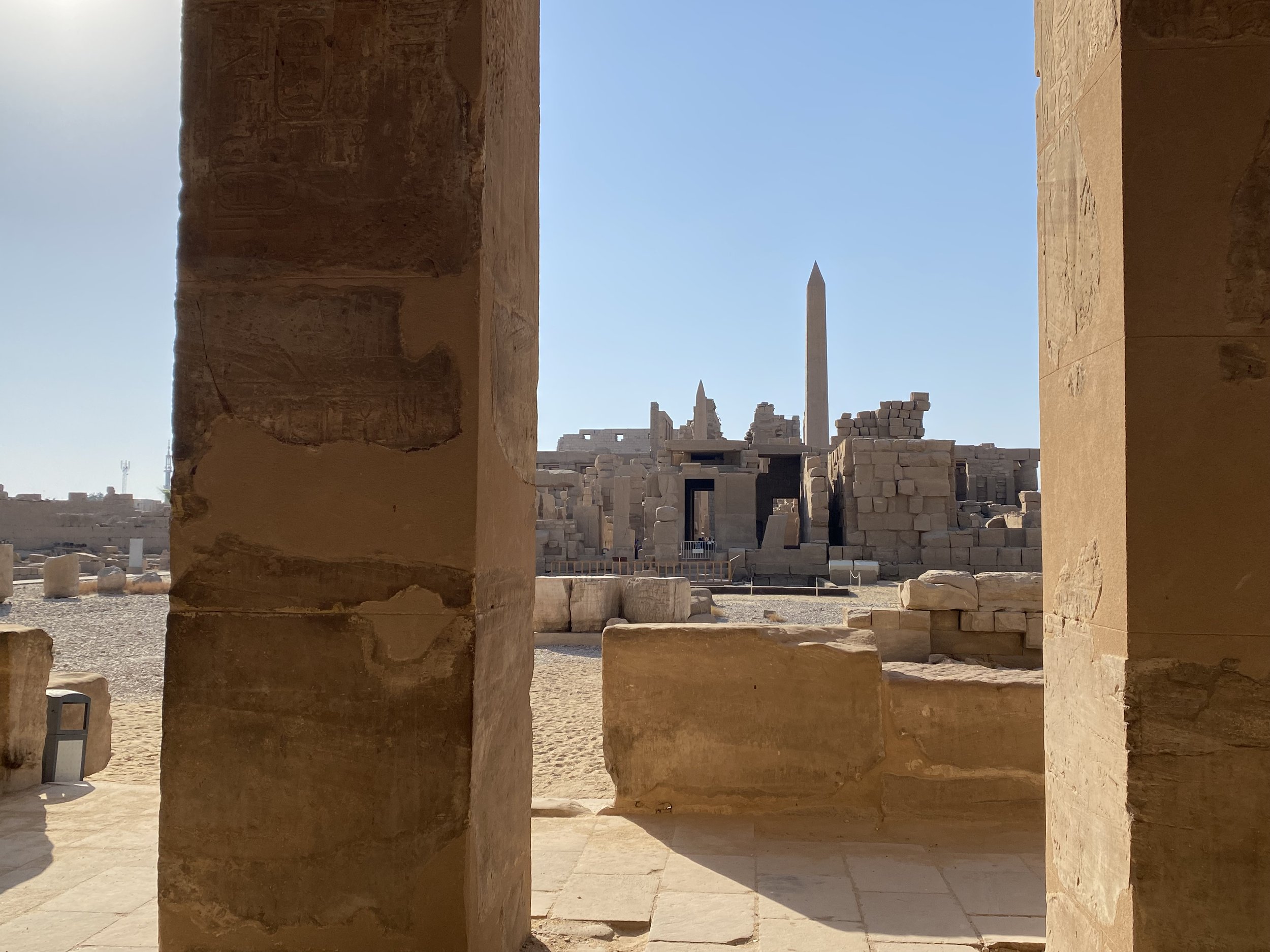
Karnak is a HUGE ensemble stretching across around 100 hectares, almost a whole city dedicated to the gods. Pretty much every pharaoh wanted to leave their mark here: chapels, obelisks, monumental pylons, hypostyle halls, etc.
Karnak is organized into three main sacred domains:
The Precinct of Amun-Ra
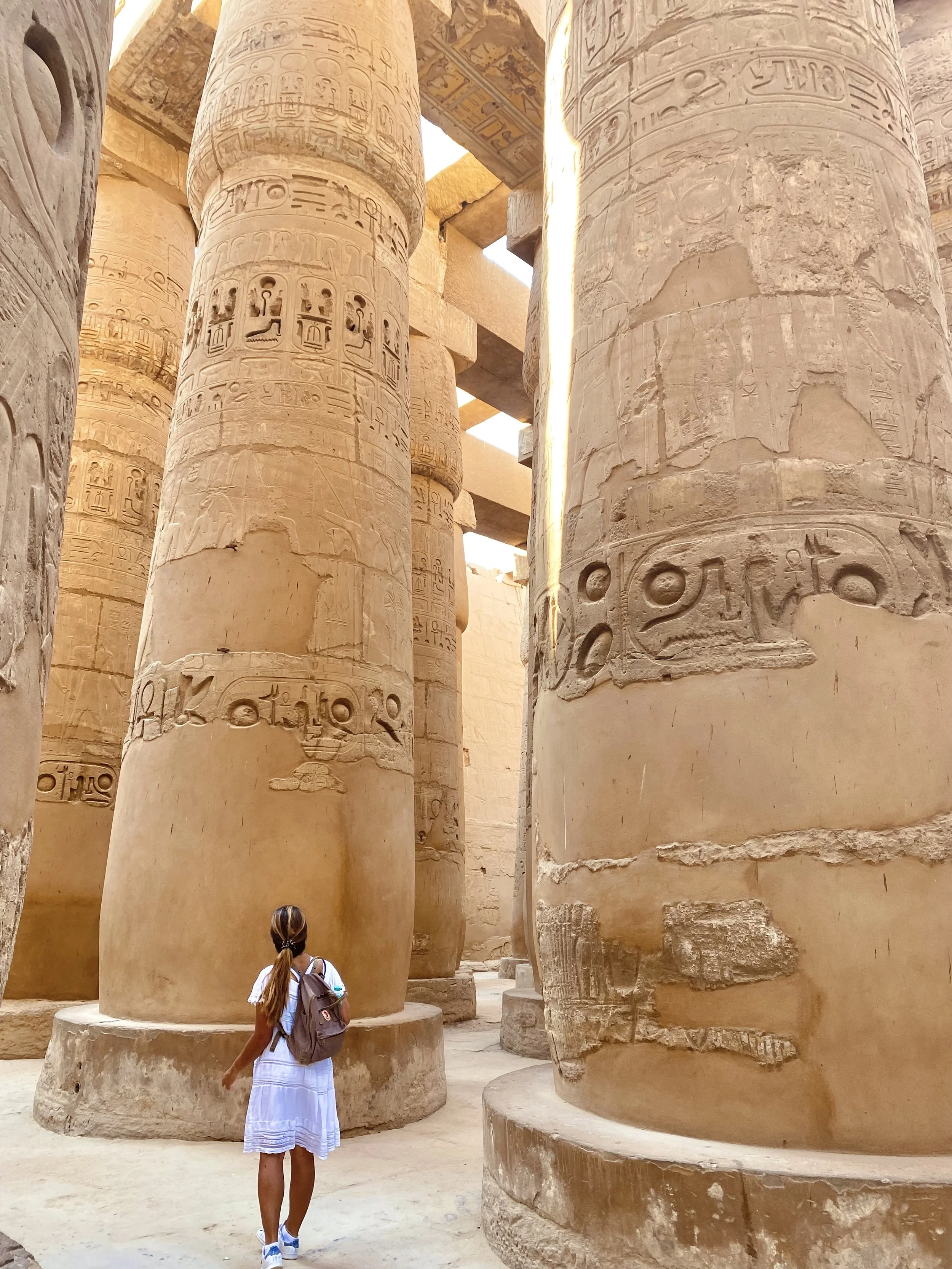
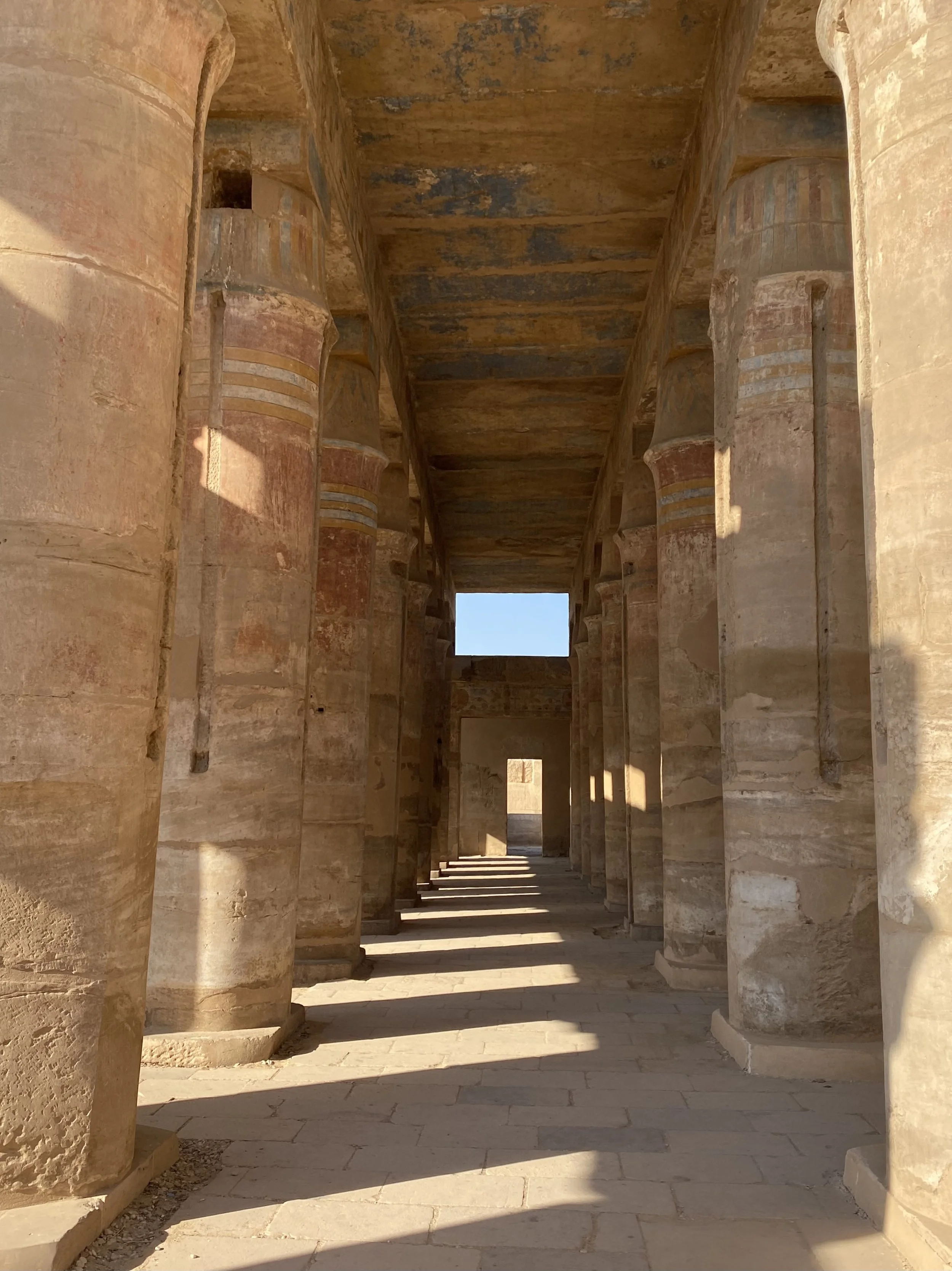
Amun-Ra combines Amun, the local god of Thebes, with Ra, the sun god. Together, they become the supreme deity: creator of the world, protector of the pharaohs. I loved the Great Hypostyle Hall : it’s composed by 134 colossal columns that are 23 meters high. It’s really impressive.
The Precinct of Mut
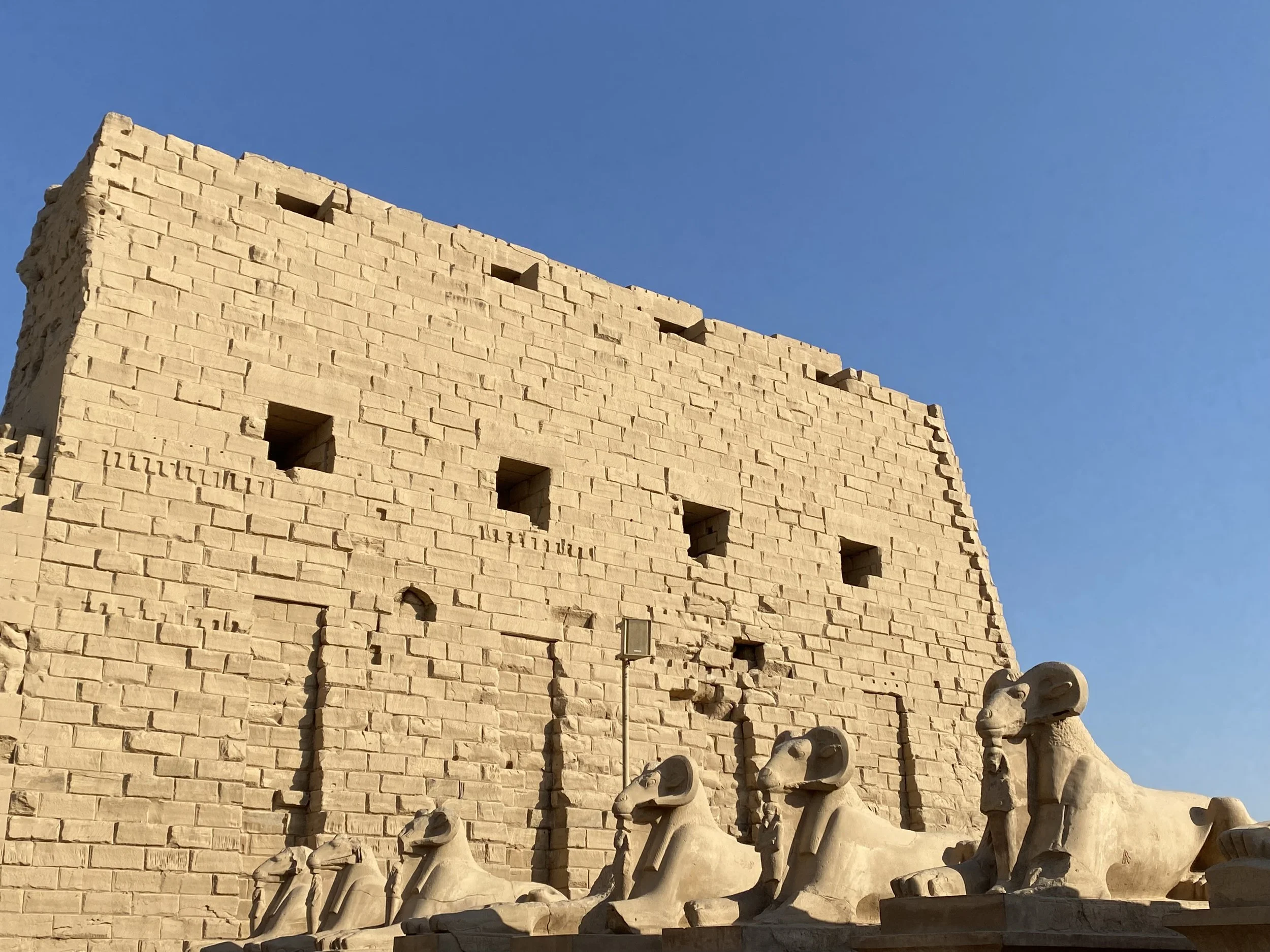
Mut is the mother goddess. She is the embodiment of feminine sovereignty and protector of royal births. Her temple was once connected to Amun-Ra’s by a long avenue of sphinxes. Today, the precinct is still under excavation and so it’s not accessible to the public.
And last…the Precinct of Montu
Montu ist the falcon-headed god of war, who gave pharaohs victory on the battlefield. Less famous than Amun, yet heavily venerated in Thebes, Montu symbolizes Egypt’s military strength. Those three together form a perfect trinity: Power (Amun), Protection (Mut), Victory (Montu).
And if you go there, don't miss the Pylon of Thutmose III covered in war scenes, a testament to one of Egypt’s greatest strategists.
Step 10: Deir el-Medina, the Village of the Royal Artisans
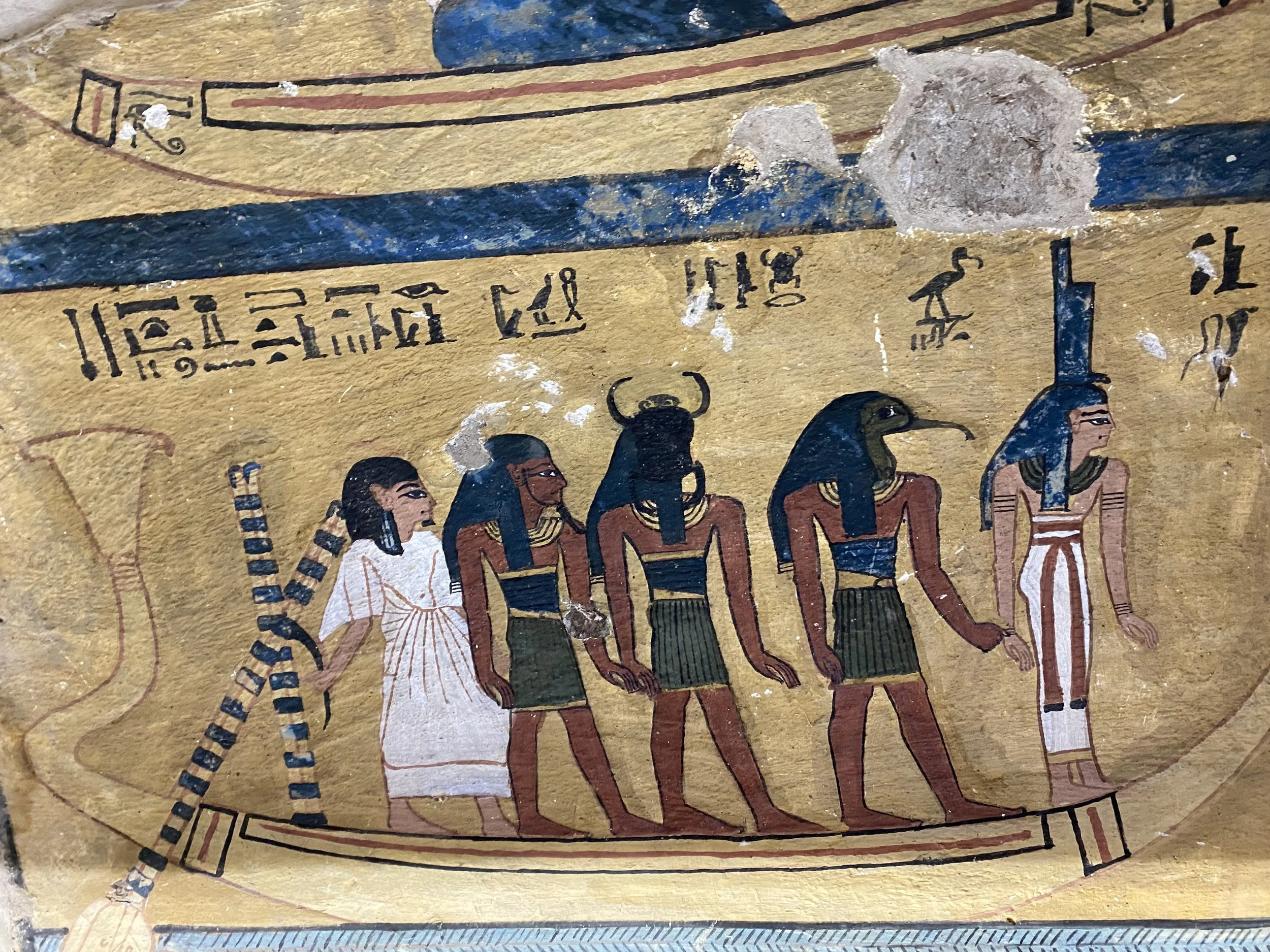
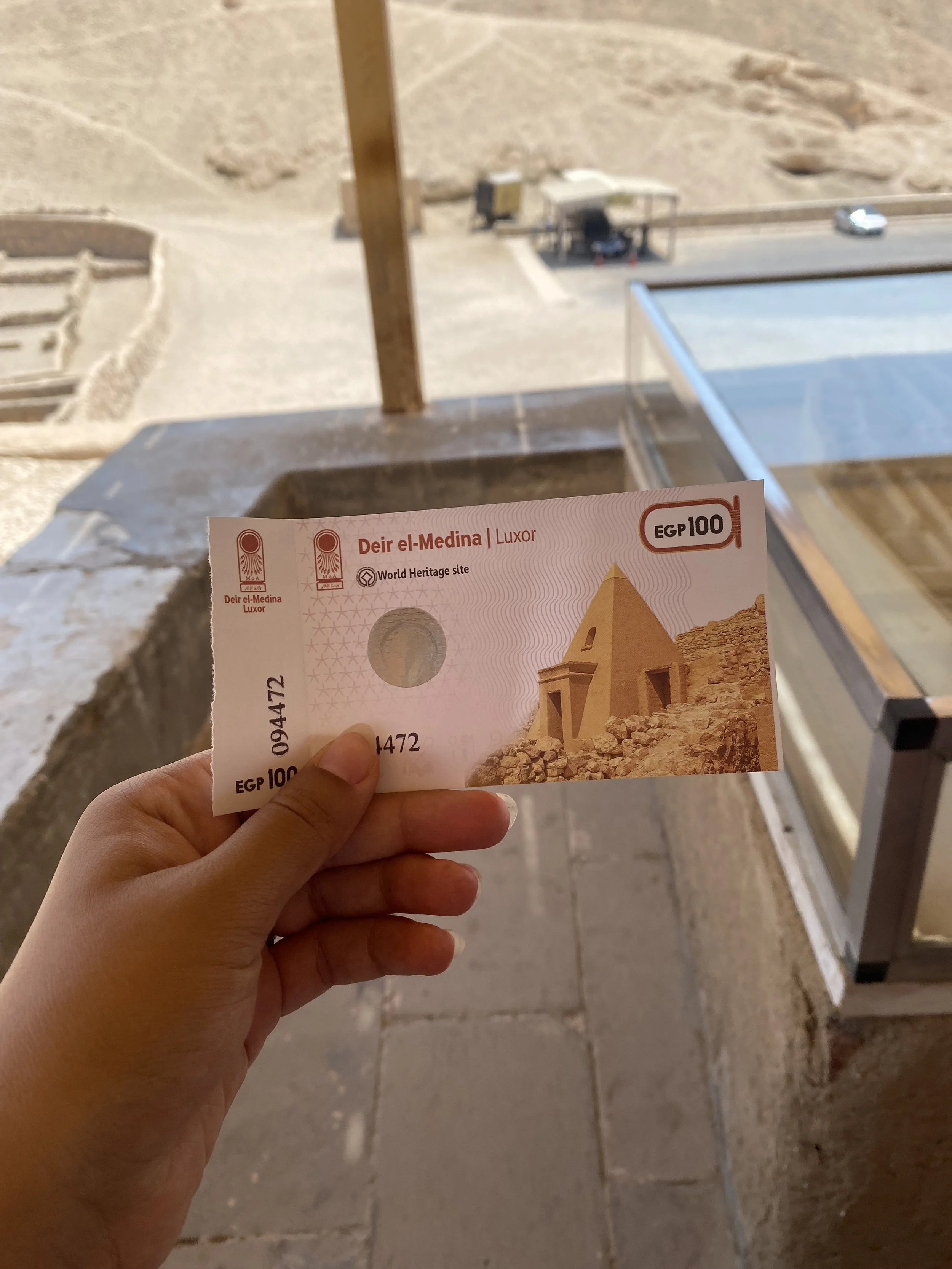
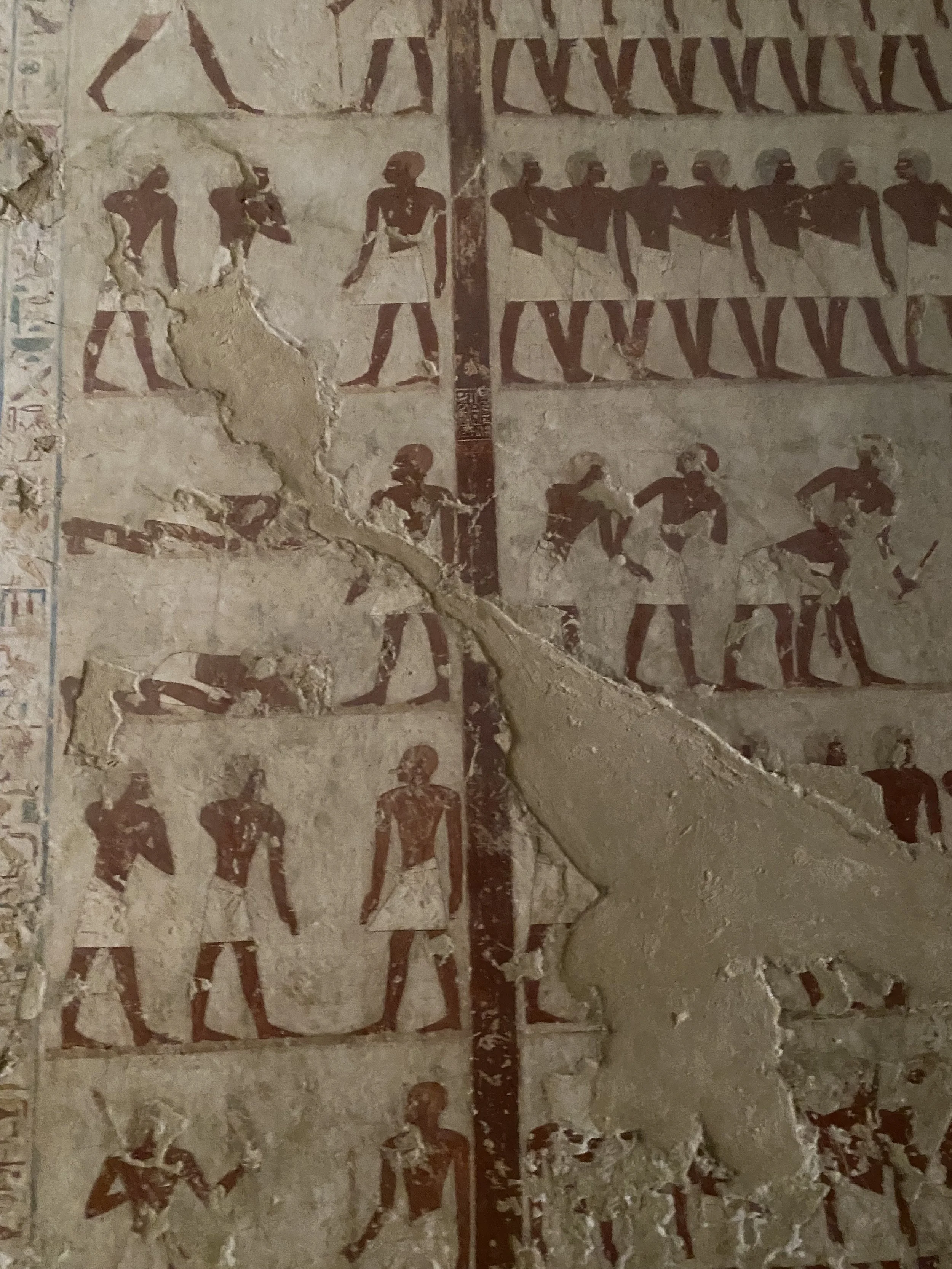
We also went to visit Deir el-Medina that plunges you into the daily life of ancient Egypt. Far from the grandeur of palaces and temples, this is where the people who were responsible for constructing the pharaohs’ tombs and funerary temples during the New Kingdom lived. Often called the village of the artisans, it was home to Egypt’s most skilled draftsmen, sculptors, painters, and plasterers. They painted and carved most of the Valley of Kings and also The Temple of Hatshepsut.
Step 11: Marsa Alam
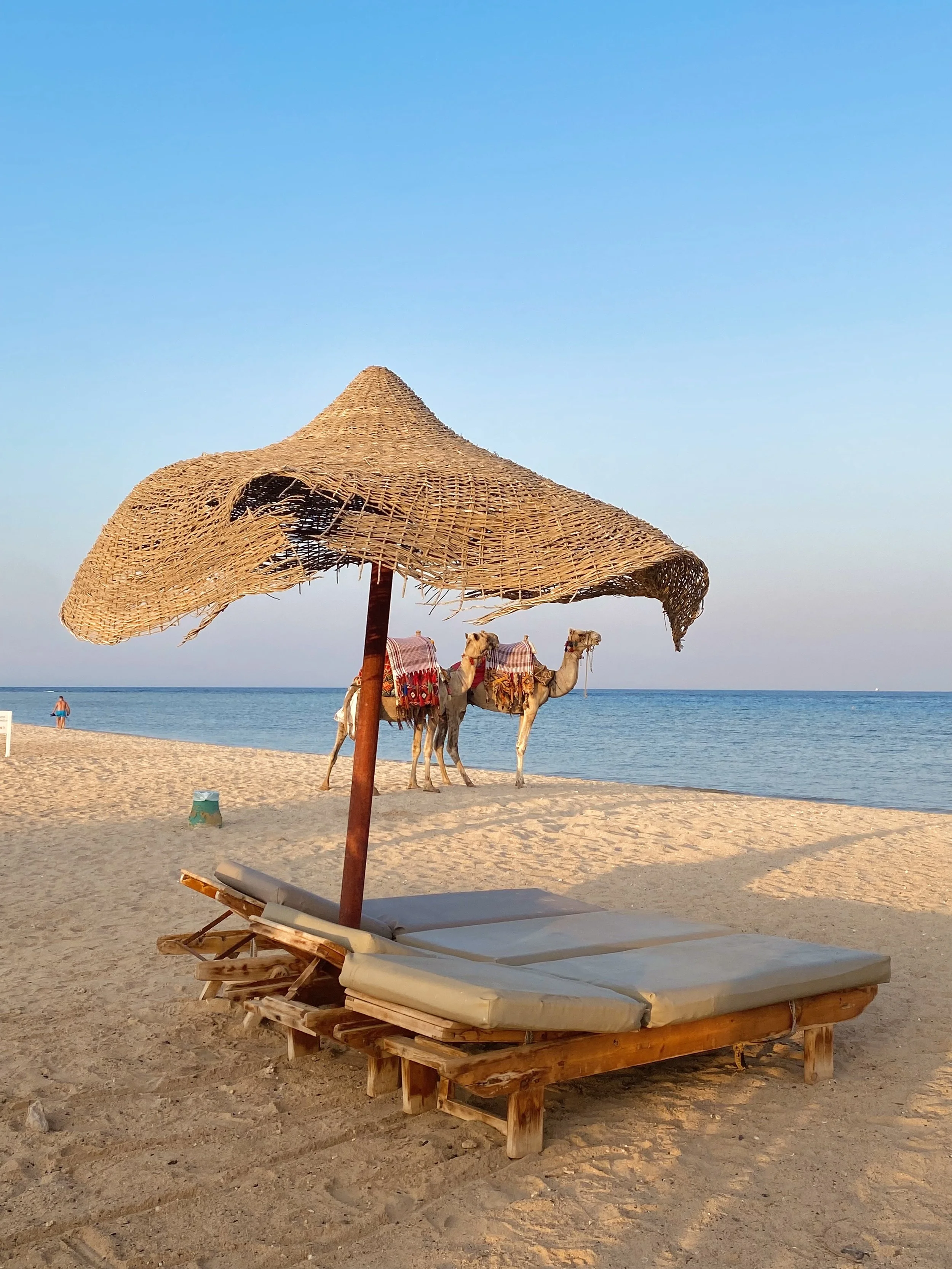
For the next leg of our journey, we spent several days at a resort in Marsa Alam, a coastal town in southeastern Egypt on the western shore of the Red Sea. So we traded temples and deserts for the sea and vibrant marine life because my mom really wanted a few days of calm and beaches before heading back.
As we were by the Red Sea, renowned worldwide for its underwater world, we of course had to go snorkeling and diving into that paradise. We had a boat matinée and spent a lot of time just looking and snorkeling around.



Step 12: Cairo
To close our Egyptian journey, we spent two days in Cairo, the capital and economic hub of the country. Located in the north near the Nile Delta, this city is home to over 20 million people, making it one of the most densely populated cities in the world and even I (coming from Paris) was struck by its crowded streets and busy shops.
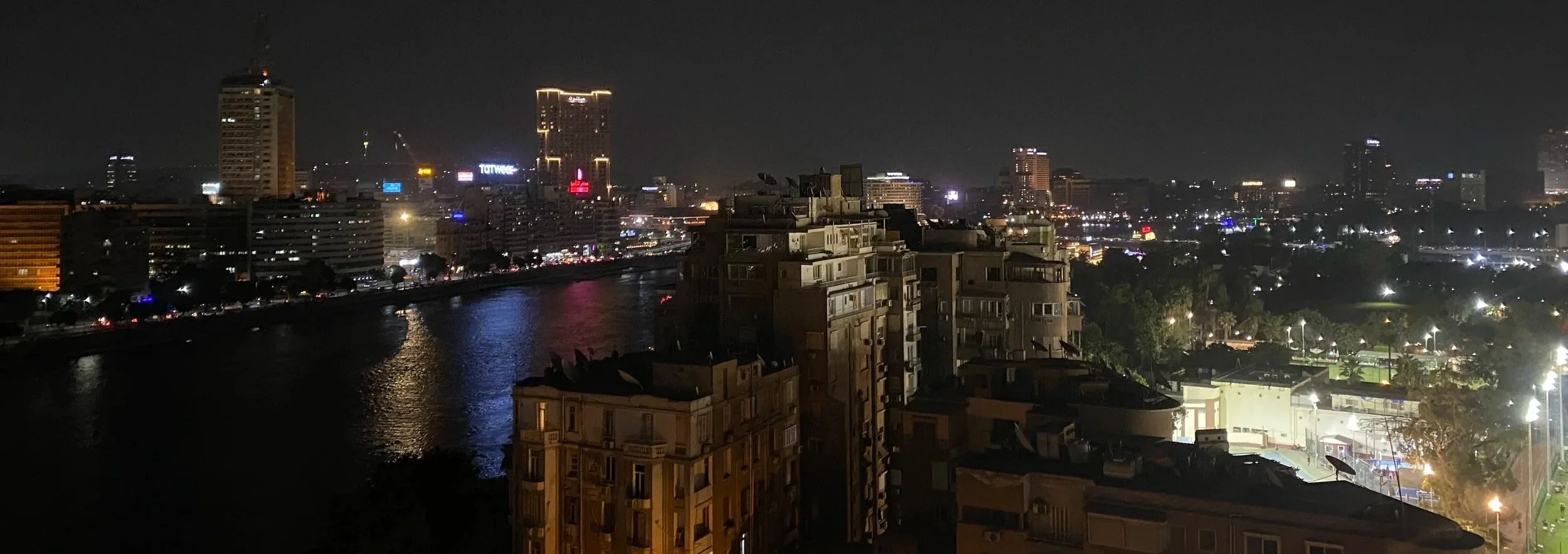
Cairo by night
What we visited and some must-sees:
I mean… of course: The Pyramids of Giza
No visit to Cairo is complete without marveling at the pyramids, symbols of the Egyptian civilization that shaped history as early as the 3rd millennium BCE. It is the only surviving structure of the Seven Wonders of the Ancient World.
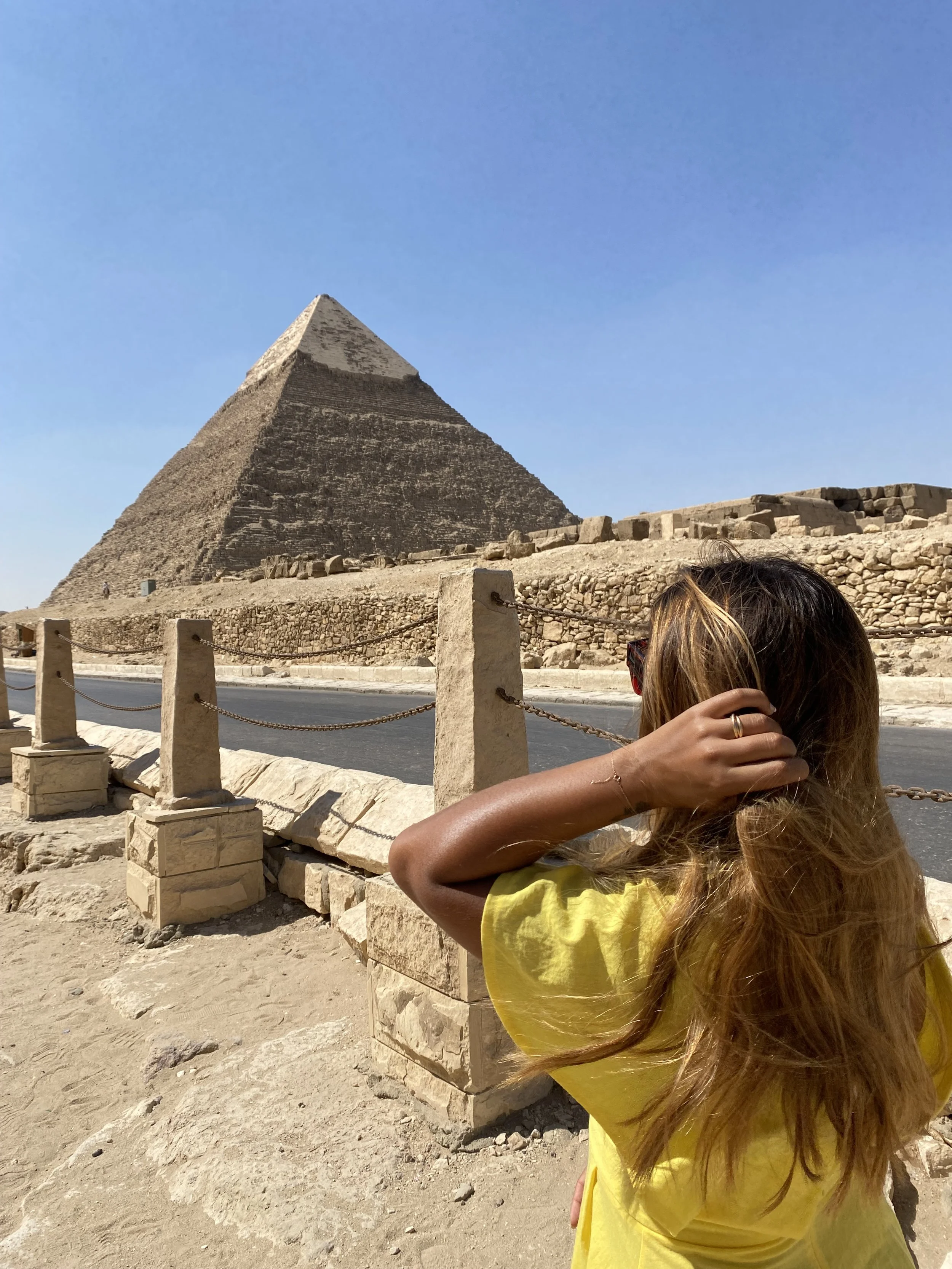
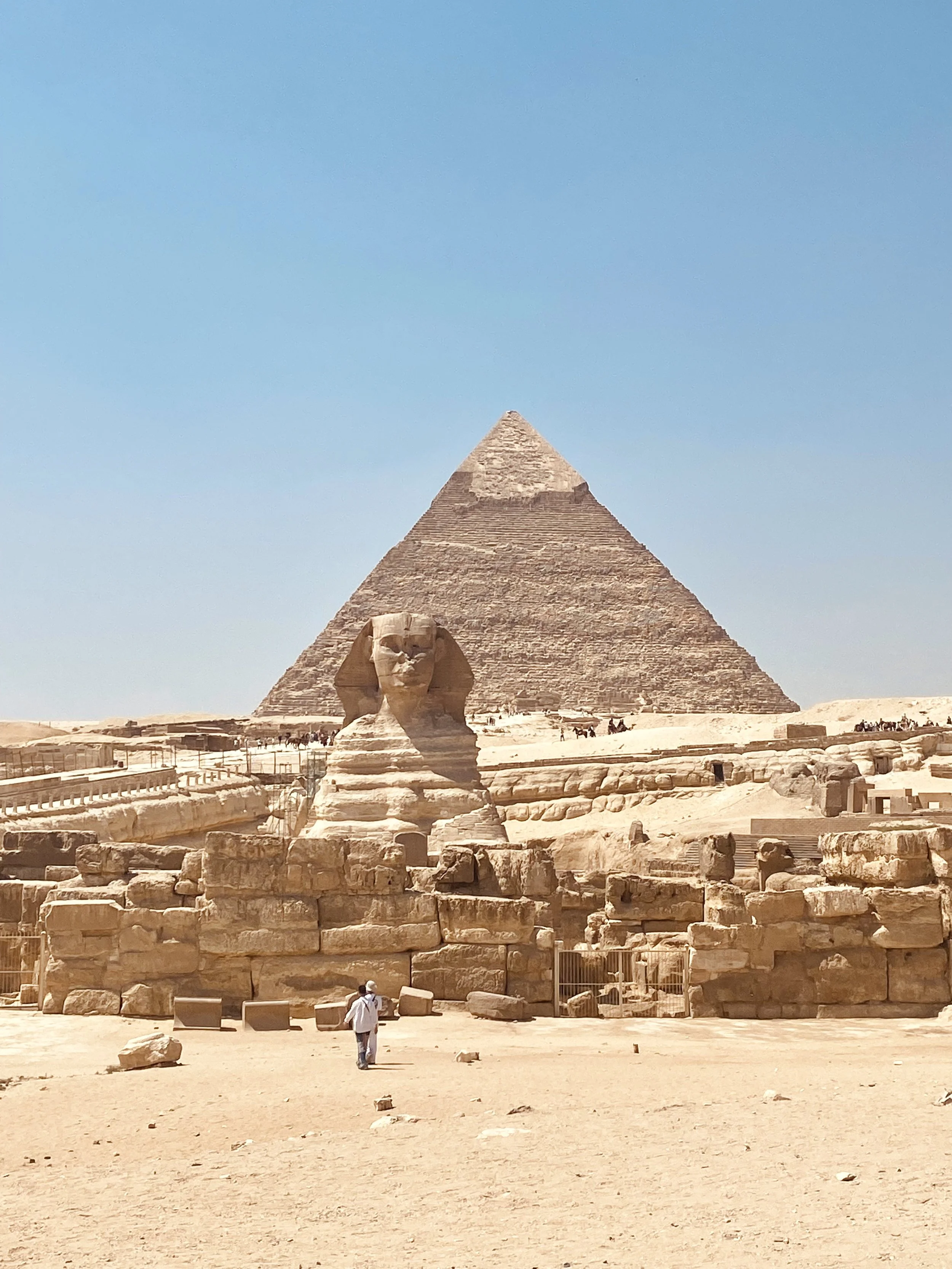
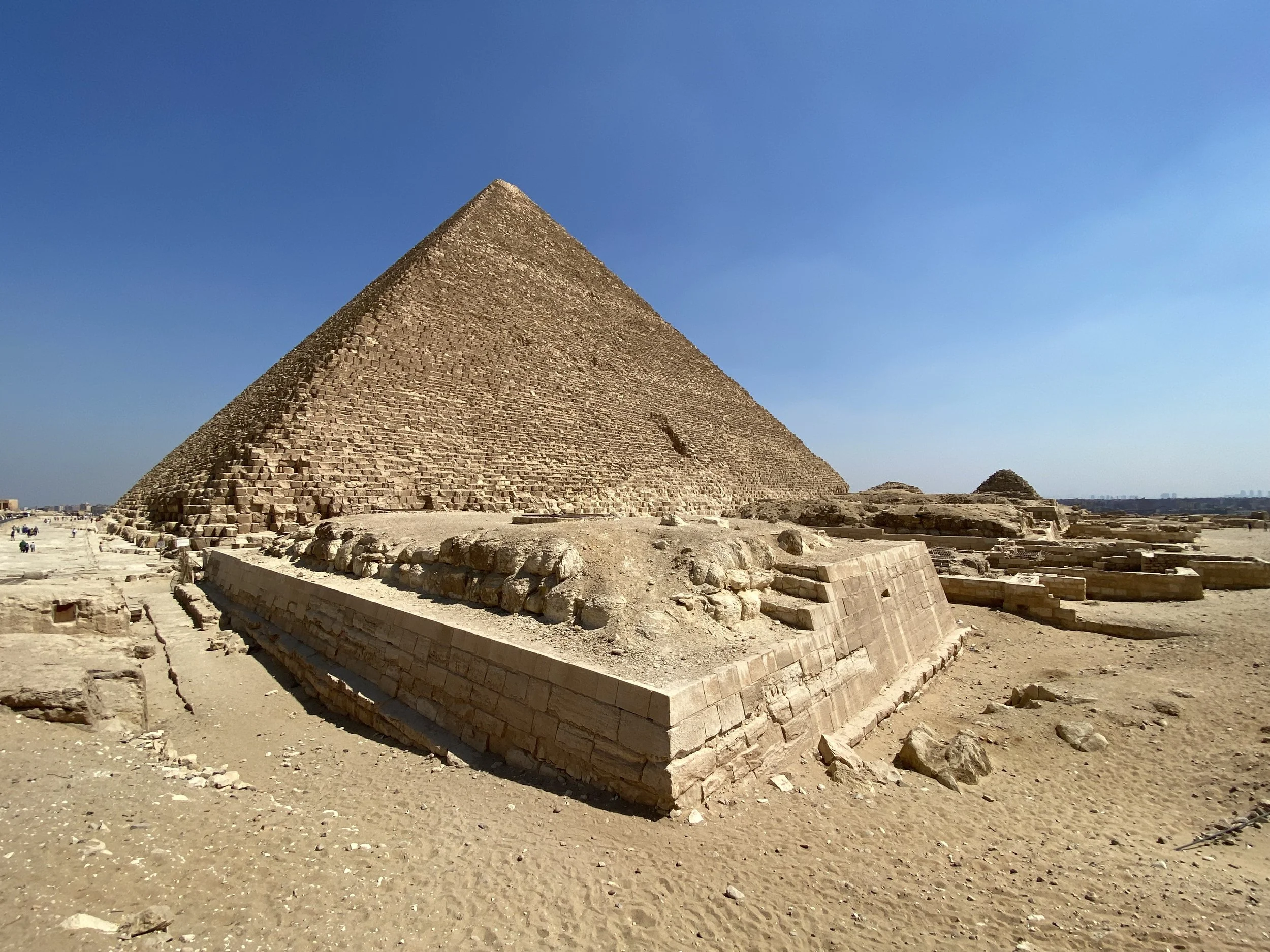
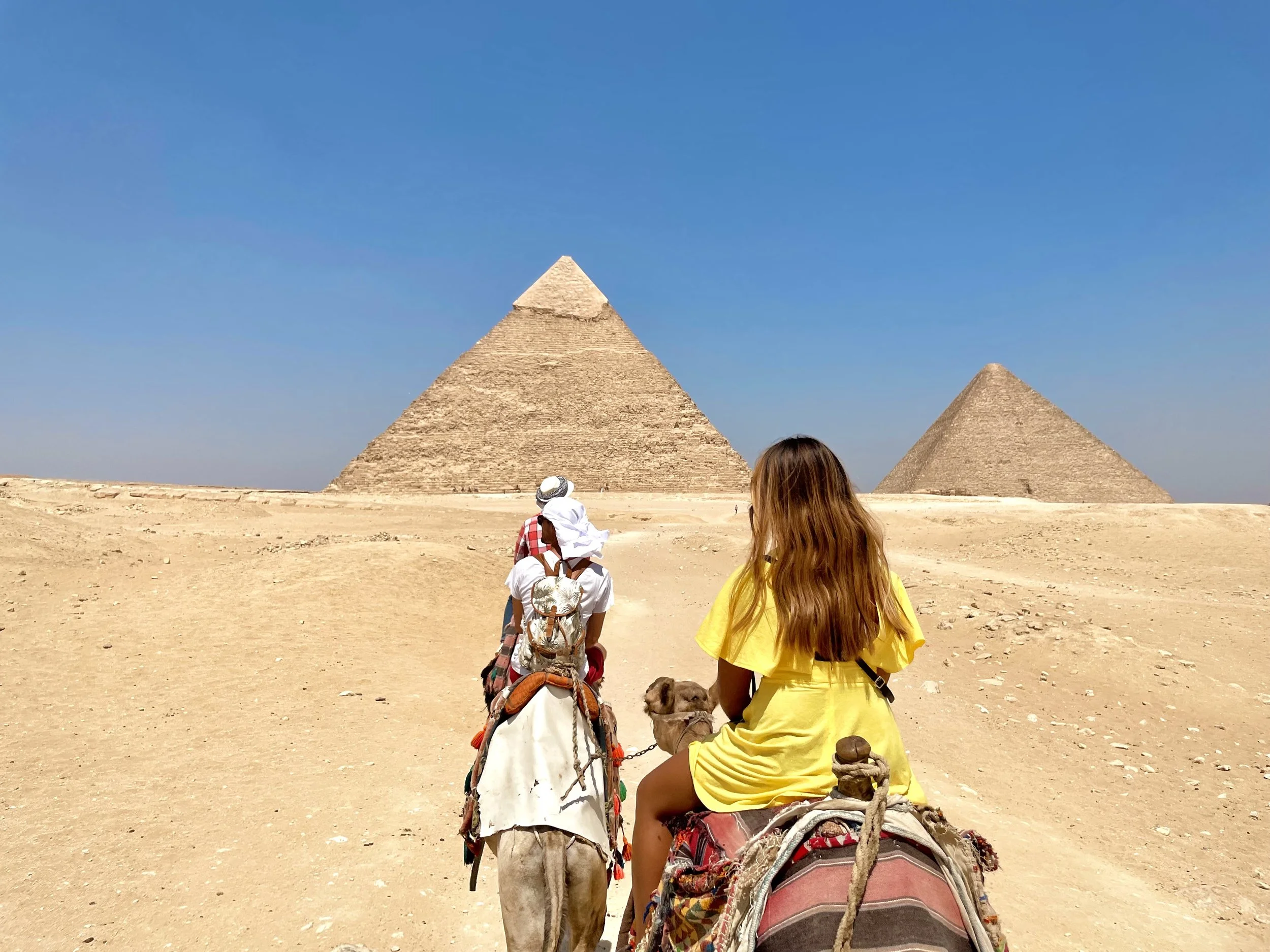
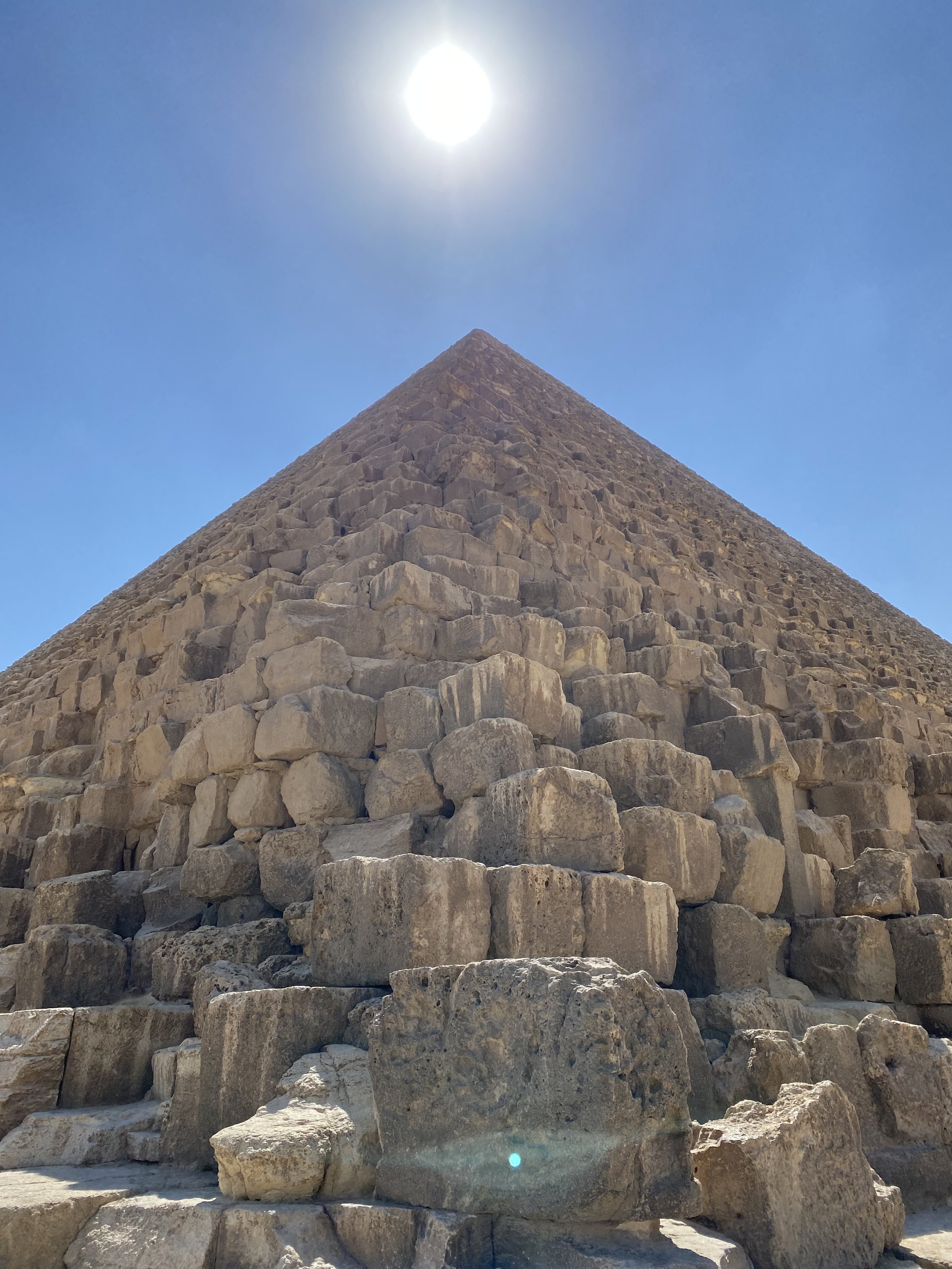
They were built for Pharaohs: The pyramids are monumental tombs, mainly for Pharaoh Khufu (the Great Pyramid), Khafre, and Menkaure.
We didn’t enter them but stayed around with our guide and went also to see the other icon, the Great Sphinx of Giza. The statue represent the body of a lion and the head of a human and is to represent Pharaoh Khafre and was carved directly from the bedrock near the pyramids
The Ramses Museum
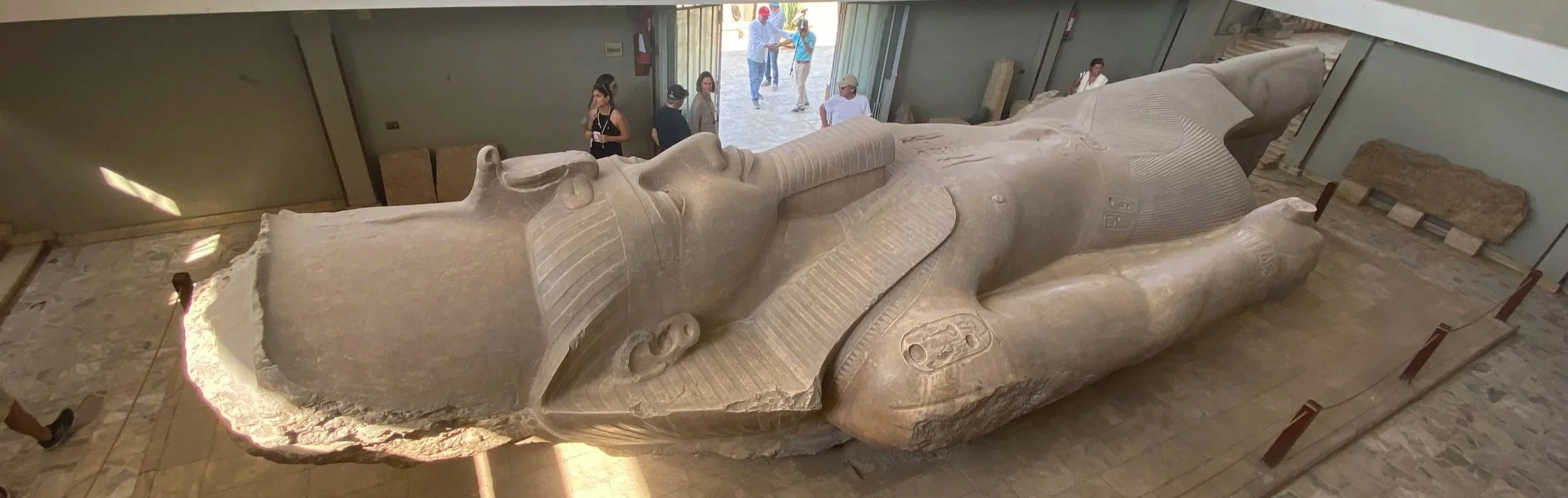
If you have time i’d say stop by because nothing prepares you to not be impressed by the colossal statue of Ramses II. It’s one of the largest in Egypt. It was originally part of a temple in Memphis and has impressive details on the body and face.
Egyptian Museum
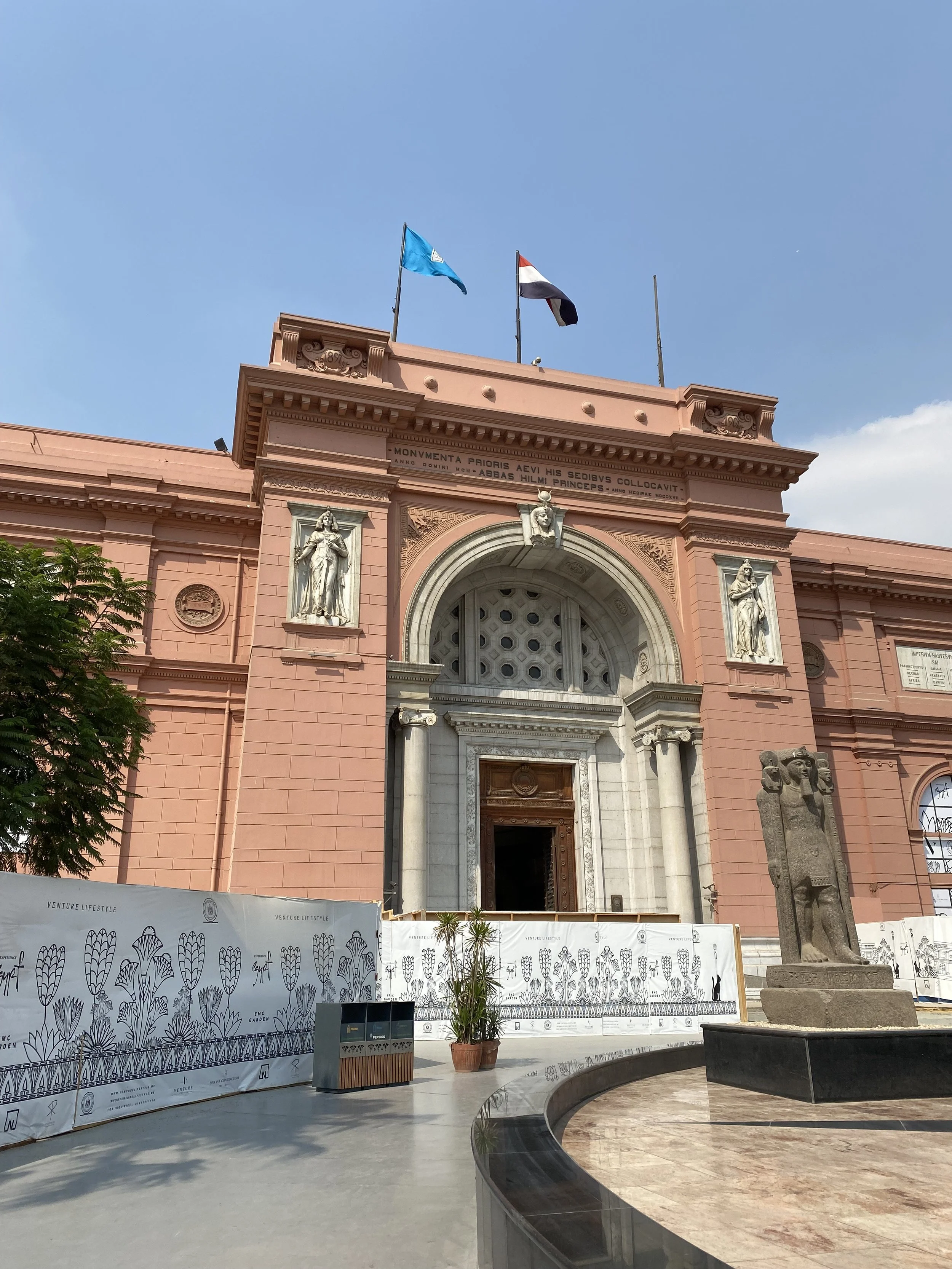
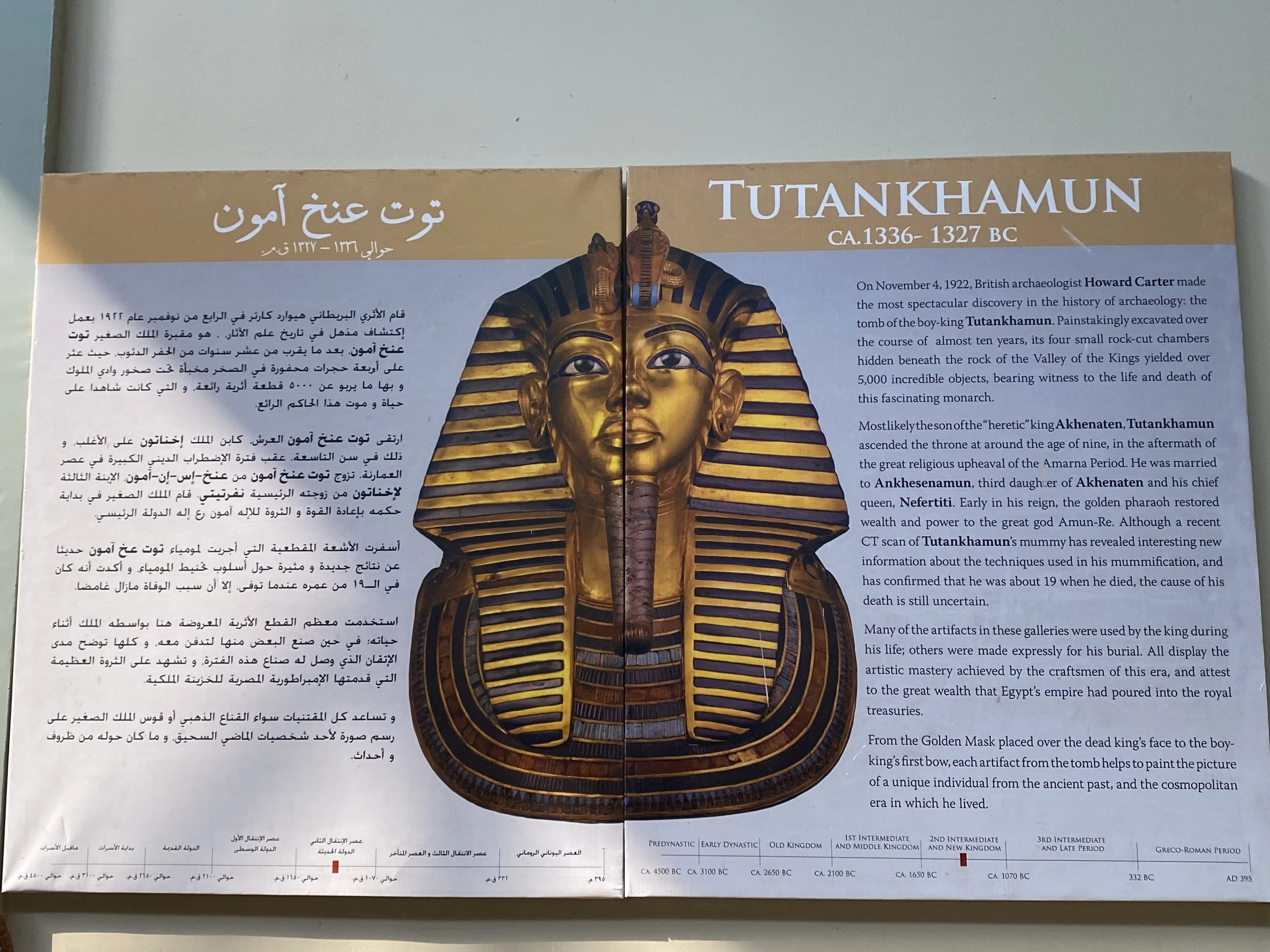
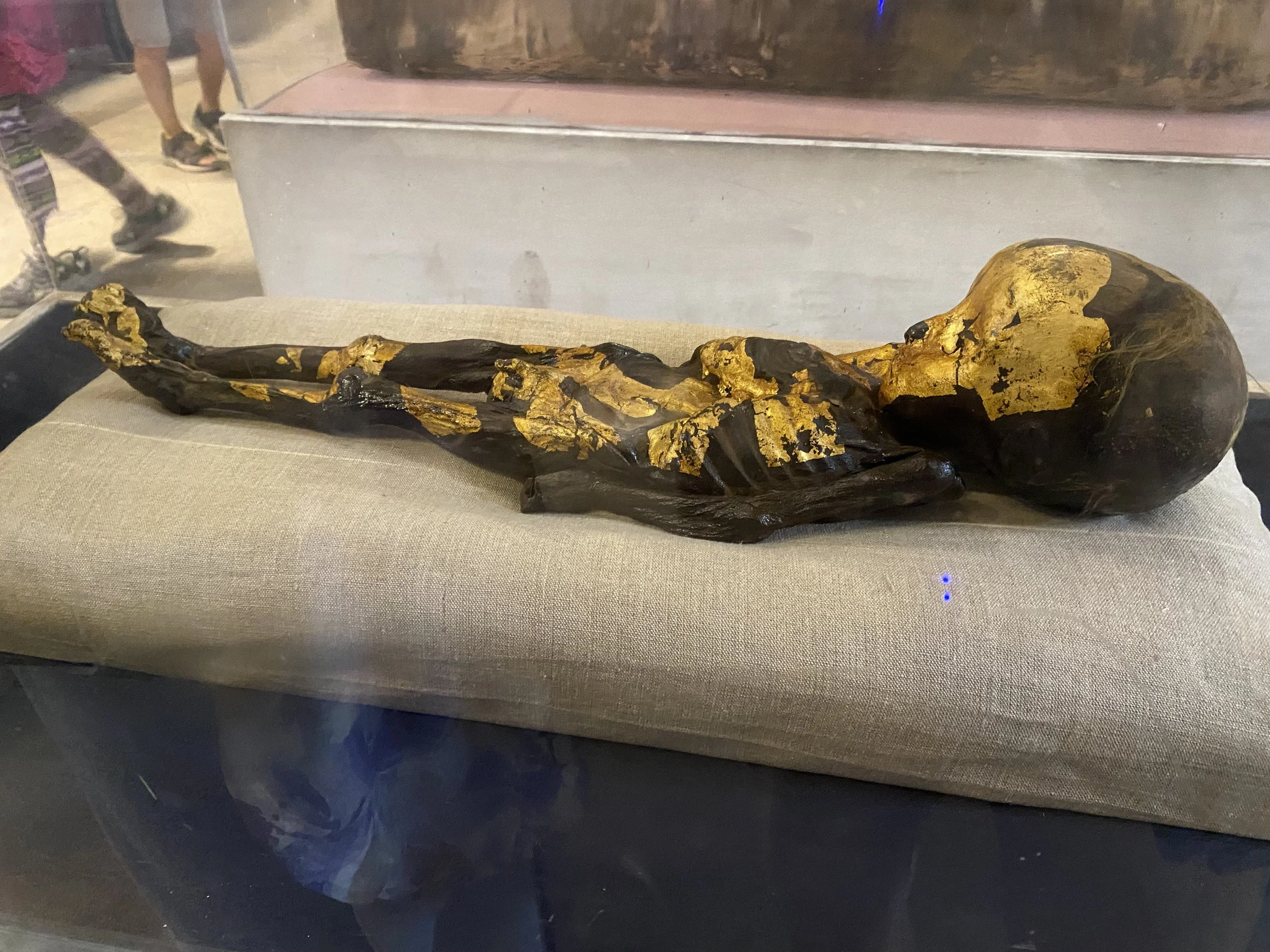
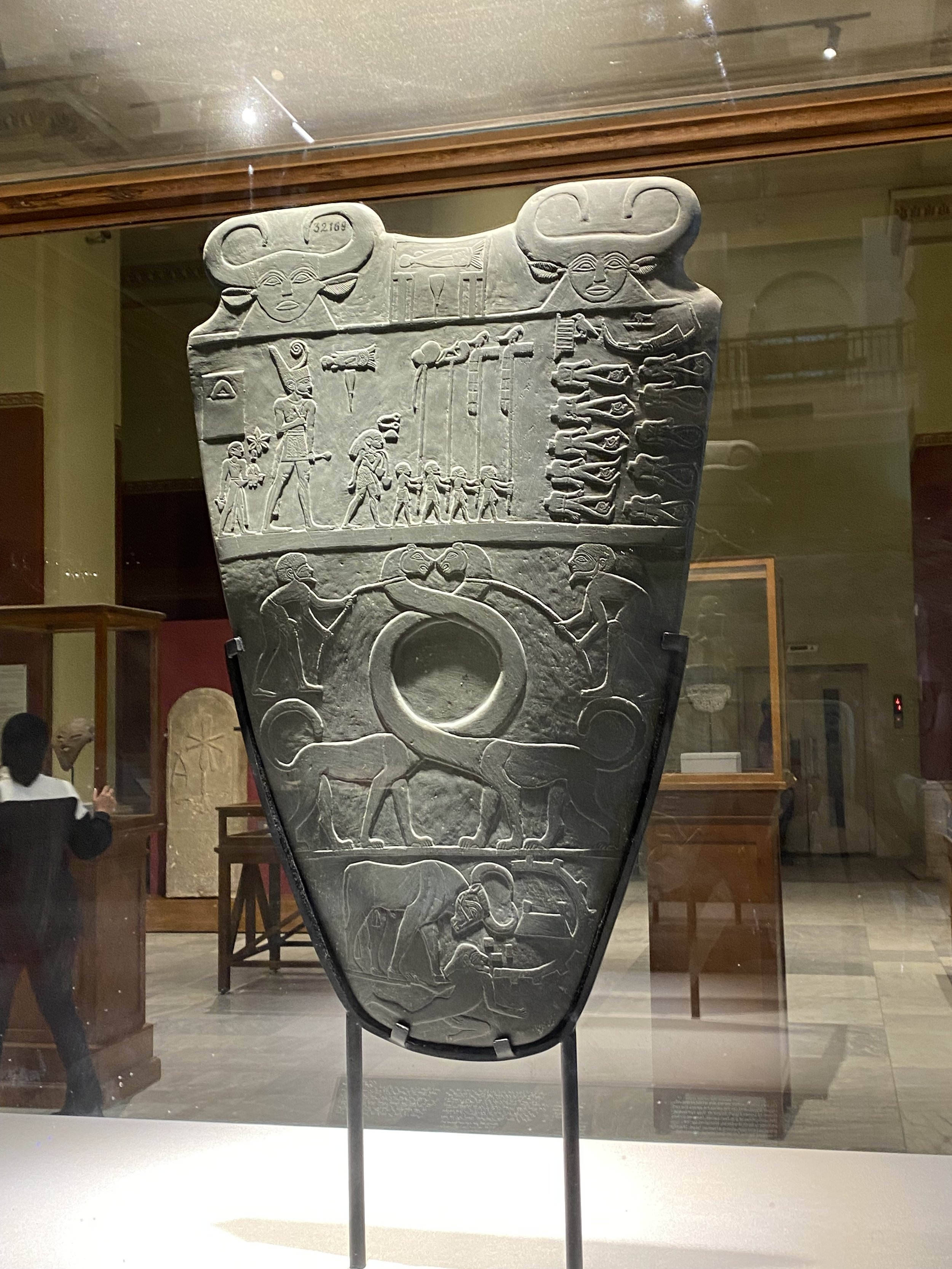
Of course I’d vividly encourage you to go to The Egyptian Museum, if only just to see the museum’s most famous exhibit : the treasures of King Tutankhamun, including his golden mask, jewelry, chariots, and even his mummy. Pictures are not allowed and don’t joke around because they are strict about this rule. If you’re curious about more details and history you’ll have fun and learn a lot. Some of my favourite parts were the Narmer palette, the mummified sacred animals, but also the tomb of Yuya and Thuya and their ancient papyri.
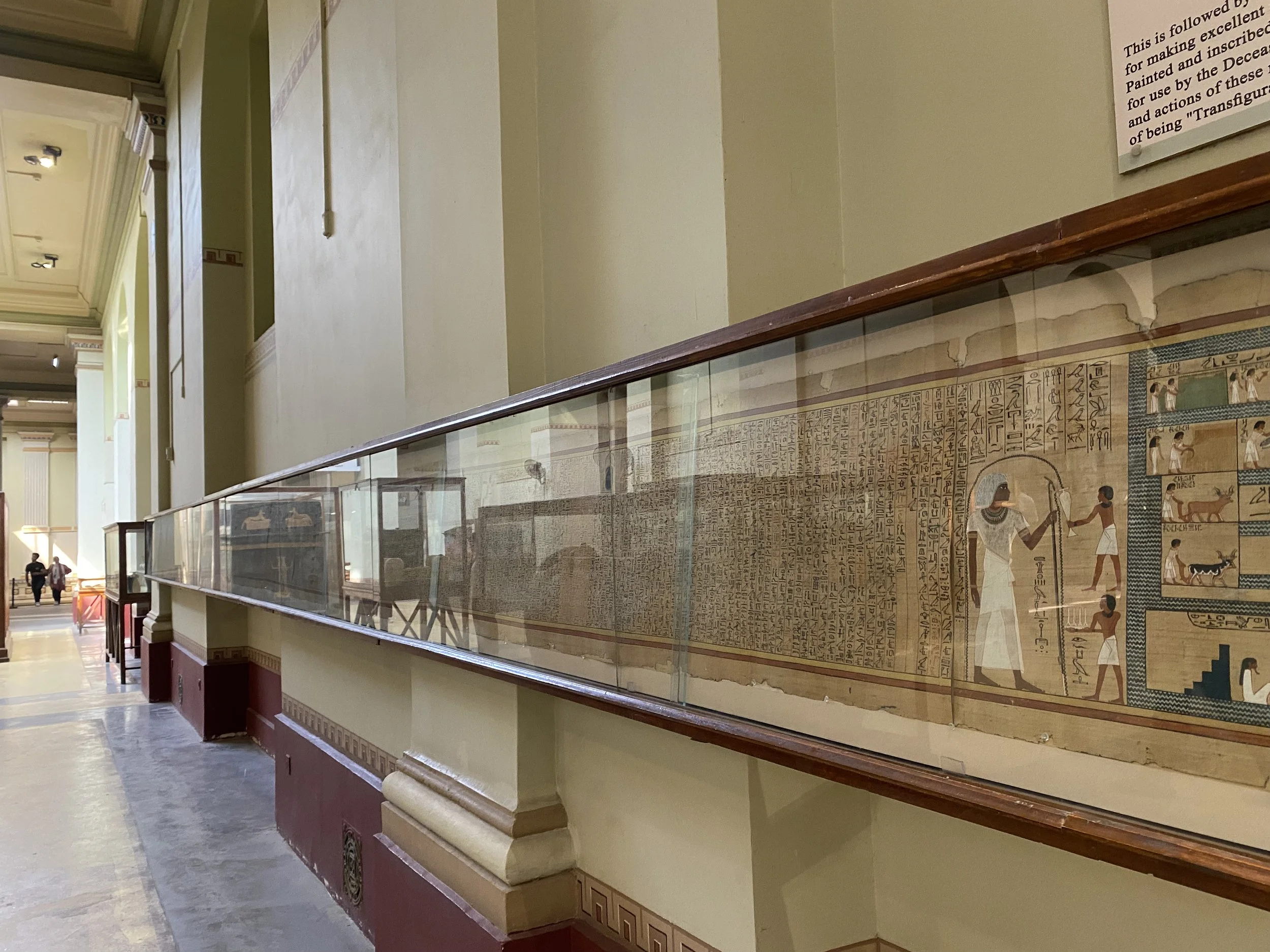
Their tomb contained well-preserved burial goods, including their mummies and of course jewelry, furniture, etc. Among these finds were papyrus documents that are considered historically important because they show funerary practices of non-royal but elite individuals. Provide insight into religion, embalming, and tomb preparation in the 18th Dynasty. Include texts that predate Tutankhamun’s tomb, offering context for later royal burials.
Saqqara and Imhotep’s Site
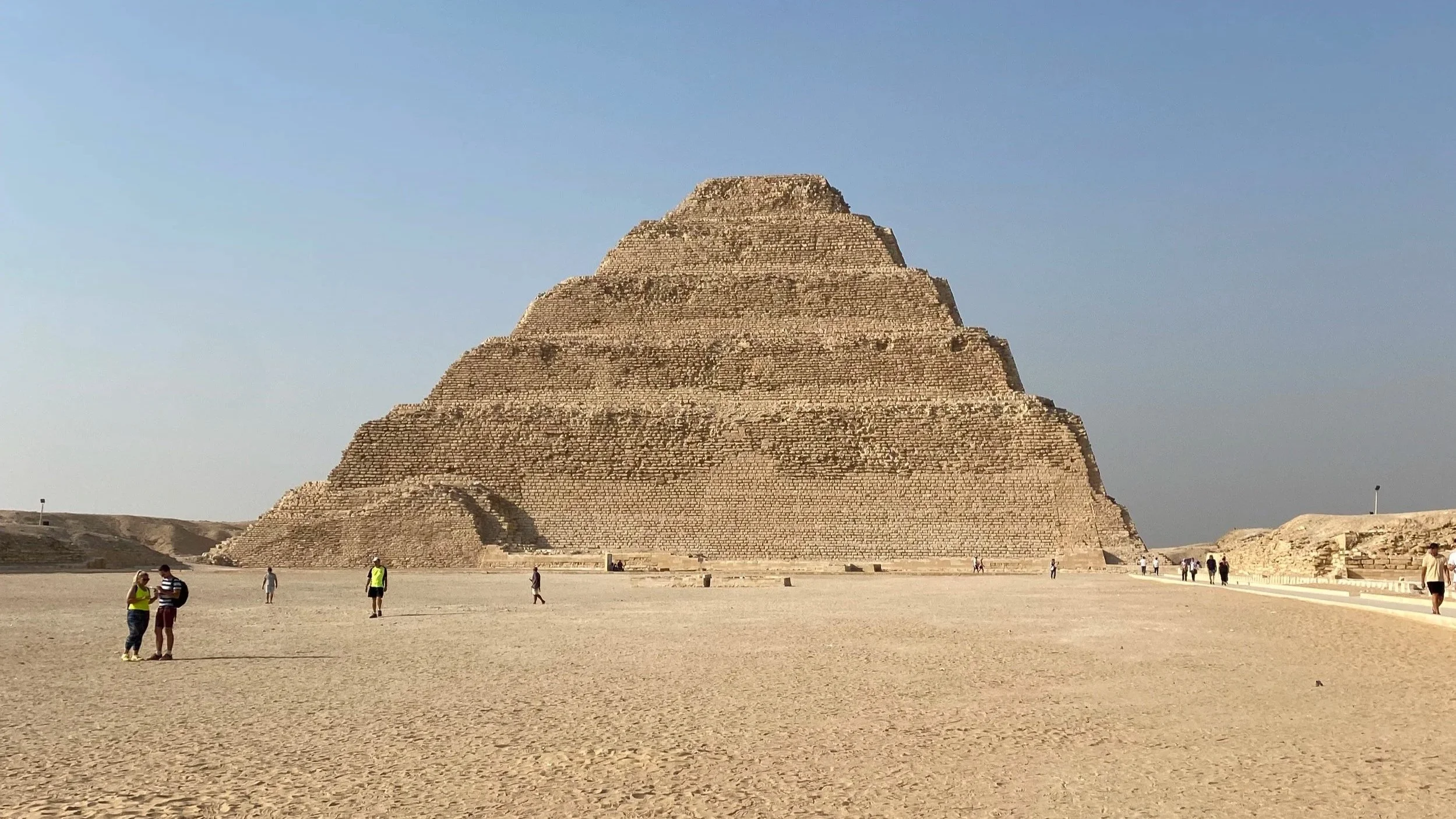
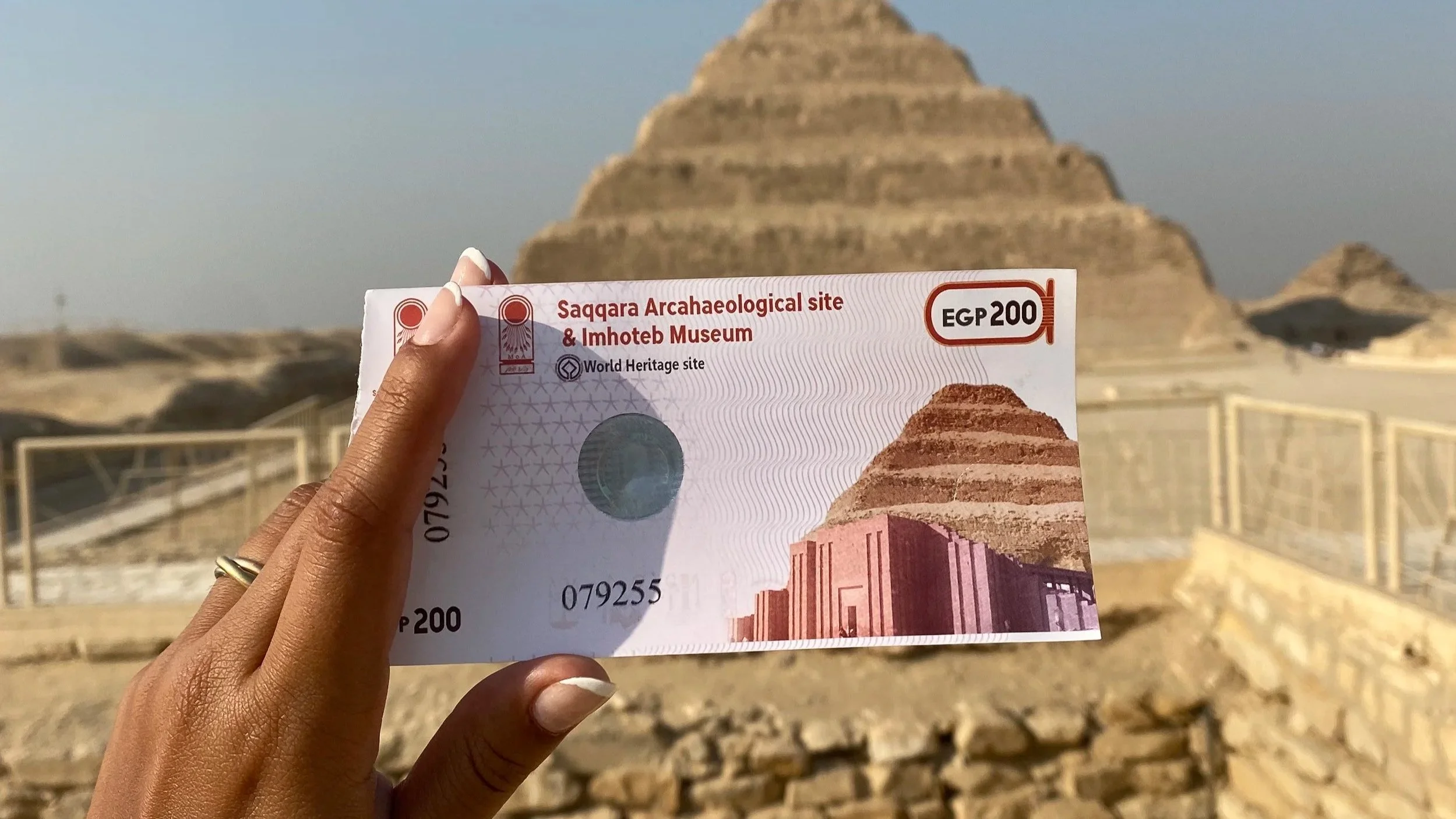
Just a few kilometers from the city center, Saqqara reveals the genius of architect Imhotep and his early step pyramids. They existed before Giza and perfectly illustrate the transition from mastabas to smooth-sided pyramids. Our guide talked to us about the evolution of royal funerary architecture.
One of the most famous sights there is the Step Pyramid of Djoser, built around 2630 BCE, and it’s the first pyramid in history. Think about that: Imhotep was later deified because of this, because of his genius; he’s one of the very few non-royal Egyptians to be worshipped as a god
The Citadel of Cairo
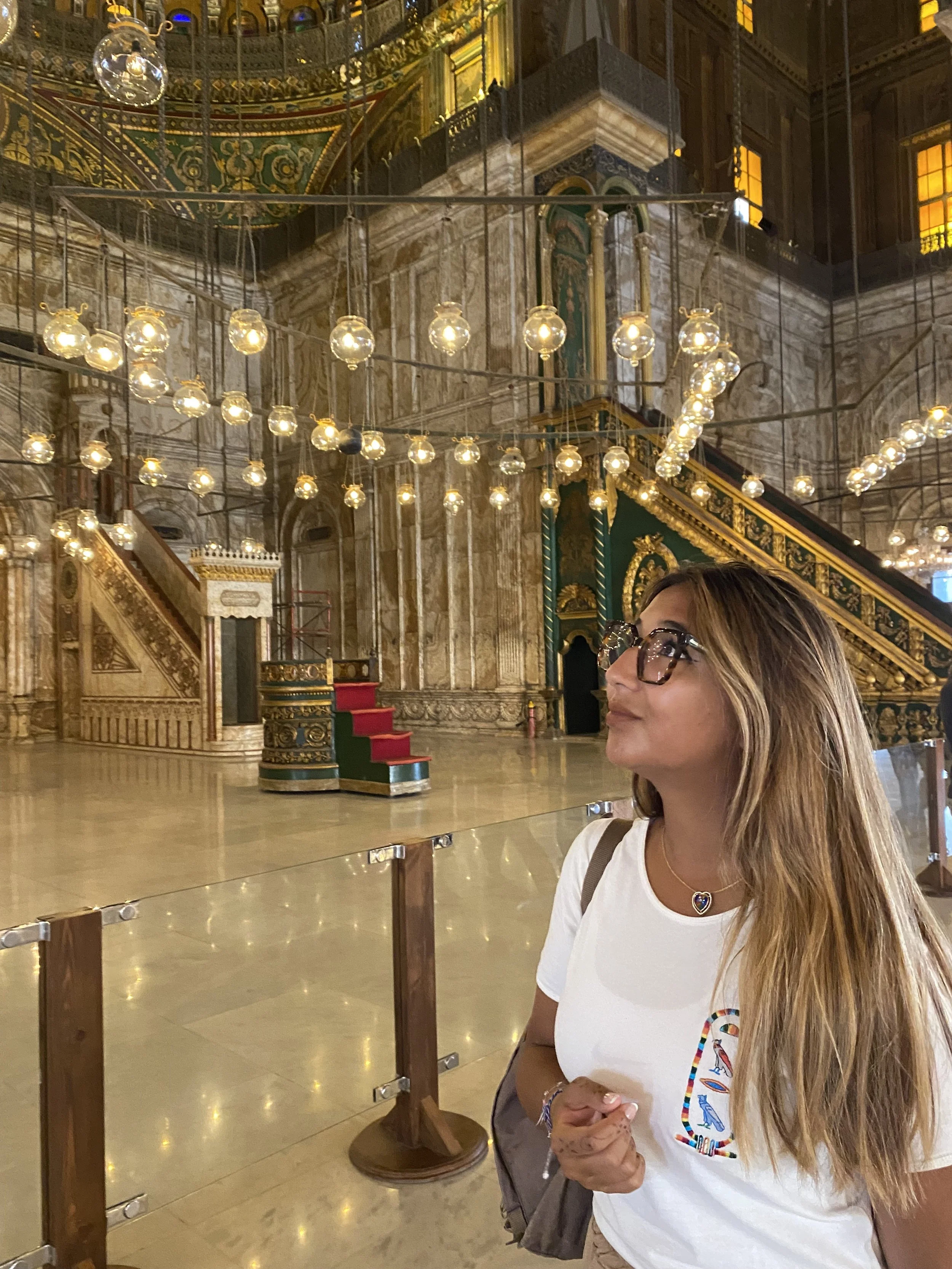
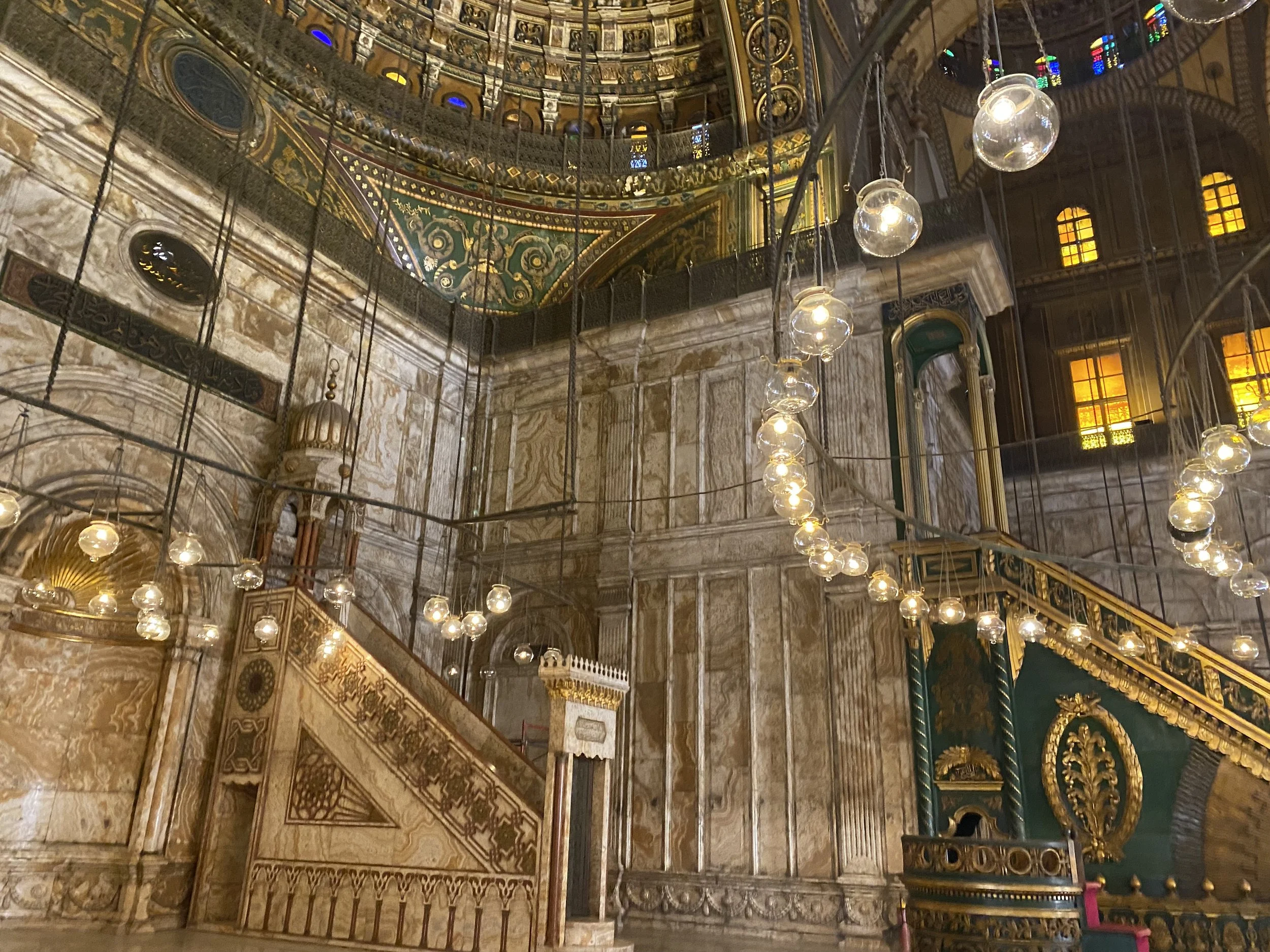
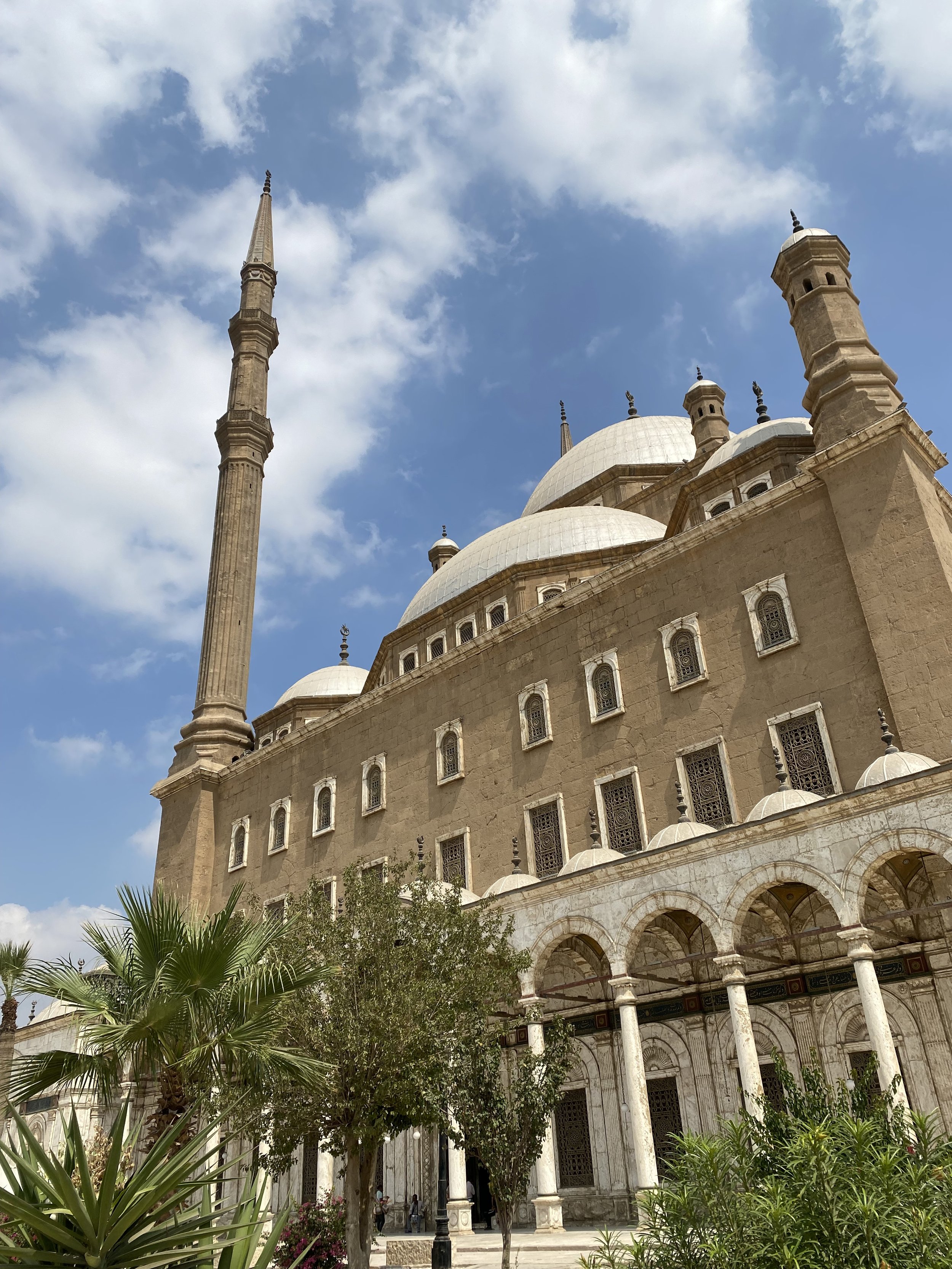
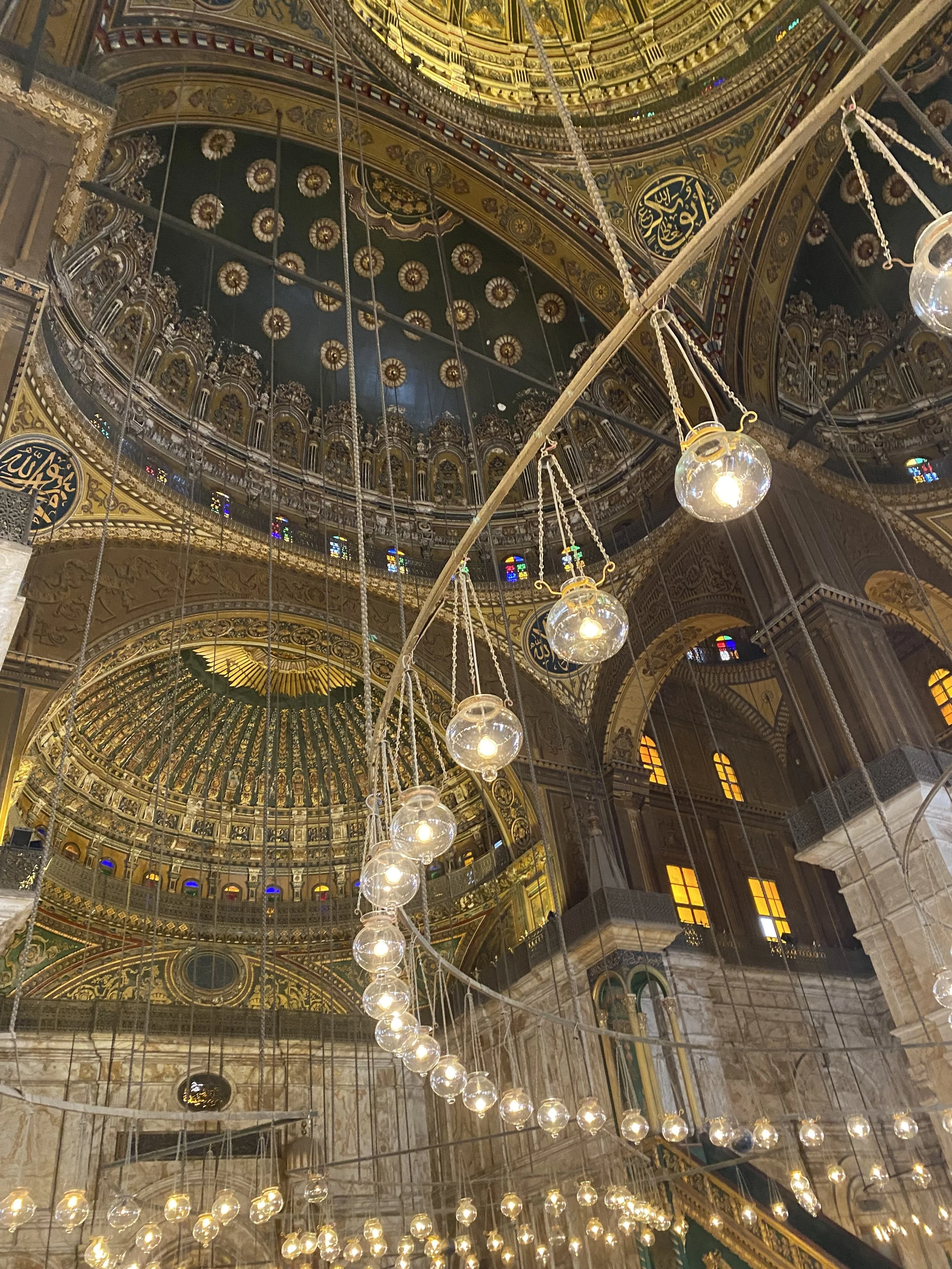
Perched on a hill, the citadel offers panoramic views over the city but we especially went to see the Mosque of Muhammad Ali (Alabaster Mosque). It’s beautiful and is of Ottoman architecture, inspired by the Blue Mosque in Istanbul. It’s important as it symbolizes Muhammad Ali Pasha’s modernization of Egypt and his power but mostly it’s really a magnificent mosque.
Just be prepared : you’ll need shoulders and knees covered; women will be given a headscarf.
Strolling Downtown and Khan el-Khalili Bazaar
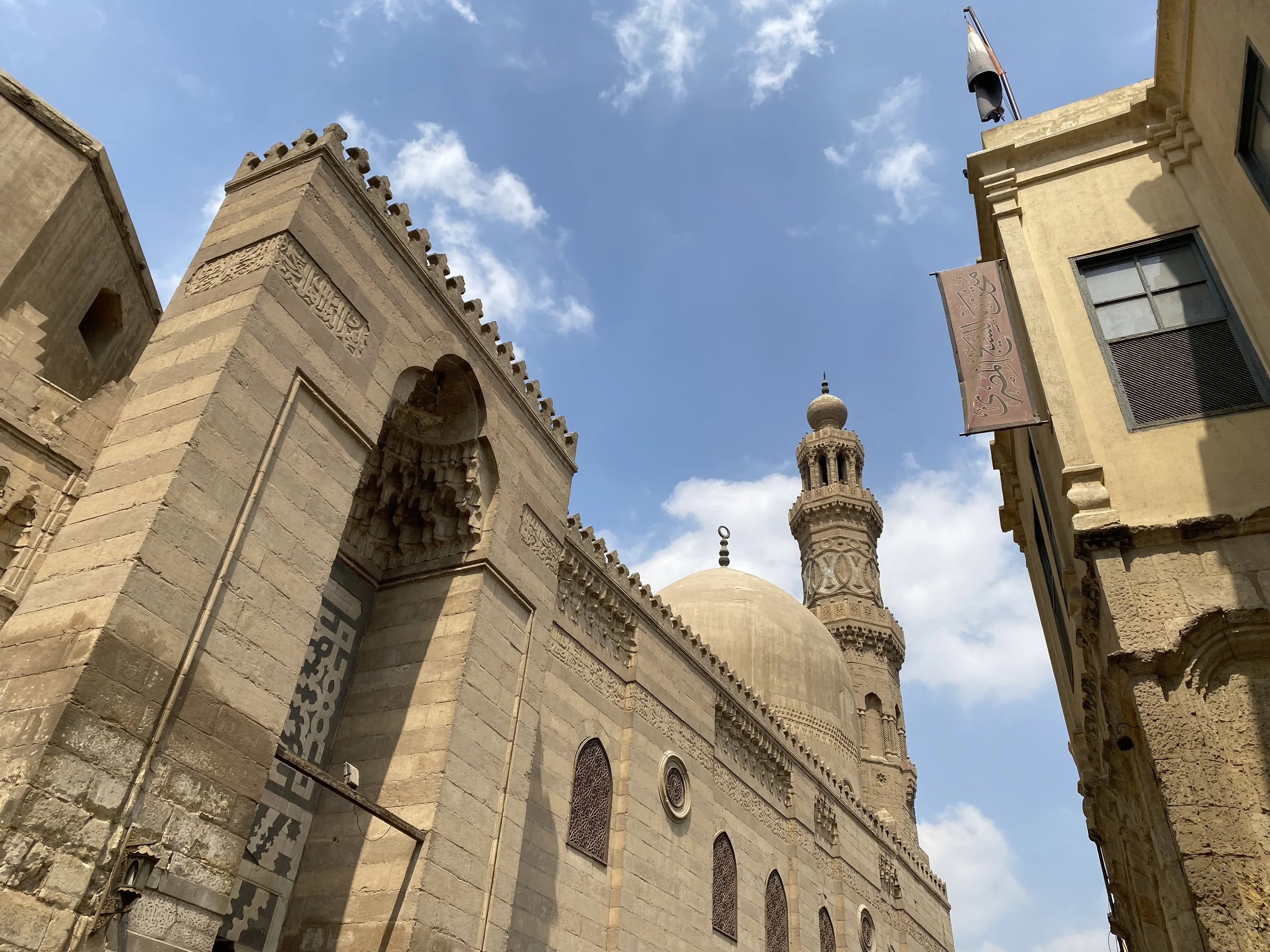
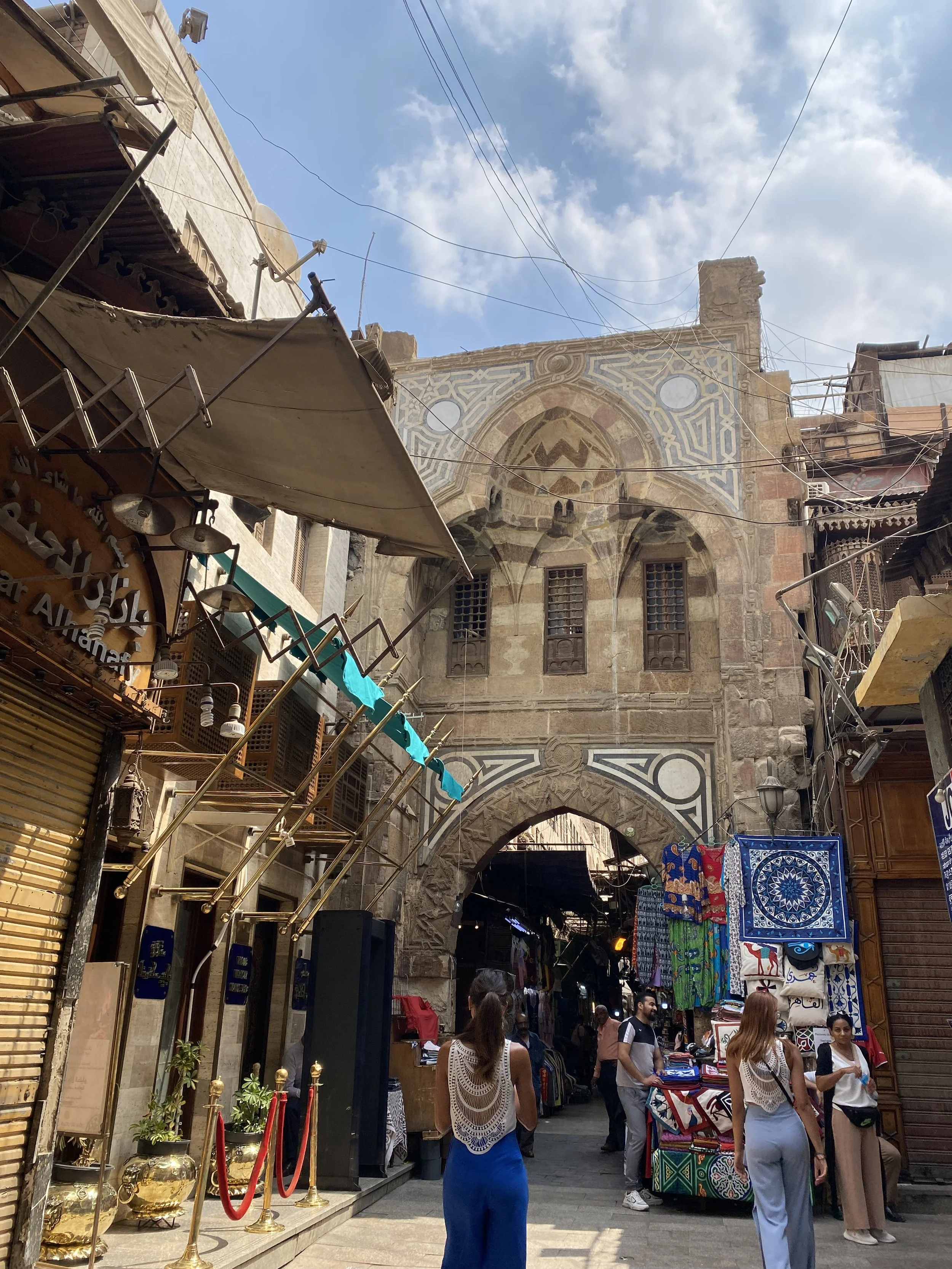
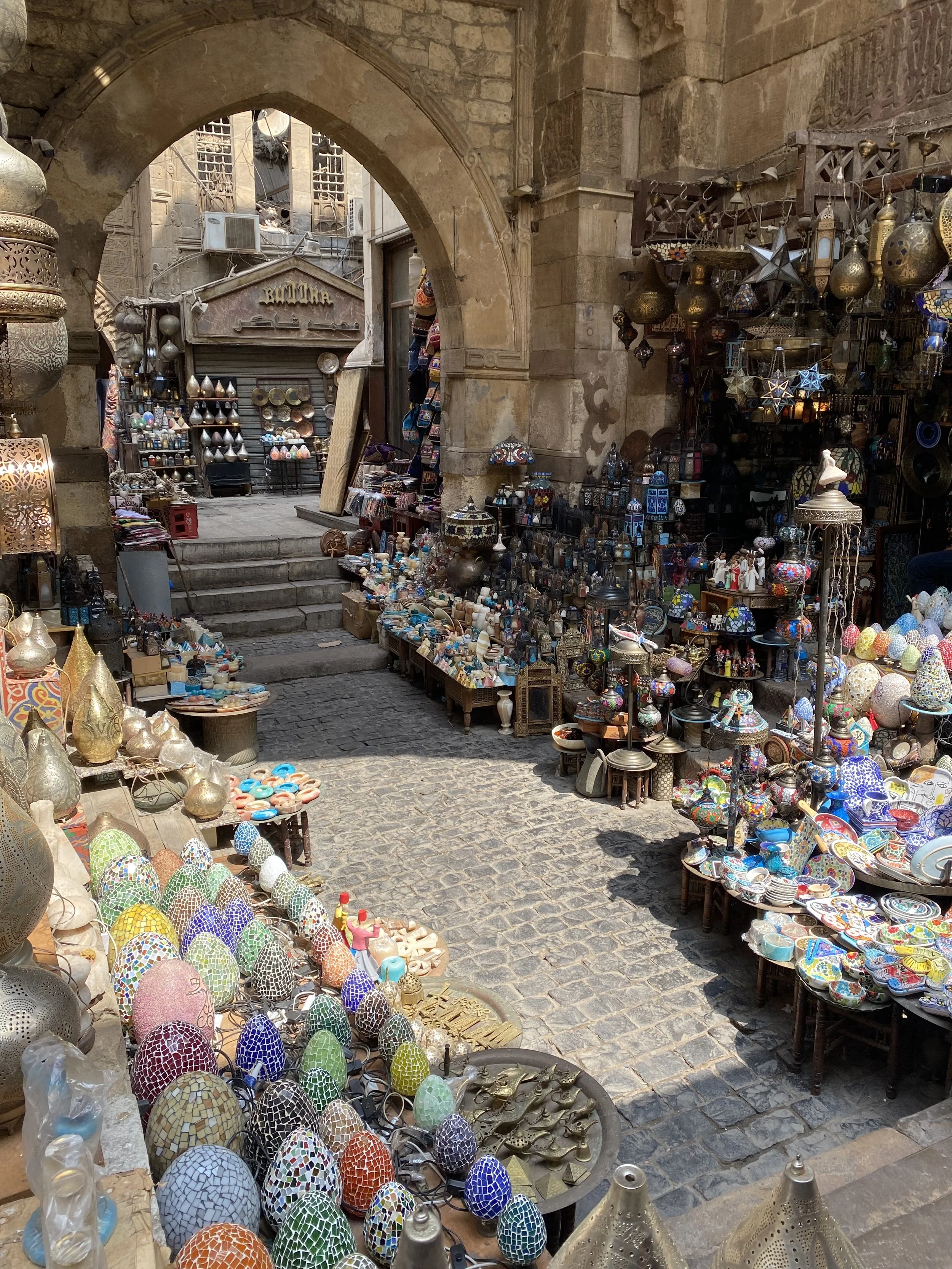
To feel the pulse of modern Cairo, nothing beats wandering the bustling streets downtown and exploring the Khan el-Khalili bazaar. The bazaar retains its medieval layout and you’ll have historic mosques and monuments within walking distance. Also if you want to buy some things know that bargaining is expected, so don’t accept the first price. And don’t walk alone if you’re a woman, I got quite harassed there until the moment my friend’s dad came and pretended to be mine.
Don’t exclude it from your itinerary because of my experience since our guide assured us it’s a living slice of Cairo’s history and culture and it’s also Egypt’s most famous market, but be aware that you should stay in groups.
I hope this little journey through Egypt has given you a taste of its beauty and maybe even inspired you to experience it yourself. I really loved every moment of this trip and would absolutely go back, this time with my fiancé. If you’re travelling from France, I can only recommend the agency we used; we were truly impressed (and no, this isn’t sponsored!).
If you need more details, tips, or want help planning your own itinerary, feel free to send me an email, I’m always happy to share.
